
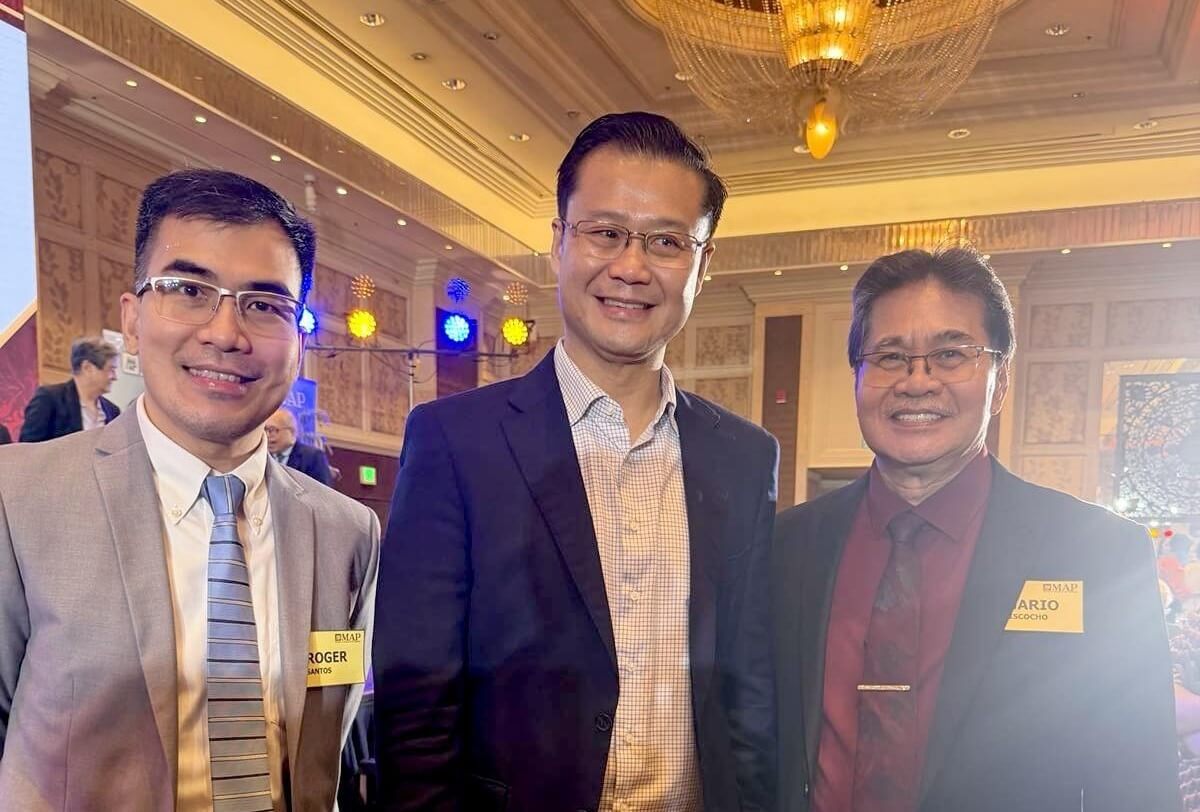
I recently had the opportunity to attend the Management Association of the Philippines (MAP) General Membership Meeting, which featured Senate President Sherwin “Win” Gatchalian as the guest speaker. The session focused on the Senate’s priority agenda and offered valuable insights into how government and the private sector can work together to accelerate Philippine economic development.
What stood out to me most was the message that the country needs to move from “politics to economic execution.” At a time when businesses face slower growth, rising operating costs, weaker consumer demand, and uncertainty around investments, the message was clear: good policies matter, but execution matters even more.
A Challenging Economic Environment
Senate President Gatchalian began by putting the current economic situation into context.
According to the Philippine Statistics Authority (PSA), the Philippine economy grew by only 2.3% in the second quarter of 2026. Household final consumption expenditure increased by 2.8%, while gross capital formation declined by 9.2%. Construction activity played a major role in that decline, falling by 14.8%, while general government construction dropped by 32.4%.
For official economic statistics, visit:
These figures help explain why the economic outlook has become more challenging.
Construction, household spending, and investment directly affect jobs and business activity. When projects slow down, fewer employment opportunities emerge. Likewise, when purchasing power weakens, consumer spending often follows. As a result, businesses tend to become more cautious about expansion.
Furthermore, inflation remains a concern. The PSA reported that headline inflation reached 6.2% in July 2026, slightly lower than 6.4% in June. Average inflation from January to July stood at 5.0%.
Against this backdrop, the Development Budget Coordination Committee (DBCC) revised the government’s 2026 growth target to 3.5% to 4.5%, down from the earlier 5% to 6% range.
The challenge, therefore, is not simply achieving growth. It is restoring confidence and creating the conditions needed for long-term prosperity.
Senate Priorities Supporting Philippine Economic Development
One of the most valuable parts of the presentation was Senate President Gatchalian’s discussion of the Senate’s legislative priorities.
He shared that the Senate had identified 33 priority bills, many of which focus on economic recovery, infrastructure, investment, energy, employment, and cost-of-living concerns.
Below are several proposals that stood out from a business perspective.
1. Master Plan for Infrastructure and National Development (MIND)
One major proposal is the Master Plan for Infrastructure and National Development (MIND) Bill, which seeks to establish a comprehensive 30-year infrastructure roadmap.
Specifically, the proposal goes beyond roads and bridges. It aims to integrate:
- Roads and highways
- Airports and seaports
- Mass transportation systems
- Energy and water infrastructure
- Logistics networks
- Warehouses and cold storage facilities
Infrastructure is more than government spending. It is a key driver of competitiveness. Investors evaluate transportation systems, logistics efficiency, power reliability, and connectivity when deciding where to allocate capital.
Consequently, a long-term infrastructure framework can provide businesses with greater confidence and encourage larger investments.
2. Reducing Electricity Costs
Energy reform was another major topic of discussion.
Gatchalian highlighted proposed reforms related to system-loss charges and stronger oversight by the Energy Regulatory Commission. He also discussed reviewing electricity-related costs, including fuel pass-through charges.
For businesses, electricity is a critical operating expense. High power costs can reduce competitiveness and limit growth.
Additional information about the energy sector can be found at:
The Senate is also exploring amendments to the Electric Power Industry Reform Act (EPIRA) to strengthen oversight and improve efficiency. These reforms could support Philippine economic development by helping businesses manage one of their largest operating costs.
3. Waste-to-Energy Opportunities
Another proposal highlighted during the discussion was the Waste-to-Energy Bill.
Gatchalian described waste-to-energy technology as both an environmental solution and an economic opportunity. Instead of viewing waste solely as a disposal challenge, the country can potentially transform it into an additional power source.
He pointed to countries such as Japan, South Korea, and Singapore as examples of economies that have successfully adopted this approach.
In contrast to traditional waste management strategies, waste-to-energy initiatives can create economic value while addressing environmental concerns.
4. The GINHAWA Bill and Higher Take-Home Pay
On the consumer side, Gatchalian discussed the GINHAWA Bill, or the Granting Increase in Take-Home Pay for All Working Filipinos Act.
The proposal seeks to:
- Increase the income tax exemption threshold from ₱250,000 to ₱400,000 annually
- Raise the tax-free bonus ceiling from ₱90,000 to ₱150,000
- Provide additional tax relief on certain forms of compensation
The objective is straightforward. Workers would keep more of their earnings, which could strengthen consumer spending without relying solely on mandated wage increases.
At a time when inflation continues to affect household budgets, this proposal could provide meaningful support.
5. Strengthening MSMEs
The Senate’s agenda also recognizes the essential role of micro, small, and medium enterprises (MSMEs).
Proposed reforms aim to improve:
- Access to financing
- Credit guarantees
- Shared machinery programs
- Technical assistance
- Business support services
This focus is important because sustainable Philippine economic development depends not only on large corporations and foreign investors but also on thriving local enterprises.
MSMEs create jobs, support communities, and contribute significantly to economic resilience.
6. Tax Amnesty and the Proposed Removal of Travel Tax
Gatchalian also discussed a general tax amnesty, including estate tax provisions that could help taxpayers settle long-standing obligations and unlock idle assets.
In addition, he proposed the abolition of travel tax, which he sees as an unnecessary cost for professionals, workers, tourists, and business travelers.
While these proposals address different issues, they share a common objective: reducing barriers that can restrict economic activity.
Improving the Business Environment Through Oversight
Another key point was the Senate’s oversight role.
Gatchalian discussed concerns from businesses regarding government processes, particularly those involving agencies such as the Bureau of Internal Revenue (BIR) and the Bureau of Customs.
More information is available at:
His message was clear. Government must identify areas where red tape creates friction and ensure agencies remain accountable for effective implementation.
Businesses can adapt to regulations when rules are clear and predictable. What creates difficulties is uncertainty, excessive bureaucracy, inconsistent implementation, and prolonged delays.
Furthermore, Gatchalian discussed the proposed Reinvigorate Investment and Sustainable Economic Growth (RISE) Ad Hoc Committee, which will focus on:
- Investment promotion
- Job creation
- Government efficiency
- Cost-of-living concerns
This initiative reflects the growing recognition that practical execution is essential for stronger Philippine economic development.
AI and the Future of Jobs
Perhaps the most thought-provoking discussion centered on artificial intelligence.
Gatchalian acknowledged ongoing government investments in AI training programs, including initiatives through TESDA. However, he emphasized that teaching people how to use AI is only one part of the challenge.
The larger question is: How will AI reshape industries and jobs in the Philippines?
He raised concerns about occupations that rely heavily on repetitive tasks, where automation may significantly change workforce requirements.
As someone working in recruitment and talent solutions, this topic resonated with me.
The future of talent acquisition cannot focus solely on filling today’s vacancies. Organizations must also prepare for emerging roles, new skill requirements, and workforce transitions driven by technological change.
Therefore, AI should be viewed not only as a technology issue but also as a workforce and economic strategy.
Pax Silica and Moving Up the Value Chain
During the Q&A session, another noteworthy topic was the proposed Pax Silica investment.
Gatchalian described it as a potential opportunity for the Philippines to attract substantial foreign investment and move further up the value chain.
The country has already established itself as a leader in business process outsourcing. Now, opportunities in semiconductors and advanced technology industries could represent the next stage of Philippine economic development.
However, moving into higher-value industries will require more than capital investment. The country will also need strong infrastructure, supportive policies, and a highly skilled workforce.
Key Takeaways
I came away from the discussion with several important insights:
1. Economic Recovery Requires Execution
Good policies matter, but the real measure of success is whether they lead to investments, jobs, infrastructure projects, and better outcomes for citizens.
2. Infrastructure Is a Business Issue
Roads, ports, logistics systems, energy infrastructure, and connectivity directly influence a country’s attractiveness to investors.
3. The Cost of Doing Business Matters
Energy costs, taxes, regulations, and government processes all affect business decisions.
4. AI Requires a Workforce Strategy
Organizations must prepare workers for change while identifying the skills needed for future growth.
5. Government and Business Must Work Together
Government creates the environment for growth, while businesses drive innovation, investment, job creation, and competitiveness.
From Discussion to Action
My biggest takeaway from the MAP General Membership Meeting is that the Philippines has immense potential, but opportunity alone is not enough. The country must translate plans into action.
The recent economic figures serve as a reminder that growth cannot be taken for granted. Slower GDP growth, reduced investment activity, and weaker construction performance highlight why restoring business confidence remains critical.
For business leaders, this means we cannot simply wait for government action. We also have a responsibility to invest in people, adopt new technologies, develop future-ready capabilities, and engage constructively with policymakers.
The MAP discussion reinforced an important lesson: economic growth is a shared responsibility. Government must create a stable and predictable business environment. Businesses, in turn, must invest, innovate, create jobs, and develop talent.
Ultimately, the shift from politics to economic execution is not just a government agenda. It is a challenge for every leader who wants to help make the Philippines more competitive, resilient, and ready for the future.
Continue the Conversation
Want to learn how your organization can strengthen its workforce, leadership pipeline, and business strategy in a rapidly changing economy?
Contact the John Clements team today:

