

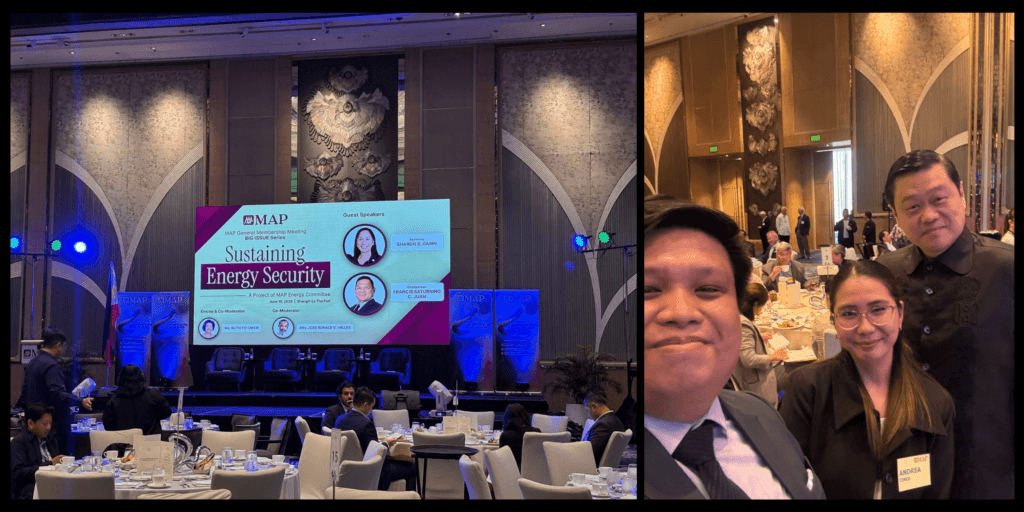
One of the greatest benefits of attending industry events is encountering ideas that challenge not only how we lead organizations but also how we understand the people within them. At the recent PMAP General Membership Meeting, Inclusive by Design: Understanding Intersectionality in the World of Work and Tech, Dr. Mira Alexis Ofreneo, Director of the University Gender Hub at Ateneo de Manila University, encouraged HR professionals and business leaders to reconsider one of the workplace’s most common assumptions: that a “typical” employee exists.
Dr. Ofreneo began with a simple but revealing exercise. She asked participants to imagine a person at work. Was that person a man or a woman? Young or middle-aged? Filipino or from another nationality? Married or single? Able-bodied or living with a disability?
As many of us filled in the blanks, we likely relied on our own assumptions. Consequently, the exercise revealed how easily organizations can design systems around an invisible ideal employee. Yet no such standard person exists. Every employee brings a unique combination of identities that influences how they experience opportunity, belonging, and success.
Understanding Intersectionality
More Than One Identity
This is where intersectionality in the workplace becomes especially important. Intersectionality recognizes that people do not experience life through a single identity. Rather, every individual carries multiple identities that interact and influence one another.
Gender, age, disability, ethnicity, religion, sexual orientation, language, socioeconomic status, educational background, and marital status all shape how people navigate work and society. These dimensions do not exist independently. Instead, they overlap in ways that create distinct experiences for every person.
As a result, organizations that want to build truly inclusive cultures must look beyond broad demographic categories and understand the complexity behind each employee’s experience.
A Philippine Perspective
This concept resonates strongly in the Philippine context. As Dr. Ofreneo explained, many Filipinos experience life as patong-patong or halo-halo—layers of identities that can create opportunities or compound disadvantages.
For example:
- A young woman may face challenges that differ from those of an older woman.
- A woman with a disability may encounter barriers that able-bodied women do not experience.
- LGBTQ+ professionals may navigate situations differently from their heterosexual colleagues.
- Employees from lower socioeconomic backgrounds may face obstacles that remain invisible to others.
In contrast, some individuals may benefit from advantages tied to certain identities while experiencing challenges associated with others.
This complexity helps explain why intersectionality in the workplace matters. People may work in the same organization yet experience that environment in remarkably different ways.
Reflecting on Privilege and Marginalization
One of the most thought-provoking moments of the keynote involved a discussion about privilege. Dr. Ofreneo asked attendees whether they viewed themselves as privileged or marginalized.
The answer is often both. Most people possess identities that provide advantages in some situations and create challenges in others. Recognizing this reality shifts the conversation beyond labels and encourages a more nuanced understanding of workplace experiences.
This discussion also prompted a personal reflection. As a cisgender male in the Philippines, I realized that many opportunities and freedoms I have enjoyed were shaped by forms of privilege that I rarely had to consciously consider.
Importantly, this realization is not about assigning guilt. Instead, it encourages greater awareness. Furthermore, it helps leaders understand that other employees may encounter barriers they have never personally experienced.
Building Better Organizations Through Inclusion
Representation Alone Is Not Enough
For organizations, intersectionality in the workplace presents both an opportunity and a challenge. Diversity initiatives often focus on representation, but representation alone does not guarantee inclusion.
Leaders should examine whether organizational systems unintentionally favor certain groups while creating barriers for others. Specifically, they should evaluate:
- Recruitment processes
- Leadership development programs
- Workplace policies
- Performance management systems
- Everyday cultural norms
Rather than asking whether a program is broadly inclusive, leaders should ask:
- Who benefits most from the current system?
- Whose voices remain underrepresented?
- What barriers still exist?
- How can those barriers be reduced or removed?
According to the Philippine Commission on Women, inclusive and equitable participation remains a key objective across workplaces and institutions.
See more information here: https://pcw.gov.ph
Likewise, the Civil Service Commission continues to promote equal opportunity and merit-based employment practices throughout the public sector.
See more information here: https://www.csc.gov.ph
Viewing Policies Through an Intersectional Lens
An intersectional lens allows organizations to identify challenges that might otherwise remain hidden. When leaders understand intersectionality in the workplace, they can design policies that better reflect the realities of their workforce.
For example, a policy that appears fair on the surface may affect different groups in different ways. Therefore, leaders should continuously assess programs and initiatives from multiple perspectives.
Doing so helps create environments where employees feel seen, valued, and supported.
The Path to Inclusive Leadership
Perhaps the greatest takeaway from Dr. Ofreneo’s keynote is that intersectionality is ultimately about seeing people more completely. Every employee brings a unique combination of experiences, strengths, identities, and challenges that cannot be reduced to a single label.
Therefore, building inclusive workplaces requires more than good intentions. It demands:
- Curiosity
- Empathy
- Humility
- Active listening
- Continuous learning
These qualities help leaders make better decisions and foster stronger workplace cultures.
Ultimately, intersectionality in the workplace reminds us that inclusion is an ongoing practice rather than a destination. When organizations take the time to understand the full complexity of their people, they create environments where everyone has a greater opportunity to thrive.
Build a Future-ready Workforce
At John Clements Consultants, we believe building exceptional teams goes beyond matching skills to roles. It also means understanding the people behind those skills and recognizing the diverse experiences they bring to work. As organizations navigate an increasingly complex future, inclusive leadership begins with a simple but powerful question: Who might we still be unintentionally leaving behind?
Ready to build a more inclusive and future-ready workforce? Contact our team today:
https://www.johnclements.com/contact-us/

