

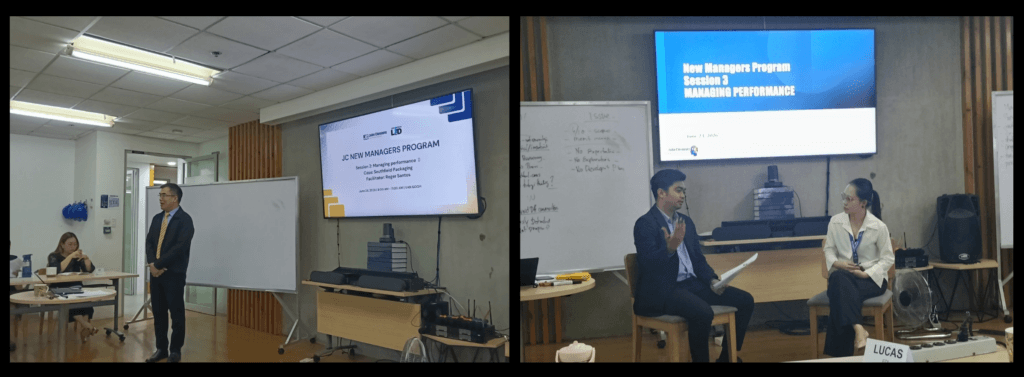
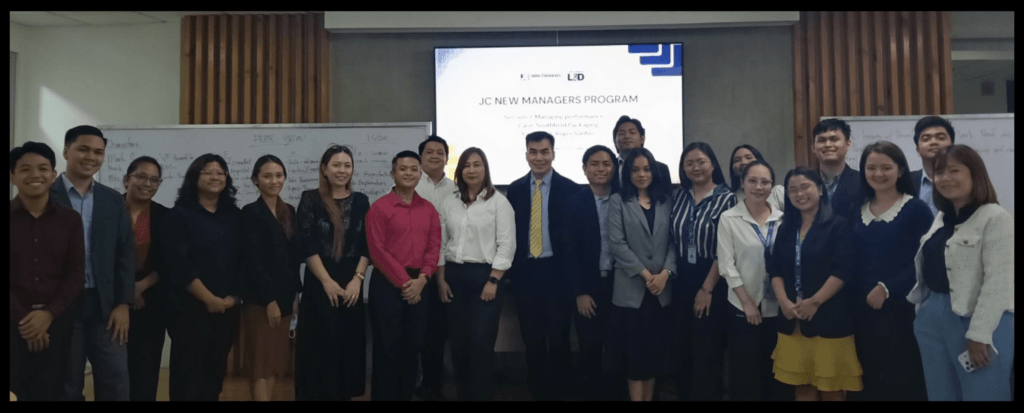
The third session of the New Managers Program, facilitated by Roger Santos, focused on employee performance management using the Southfield Packaging case study.
Initially, I expected the session to focus on metrics and ratings. However, I realized that managing performance goes beyond numbers. It involves understanding people, making sound decisions, and creating an environment where employees can perform at their best.
Balancing Goals and Development
The case study reflected real challenges managers face, such as balancing business goals with employee development. Addressing performance issues while maintaining trust is never simple. There is no perfect solution. What matters is being fair, objective, and consistent, while leading with integrity and accountability.
Example Case
One situation stood out involving Mark Sanders, Corporate Vice President, and his direct report, Frank Belby, a Regional Manager. As Sanders prepared for Belby’s performance review, concerns arose about Belby’s behavior and handling of client situations. However, the feedback lacked clarity, creating confusion around how his performance was evaluated.
Importance of Clear Feedback
This highlights that performance reviews alone are not enough. Feedback must be clear, objective, and actionable. Employees should understand their strengths, development areas, and expectations moving forward. When feedback is unclear or delayed, it affects both performance and engagement.
Furthermore, strong leadership is not about having all the answers. It is about listening, learning, and making informed decisions.
Continuous Performance Management
A key takeaway is that employee performance management should be continuous, not limited to formal reviews. Managers must:
- Set clear expectations
- Provide regular feedback
- Guide teams effectively
- Recognize strong performance
These efforts directly impact engagement and results.
Specifically, when a team member starts missing deadlines and feedback is delayed, the issue can quickly affect team performance. Addressing concerns early, understanding root causes, and setting clear expectations help employees improve and stay aligned with team goals.
Practical Application
The session encouraged me to strengthen how I apply these practices. I will be more intentional in giving timely feedback, recognizing achievements, and addressing concerns early. I will also ensure expectations are aligned and communication remains open.
Regular and open communication builds trust, strengthens teamwork, and ensures alignment across the team and stakeholders.
Broader Relevance
This session is also relevant to my work in executive search and talent acquisition. Employee performance management includes setting clear expectations with clients and candidates, providing regular updates, and maintaining alignment. Consistency and transparency help build long-term relationships and improve outcomes.
For factual context, the Philippine Department of Labor and Employment provides guidelines on performance and workplace standards: http://www.dole.gov.ph
Key Principles
Overall, the session reinforced that managing performance is not just about results, but also about developing people, building trust, and driving continuous improvement. It requires discipline, consistency, empathy, and accountability from leaders at all levels of the organization.
Employee performance management is a responsibility that goes beyond evaluation. It is about creating the conditions that enable teams to succeed and reach their full potential.
Take the Next Step in Employee Performance Management
Strong leadership is not only about guiding teams but also about creating the right conditions for success. If you’re ready to elevate your approach to employee performance management, build trust, and drive measurable results, let’s connect.
Ready to strengthen your leadership approach? Connect with us today.

