
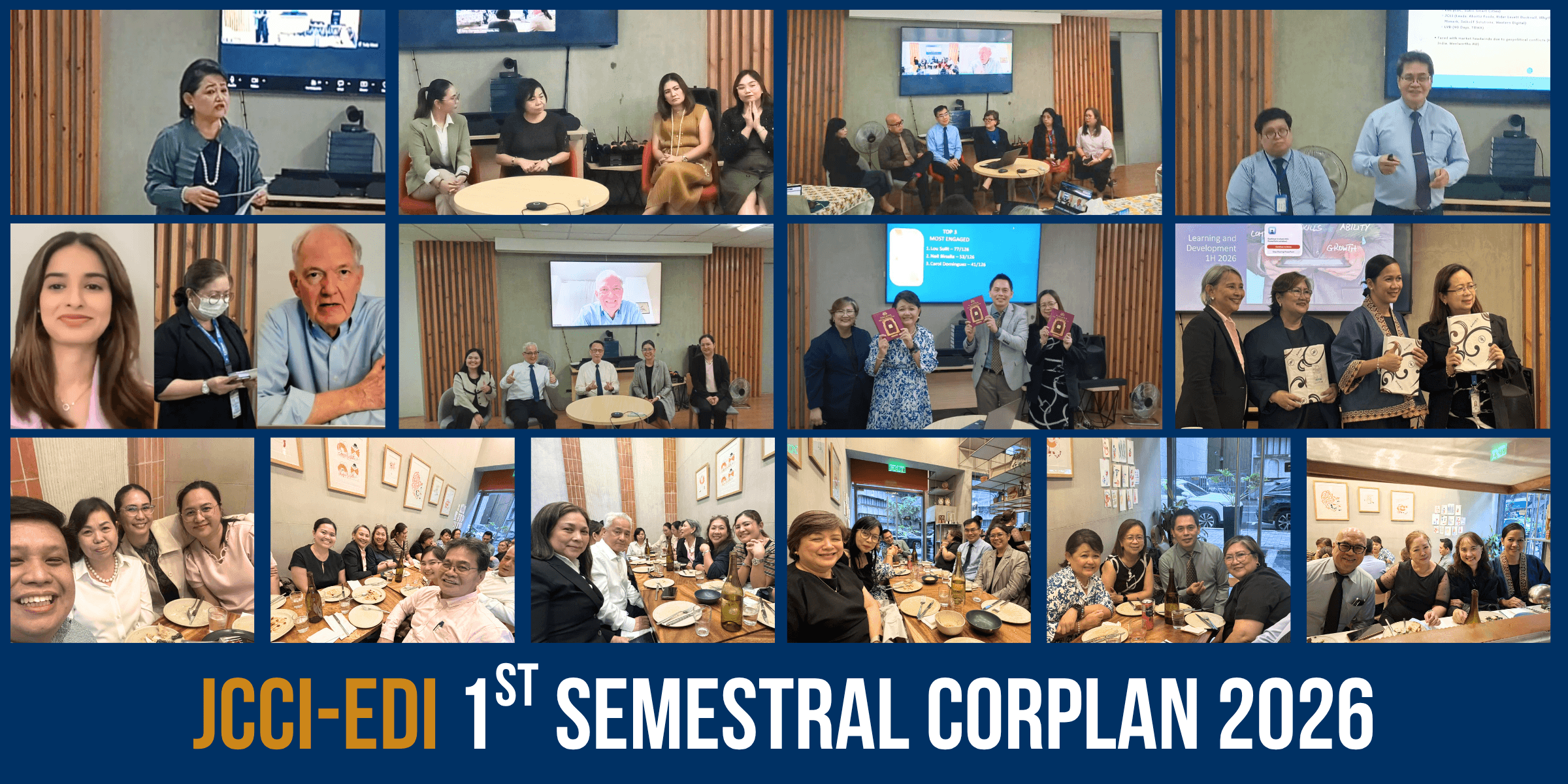
Corporate leadership proves itself not in calm markets but in disrupted ones. On August 5–6, 2026, executives from John Clements Consultants (JCCI) and EDI Staffbuilders convened for their Mid-Year Corporate Planning (Corplan) conference under the theme “Ground Shift Prep.”
The two-day session confronted a blunt reality: AI acceleration, geopolitical shocks, and a slowing Philippine economy are rewriting the rules for every organization — and leadership teams that wait for stability will lose ground to those who don’t.
Day 1 reviewed first-half performance with candor, tested strategy against a live macroeconomic briefing from the World Bank and set direction for the second half of 2026. Day 2 carried that momentum forward through marketing wins, a case study on Apple, division updates, and a fellowship dinner that closed the conference on a note of unity. Across both days, three themes anchor this article: read the economic signals correctly, act on them faster than the market changes, and convert disruption into competitive advantage.
Key Takeaways
- Philippine GDP growth is projected at 3.7% for 2026, a sharp deceleration driven by investment contraction and a Middle East-linked terms-of-trade shock.
- JCCI–EDI posted H1 2026 gross revenue of $66.6 million — 10% below target — while holding a 21% gross profit margin.
- Leadership adopted a three-pillar growth framework — Investment, Infusion, Innovation — to help the Philippines escape the middle-income trap.
- AI visibility for the John Clements brand jumped from 27 citations in December to 222 today, as marketing, JCLI, and EDI each built AI adoption into their H2 roadmaps.
- H2 2026 priorities for corporate leadership: agility, responsible AI adoption, cross-divisional collaboration, and trust-based client growth.
Setting the Stage Under Pressure
Carol Dominguez, President and CEO of John Clements Consultants, opened the session with a direct message to her executive team: panic and hesitation solve nothing. AI acceleration, shifting trade alliances, market consolidation, and persistent inflation are reshaping business fundamentals in real time, she said, and organizations must respond with strategy — not reaction.
She set three mandates for the two-day agenda: test leadership readiness, expand business capability, and align every division tightly around one enterprise strategy. Her closing line set the tone for everything that followed: in a market this dynamic, failing to plan is planning to fail.
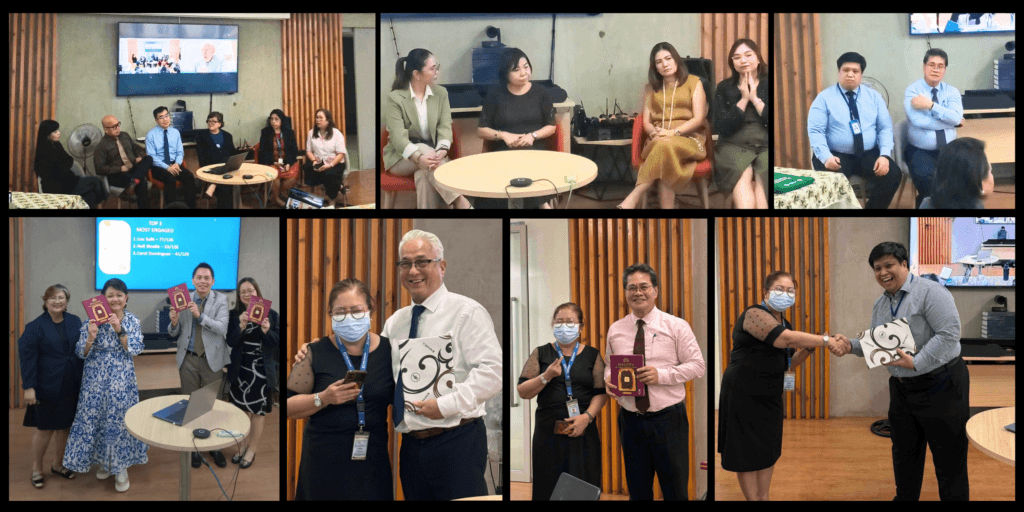
Dr. Grace Alcid, Learning and Development Director of the John Clements Leadership Institute (JCLI), followed with an interactive “Human Bingo” icebreaker that pushed leaders across divisions to trade stories — and a few surprises, including hidden talents in Hawaiian dance and ballet — before the strategy sessions began. The exercise dismantled the divisional silos that make coordinated execution difficult later in the day.
Reading the Macroeconomic Signals
As part of the Corplan discussions, the team reviewed the World Bank’s Philippine Economic Update (Mid-Year 2026 Edition), as shared by Carol Dominguez, President and CEO of John Clements Consultants, who had previously joined a session with the World Bank’s Senior Country Economist for the Philippines and brought the key findings back to the leadership team.
The report projected GDP growth slowing to 3.7% alongside rising inflation at 4.8%, driven by investment contractions and energy price shocks. Despite these headwinds, unemployment remained low and poverty continued to decline, though at a slower pace.
The key takeaway was clear: resilience requires foresight. Accelerating renewable energy deployment, expanding grid resilience, and deepening market competition are signals corporate leaders must read correctly to align strategies with shifting economic realities. This context framed the division reports that followed, underscoring why synchronized leadership and decisive action are essential for the second half of 2026.
Strategic Division Roadmaps
The first half of 2026 tested resilience, yet the organization held firm. Profitability remained steady, job orders processed rose by 7%, and successful placements grew 18% year-over-year. Attrition improved to 25% from 33% in 2024, with only 13% employee-driven turnover. Each division entered the second half of the year carrying a distinct mandate.
Outsourcing — Rita Estrella, Vice President
The Outsourcing Division sustained steady year-over-year growth despite a harder market. Moving into H2, the team will tighten candidate assessment and integrity-verification protocols — a direct response to candidates increasingly leaning on generative AI during screening and evaluation.
Service Delivery Hub — Grace Sorongon, Executive Vice President
“The future belongs to those who move first,” Sorongon told her team, and the division backed the line with volume: 577 client meetings and visits to 135 companies in H1 alone. Job orders and new-business revenue slipped year-over-year, yet Business Unit 2 alone generated 40% of total revenue, anchored by AIA, EO, and Synchrony. The division’s H2 focus stays on speed-to-market and advisory-led talent solutions that help clients restructure for digital transformation.
Enterprise Sales — Mario Biscocho, Senior Vice President and Managing Director
Enterprise Sales revenue fell to $9.8 million from $19.5 million a year earlier, yet the division diversified across ten service lines, up from six. A new Tech Talent Acquisition Team (TTAC) now focuses on IT roles, and cross-selling initiatives already contributed $14.6 million in value. Biscocho’s team uses AI products as an entry point to open new client conversations, then expands into executive search, service delivery, and other offerings once trust is established.
H2 priorities: position John Clements as a workforce partner for the Pax Silica and Luzon Economic Corridor infrastructure initiatives, deepen relationships with BCDA, BPI, and BOI, run two CEO roundtables before year-end, and hold ten face-to-face client meetings plus one networking event every week. Market cycles fluctuate, Biscocho reminded the room, but John Clements’ core advantage does not: an authentic culture, deep client integration, and relationships built on trust rather than transactions.
Turning Strategy into Execution
In the afternoon, every team broke into a group activity to map out their own team’s plan for the second half — naming their weaknesses honestly and surfacing the opportunities in front of them, from specialized contracting to regional expansion — before presenting their thinking back to the wider group. Teams left the session with execution plans built to remove process friction, upskill internal talent, and extend coverage into new industries.
Alice Llamas, Group Managing Consultant, closed Day 1 with a clear synthesis: cross-functional collaboration, faster execution, and shared accountability would carry performance through the rest of 2026 and into 2027 — a note that set up exactly what Day 2 delivered.
Energy from the Opening Bell
Day 2 opened with energy. The leadership team gathered at 7:00 AM, fueled by a hearty breakfast of rice, scrambled eggs, and sardines. Simple as that sounds, it set the tone for a day built on bold ideas, spirited discussion, and genuine camaraderie.
Cheska Gardaya of the Outsourcing Division opened with a powerful recap of Day 1, spotlighting the battle cries of the three divisions: Outsourcing for RESILIENCE, Service Delivery for REINVENTION, and Enterprise Sales for FORESIGHT — rallying calls that reminded everyone the collective drive to transform challenges into opportunities never stops.
Marketing Driving Brand Synchrony
MJ and Charu opened the marketing segment by showing how the team works in synchrony to elevate the brand as a shared voice for community impact. MJ walked the room through SEO and website analytics, while Charu took over social media performance — together painting a picture of a brand whose milestones, from launching Carol’s Corner, the video series that positions Carol Dominguez as the company’s “Chief Perspective Officer,” to expanding into TikTok, reflect a creativity that consistently sparks connection.
The numbers backed up the story. Organic search remains the strongest acquisition driver, generating 25K clicks and 4.85 million impressions year-to-date, while nearly 32K organic sessions landed at a 49.48% engagement rate. Domain Authority now sits at 28, supported by 575 referring domains. Even more telling: AI visibility jumped from just 27 citations in December to 222 today, with ChatGPT, Copilot, Gemini, and Perplexity all now surfacing the John Clements brand.
Social platforms told a similar story of momentum. LinkedIn engagement hit 8% against a 2–3% industry baseline, reaching 60,000 followers and 720,000 impressions. Facebook delivered 6.4 million views. TikTok, barely six months old, already counts roughly 270 followers and 140,000 video views since its February launch.
Flagship content like Carol’s Corner and event-driven campaigns such as the Daddyokie Concert amplified reach even further.
Learning from Industry Leaders
The day’s intellectual highlight came from Tully Moss, who led the group through a case discussion on Apple Inc. — a sharp reminder that even giants stumble on innovation and growth. Using Porter’s Five Forces, the group unpacked how Apple’s hardware strength and ecosystem loyalty are increasingly counterbalanced by real weaknesses: slower AI development, an over-reliance on Google’s Gemini for core AI capability, and mounting regulatory scrutiny of its “walled garden” approach.
Participants didn’t hold back their opinions either. Several questioned whether Tim Cook’s process-driven leadership style can produce the same groundbreaking products that defined Steve Jobs’ visionary era, and some argued the AI age may demand a different leadership style altogether. Still, Apple’s milestone as the first U.S. company to cross the $1 trillion mark inspired real reflection on resilience and reinvention. Tully drew a clear parallel for the room: the same forces testing Apple are testing John Clements, and corporate leadership — not size or legacy — will decide who adapts in time.
EDI’s Best Year Yet
EDI Staffbuilders International’s presentation, led by Cesar Averia, Jr., was equally uplifting: the division is celebrating its best year to date. Sixty-nine percent of sales came from repeat accounts, a strong signal of client trust, and the team deployed more than 1,000 workers across 30 countries. With the Philippines serving as a hub of highly skilled talent, EDI continues tapping into global demand — particularly in healthcare — while expanding partnerships across Europe to diversify beyond the Middle East.
Not every signal was purely celebratory. Japan’s new visa framework is replacing the long-standing TITP program with ESDA, a shift that could affect recruitment pipelines there, and candidates overall are growing more selective about destinations. EDI’s response leans on the same playbook driving the rest of the organization: build deeper client partnerships around the new Japanese requirements, grow talent pools ahead of changing candidate preferences, and put AI to work for talent generation and analytics.
JCLI Positioning for the Next Shift
John Clements Leadership Institute (JCLI), led by Alicia Morales, followed with a Corplan presentation that didn’t shy away from a hard truth: training investments are slowing as firms pivot hard toward AI. Rather than treat that as a threat, Alicia positioned JCLI’s response as an opportunity — to grow into a true Business Transformation Partner capable of guiding organizations through change, not just delivering training modules.
The division mapped out concrete next steps: introduce a certification requirement for clients who want to use John Clements’ program designs, strengthen JCLI’s role through expanded AI-enabled learning and executive coaching, continue building thought leadership through quarterly briefings and an annual geopolitics conference, and target high-growth industries including renewable energy, healthcare, education, AI technology, manufacturing, semiconductors, and infrastructure.
Growth, Engagement, and Operational Excellence
After a delightful Japanese lunch featuring tempura, karaage, and tonkatsu, the afternoon sessions continued with updates from the Services support team.
L&D, presented by Dr. Grace Alcid, highlighted a strong organizational appetite for growth and continuous learning — the Executive MBA program alone posted an 89% completion rate among its 27 participants, alongside new “Learning Bytes” sessions built around practical AI adoption.
Human Resources, under Malou Antonio’s leadership, reported rising participation in wellness initiatives, including yoga, Zumba, mat pilates, and chair dance programs, alongside plans for a new engagement portal where employees can track participation scores and earn points toward rewards.
Finance and Tech, headed by Neil Binalla, reinforced the importance of digital discipline, from properly saving files in OneDrive to enhancing organizational connectivity. The numbers behind the discipline were worth celebrating too: collection performance improved 13% year-over-year, revenue climbed 7%, and net income rose 16%, with AIA MediCard contributions playing a meaningful role in that growth.
Rounding out the updates, Admin, led by Lou Sulit, celebrated a successful calendar of events, including the recent Cady Awards.
Reimagining the Future of John Clements
The group activity tied the day’s discussions together by drawing lessons straight from Apple’s journey. The takeaway landed clearly: John Clements must keep evolving from a recruitment service provider into an AI-enabled talent, business, and transformation advisory partner. Every division’s story that day — marketing’s AI visibility push, JCLI’s transformation pivot, EDI’s expansion into new markets — pointed toward the same conclusion. For John Clements, leadership and innovation aren’t separate conversations anymore; they’re the same conversation.
Fellowship Beyond the Boardroom
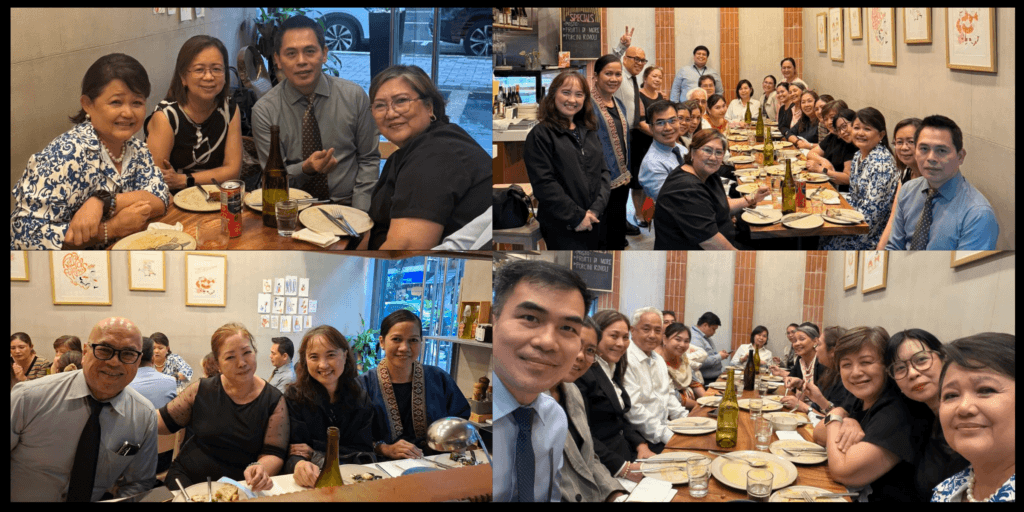
The conference concluded with a fellowship dinner at La Carinderia Manila. Despite the rain, 24 participants gathered in the cozy Italian restaurant, sharing laughter, pasta, ravioli, tiramisu, and espresso shots. Divided into six groups, with one group seated at the bar, the team strengthened connections through conversation, shared experiences, and a meaningful closing message from CAA.
The rainy evening became, fittingly, a symbol of resilience and unity. Whether walking, driving, or booking a Grab home, everyone left carrying the memory of two days that blended strategy, innovation, and camaraderie without missing a beat.
Navigating the Future with Confidence
The 2026 Mid-Year Corplan reinforced one principle above all: proactive planning turns market disruption into strategic advantage. By aligning corporate direction with macroeconomic reality, adopting AI responsibly, and investing in workforce readiness across two days of sessions, John Clements Consultants and EDI Staffbuilders remain positioned to guide client partners through whatever comes next.
Corporate leadership, in the end, is not a title. It is the discipline of preparing for a shift before the ground moves — and, as Day 2 proved, the unity to celebrate that shift together once the work is done.
Ready to build corporate leadership that outpaces market disruption?
Explore John Clements’ executive search, outsourcing, and leadership development solutions — built for organizations preparing for the next ground shift. Explore Client Solutions at John Clements.

