
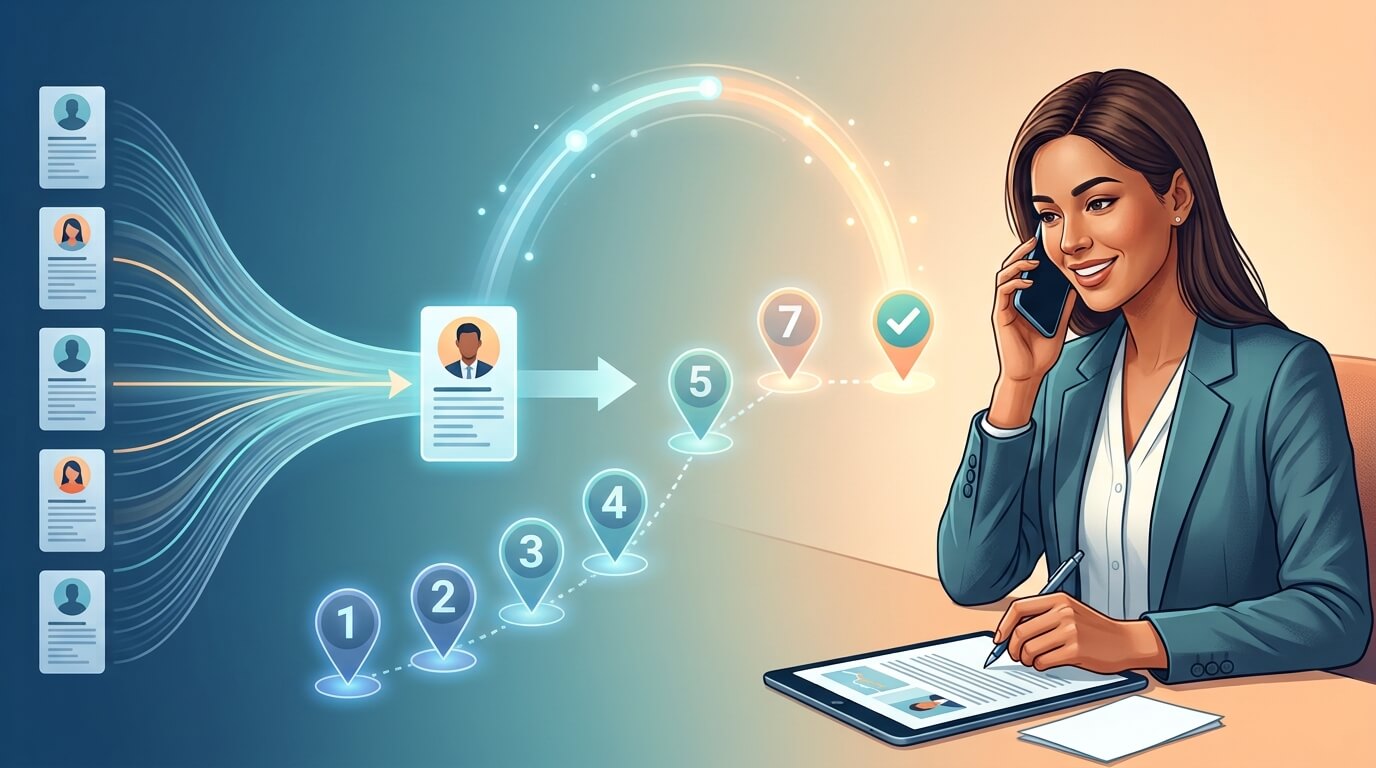
Key Highlights
- AI works best when it supports recruiters rather than replacing human judgment.
- A clear hiring process and well-defined candidate criteria should come before automation.
- Human review checkpoints can help catch errors, unfair decisions, and strong candidates that technology may overlook.
- Regular bias audits are needed to identify unintended patterns in automated screening.
- Being transparent about AI use can help build candidate trust and protect the employer brand.
- Time saved through automation should be reinvested in meaningful conversations and candidate engagement.
- Hiring teams should continuously measure results and adjust their tools and processes as needed.
Hiring teams are drowning in applications, and speed matters more than it ever did. That’s why AI in recruitment has moved from a nice-to-have to a near-default setting at most companies. But speed alone doesn’t win great hires. Add too much automation, and candidates start to feel like they’re talking to a wall.
Here’s how to bring AI into your screening process without losing the human warmth that makes people want to work for you.
Step 1: Map Your Hiring Process Before You Automate It
Before you touch any software, look at how you hire today. Write down every step, from job posting to offer letter. Flag where recruiters spend the most hours on repetitive work. Decide what “a good hire” actually looks like for each role.
Many hiring teams skip this step and pay for it later. Greenhouse’s research on recruiter judgment showed that many hiring managers struggle to describe what a qualified candidate should be before a search even starts. If your team can’t define “good” on paper, no AI candidate screening tool will fix that gap for you. Get this part right first, and everything downstream works better.
Step 2: Pick a Tool That Assists, Not One That Decides
Not all software plays the same role in your funnel, so know exactly what you’re buying.
- Look for tools that rank and organize, not ones that auto-reject candidates.
- Ask vendors how their scoring works, in plain language.
- Require a way to override any recommendation with one click.
Demand for these tools keeps climbing fast. LinkedIn’s own hiring data shows a growing share of talent-acquisition professionals plan to lean harder on AI in the year ahead, mostly to speed up early screening. That growth makes it even more important to choose AI recruitment software built to support your recruiters, not replace their judgment.
Step 3: Set Clear Human Checkpoints
AI should never have the final word on someone’s career. Require a recruiter to review every shortlist before it moves forward. Set a firm rule: no rejection goes out without human sign-off. Document who reviewed each decision, and why.
This isn’t just good practice anymore; it’s becoming the expectation. SHRM’s latest workforce research shows that AI adoption in HR tasks climbed sharply over the past year, and the organizations seeing the best results are the ones pairing automation with real human oversight, not swapping people out entirely.
Step 4: Run a Bias Audit Before Launch
An untested tool can quietly filter out strong candidates, and you may never even notice. Test the tool against historical hiring data for patterns of bias. Check outcomes across gender, age, and background groups. Repeat the audit at least once a year, not just once at launch.
This step isn’t optional in every market, either. New York City’s Local Law 144 requires an independent bias audit before employers can use automated tools to screen candidates, and the U.S. Equal Employment Opportunity Commission has made it clear that existing civil rights law applies fully to algorithmic hiring decisions. Build the habit early, even where it isn’t needed yet.
Step 5: Tell Candidates When AI Is Involved
Silence breeds distrust, and candidates notice more than most companies assume. State plainly, in the job post or application page, that AI supports your screening. Give candidates a clear way to request a human review instead. Explain what the tool is measuring.
Candidates already assume AI is in play. One survey on candidate sentiment found that just over half of applicants believe AI is already screening their applications, yet only about a quarter fully trust it to judge them fairly. Closing that trust gap matters just as much for your employer brand as any tool you choose for AI talent acquisition.
Step 6: Protect Time for Real Conversations
The whole point of automating early screening is to free up time, so spend it well.
- Reinvest saved hours into phone calls and interviews, not more admin work.
- Coach recruiters to probe career gaps and unconventional paths AI might miss.
- Watch for false negatives: strong candidates that a tool may have ranked too low.
That last point matters more than most teams realize. A recent UK survey of recruiters found that more than a third believe AI tools are already causing them to miss out on strong candidates. A human check on the “reject” pile, not just the shortlist, catches the candidate an algorithm might have misjudged.
Step 7: Track Results and Adjust
Launching the tool isn’t the finish line; it’s the starting point. Track time-to-hire, quality-of-hire, and candidate satisfaction side by side. Ask new hires and rejected candidates how the process felt. Revisit your settings every quarter, not just when something breaks.
Resume fraud and AI-polished applications are rising fast too, which makes ongoing review non-negotiable. Recruiters are now catching manipulated and AI-written resumes at a pace few teams expected even a year ago; one more reason a human should always take the last look.
Make AI Hiring Faster Without Losing the Human Touch
Done well, AI candidate screening makes hiring faster and fairer at the same time, but only when people stay in the loop. Map your process, choose the right tool, set human checkpoints, audit for bias, stay transparent, protect time for real conversations, and keep measuring. Do that, and you get the speed AI promises without losing the personal touch that makes candidates want to say yes.
Put AI to Work Without Losing the Human Touch
The right AI can make screening faster, smarter, and more consistent without taking people out of the hiring equation. John Clements combines AI-powered recruitment tools, automation, analytics, and AI consulting to help businesses build more efficient, human-centered hiring processes.
Ready to make your hiring process smarter? Contact us and discover the benefits of using AI in recruitment.

