
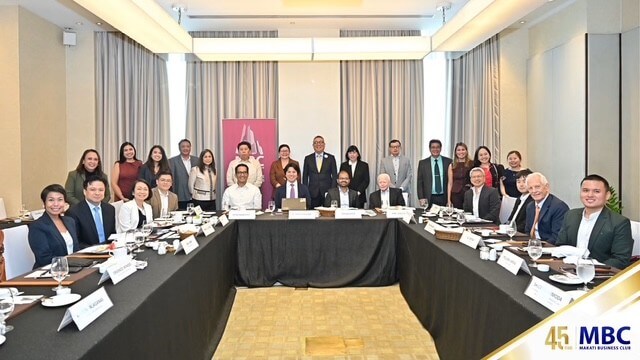
The global business landscape is undergoing a profound recalibration. Philippine businesses can no longer afford to view these changes as distant developments. This was the central message of the Makati Business Club event sponsored by Kearney. The discussion offered perspective on how Philippine businesses can remain competitive, resilient, and relevant amid rapidly changing global dynamics.
Supply Chains and Regional Positioning
One of the most significant shifts is the reconfiguration of global supply chains. Countries are positioning themselves to capture greater value, particularly in technology, energy, hardware, and infrastructure. Southeast Asia is becoming part of this strategic equation. Investors, including those in AI and technology, are expanding into the region and establishing partnerships with local economies.
For the Philippines, attracting and retaining these investments requires more than being a lower‑cost destination. The traditional cost advantage is challenged by economies such as India and Vietnam. Leaders must ask: What unique value can the Philippines offer in the evolving global supply chain?
Technology, AI, and Human Creativity
Technology and artificial intelligence are central to this equation. Yet AI should not be viewed only as a substitute for people. AI can produce the “average,” but meaningful innovation requires human creativity, judgment, and problem‑solving. The challenge is to shift from knowledge toward skills, problem‑solving, and innovation. This is vital for the future of work Philippines.
Workforce Implications
The Philippines must catch up in IT capabilities and develop skills for a rapidly changing digital economy. Businesses, schools, and government must collaborate to ensure Filipino talent is equipped not just with knowledge, but with the ability to apply technology creatively.
Another issue is AI adoption. The question is no longer whether businesses should adopt AI, but how to encourage effective use. This is especially relevant to small and medium‑sized enterprises. Limited access and resources can prevent them from benefiting from the AI revolution. Medium‑sized businesses present a significant opportunity for targeted support and technology adoption.
Strategic Imperatives for Leaders
The message for Philippine business leaders is clear: we cannot remain comfortable with past strategies. The Philippines must diversify, identify new areas of growth, and use technology to leapfrog competitors. At the same time, resilience must be strengthened so businesses can withstand future disruptions.
The global recalibration is both a challenge and an opportunity. The Philippines has the talent, market, and strategic location to participate in the next wave of global growth. Capturing this opportunity requires a deliberate shift:
- From cost competitiveness to value creation
- From knowledge to skills
- From technology adoption to technology‑enabled innovation
- From responding to disruption to anticipating it
These shifts define the future of work Philippines.
Repositioning for the Future
For Philippine business leaders, the imperative is not merely to navigate global recalibration. It is to use it as an opportunity to reposition the Philippines for the future. The future of work Philippines depends on innovation, resilience, and collaboration across sectors.
Shape Your Workforce for the Future
John Clements helps organizations recruit and develop talent ready for the future of work Philippines. Partner with us to build teams equipped with skills, creativity, and resilience.

