
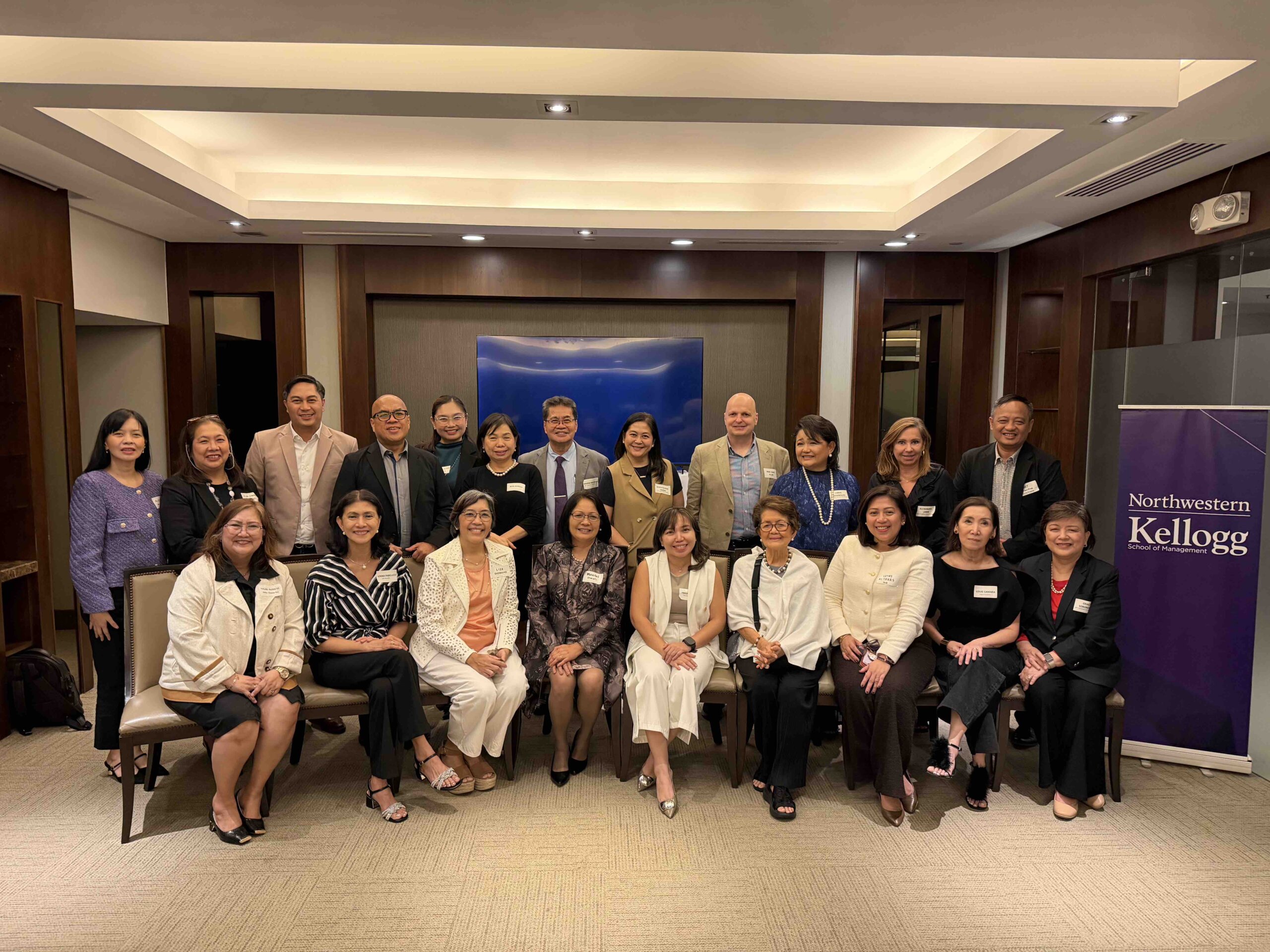
On March 26, the Manila Golf and Country Club served as the backdrop for a high-level learning session hosted by John Clements Leadership Institute. As “Your Partner for Life,” John Clements continues to bridge the gap between global expertise and local market nuances.
The evening featured Dr. Matt Allen, a globally recognized expert in family learning and entrepreneurship. As the John L. Ward Clinical Professor of Family Enterprises and Executive Director of the Ward Center for Family Enterprises at Northwestern Kellogg. Dr. Allen brought a unique blend of academic rigor and personal experience to a pressing regional issue: Strategic CHROs at the Helm: Orchestrating Succession for Family and Multinational Leaders in Asia.
The Lead Architects of Succession
The session underscored a significant shift in corporate governance: CHROs are no longer just supporting staff; they are now the lead architects of CEO and C-suite succession. In Asian markets, where the balance between legacy, meritocracy, and global standards is delicate, the CHRO’s partnership with founders and boards is the primary driver of leadership continuity.
For context, see Harvard Business Review on succession (https://hbr.org/).
A Bespoke Challenge: No Two Families Are Alike
For the Strategic CHRO, there is no “standard operating procedure” for family business succession. Each family business is as unique as the family within it. Unlike multinational corporations with standardized promotion tracks, family enterprises are governed by emotional histories, values, and internal dynamics.
The CHRO must operate less like a traditional administrator and more like a high-stakes diplomat, understanding that the business strategy is inextricably linked to the family’s private architecture.
The Exit Strategy: A Driver for the Future
The most critical insight for the future of any family firm is the leader’s exit strategy. The way a founder or current leader chooses to step away (or stay) dictates the organization’s trajectory.
Whether they act as a Monarch (staying until the end), a General (ready to “invade” back during a crisis), or an ambassador (guiding without interfering), their personal transition becomes the firm’s strategic pivot point.
The succession plan is not just a change in the org chart; it is the ultimate stress test of the company’s “Hero Mission”—the belief that the business can survive and thrive beyond the singular genius of its creator.
The Retention Paradox and the “Failure Factor”
Dr. Allen highlighted that while family businesses often stay for 40 years (compared to 7 years for private company CEOs), they face a readiness gap. In the rush from “0 to Billions,” many founders protect the next generation from the very hardships that build leadership.
However, failure is what drives the ability to solve problems. Without the room to fail, the next generation cannot develop the resilience required to lead.
The Skill of the Future: Curiosity
In an environment where performance is rarely normally distributed, Curiosity is the ultimate variable for success. The willingness to learn is more vital than tenure or age.
For the modern CHRO, identifying and nurturing this curiosity—within both the family and the professional management team—is essential to building a future-ready succession pipeline.
More Than a Strategy
At John Clements Leadership Institute, we believe succession planning is more than strategy—it is legacy. Our leadership programs are top notch, designed to empower CHROs, family leaders, and multinational executives across Asia.
Visit the John Clements Leadership Institute page to explore programs that prepare leaders for the future.

