
Next Gen Ready: Succession, Governance and AI in the Asian Family Business (Part 1)
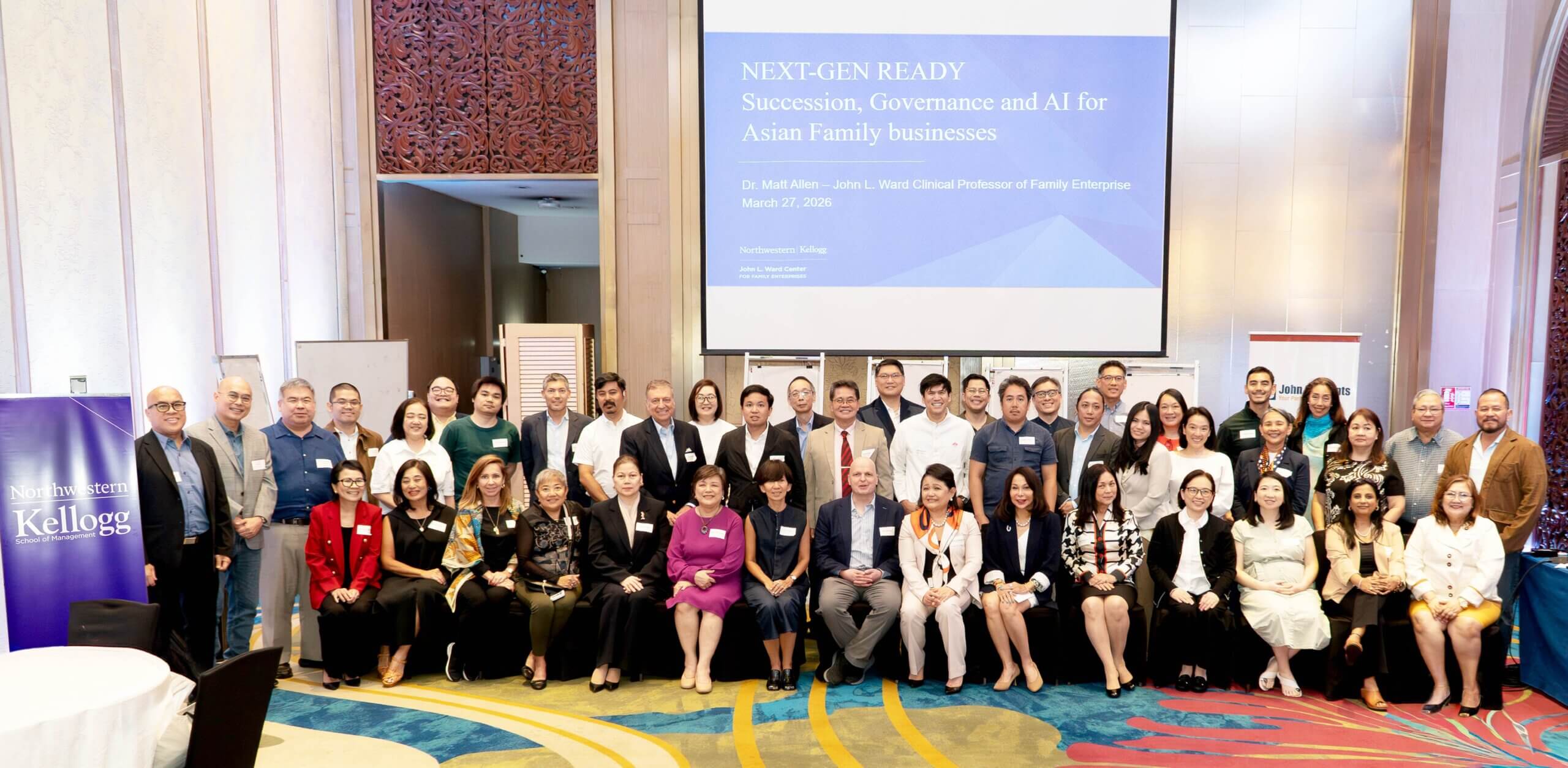
At the recent John Clements x Kellogg event titled “Next Gen Ready: Succession, Governance and AI for the Asian Family Business,” Kellogg Professor, Dr. Matt Allen shared valuable insights on how family enterprises must evolve to remain relevant across generations.
The discussion highlighted three central themes shaping the future of family businesses: alignment, governance mindset, and entrepreneurship.
Alignment Across Family, Ownership, and Management
One of the most pressing challenges facing family businesses today is alignment—particularly among the three overlapping spheres of family, ownership, and management.
Traditional models present these as separate circles, but reality is more fluid. In first-generation businesses, the founder often embodies all three roles simultaneously. As enterprises transition to the second generation and beyond, complexity increases as siblings, cousins, and extended family members become involved as employees, shareholders, or both.
Governance as a Journey
This evolving structure requires deliberate governance. Professor Allen emphasized that governance is not static but a journey that must evolve alongside the family and the business.
Early-stage businesses may rely primarily on the founder’s leadership. As the family grows, more formal mechanisms become necessary. These may include advisory boards, family protocols, family councils, corporate boards, and shareholder agreements.
The key is ensuring governance structures align with the family’s stage of development and strategic priorities.
Defensive vs. Strategic Governance
Professor Allen distinguished between defensive governance and strategic governance.
- Defensive governance often creates policies to prevent problems, driven by negativity bias—the human tendency to avoid losses.
- Strategic governance cultivates next-generation interest through internships, curated development programs, project-based roles, and entrepreneurial experimentation.
Family employment policies illustrate this tension. While requiring advanced degrees or external work experience ensures professionalism, they can discourage engagement. Research suggests nearly 80 percent of family businesses struggle to bring the next generation back into the company.
Sunrise Businesses and Next-Gen Mindset
Younger family members often seek balance, purpose, and entrepreneurial opportunities. They are more willing to explore new industries, particularly technology-driven ventures.
This is where sunrise businesses become relevant. New ventures allow younger family members to pursue innovation while staying connected to the family enterprise. Philanthropy also strengthens shared values and unites generations around common purpose.
Succession as a Continuous Process (Part 2)
Succession remains one of the most critical—and misunderstood—issues in family businesses. Professor Allen challenged assumptions:
- Succession is not an event but an ongoing process of leadership development and generational transition.
- Succession is not univariate; it involves leadership development, ownership transition, and family alignment.
- Succession is not unidimensional; it includes governance roles and stewardship of values, not just CEO replacement.
Effective succession planning requires families to address four questions:
- What roles will the next generation play?
- Why should they participate?
- How will they be prepared?
- When will leadership transition occur?
Global Trends and Generational Shifts
The Great Wealth Transfer—a massive shift of assets from older to younger generations—raises concerns about preparedness.
Surveys show:
- 75% of parents believe they have a succession plan, but only half of children are aware of it.
- 70–80% of heirs plan to change wealth managers after inheriting assets.
Generational values are evolving. Younger members emphasize quality of life, wellness, and purpose, seeking fulfillment that combines financial success with meaningful impact.
Preparing Next-Gen Leaders
Drawing from Self-Determination Theory, Professor Allen emphasized fostering:
- Autonomy: Empowering decisions
- Competence: Building leadership skills
- Relatedness: Strengthening family and organizational connection
Space for failure is equally important. Experiencing setbacks builds resilience, independence, and capability.
Succession Planning is a Legacy
Successful family succession is not about replacing one leader with another. It is about developing capable stewards of the family enterprise over time. Families that treat succession as a continuous journey—developing motivation, skills, and shared purpose—are far more likely to sustain both their businesses and legacies across generations.
At John Clements Leadership Institute, we believe succession planning is legacy work. Our leadership programs are top notch, designed to empower family leaders, CHROs, and next-gen executives across Asia.
Visit the John Clements Leadership Institute page to explore programs that prepare leaders for the future.

