
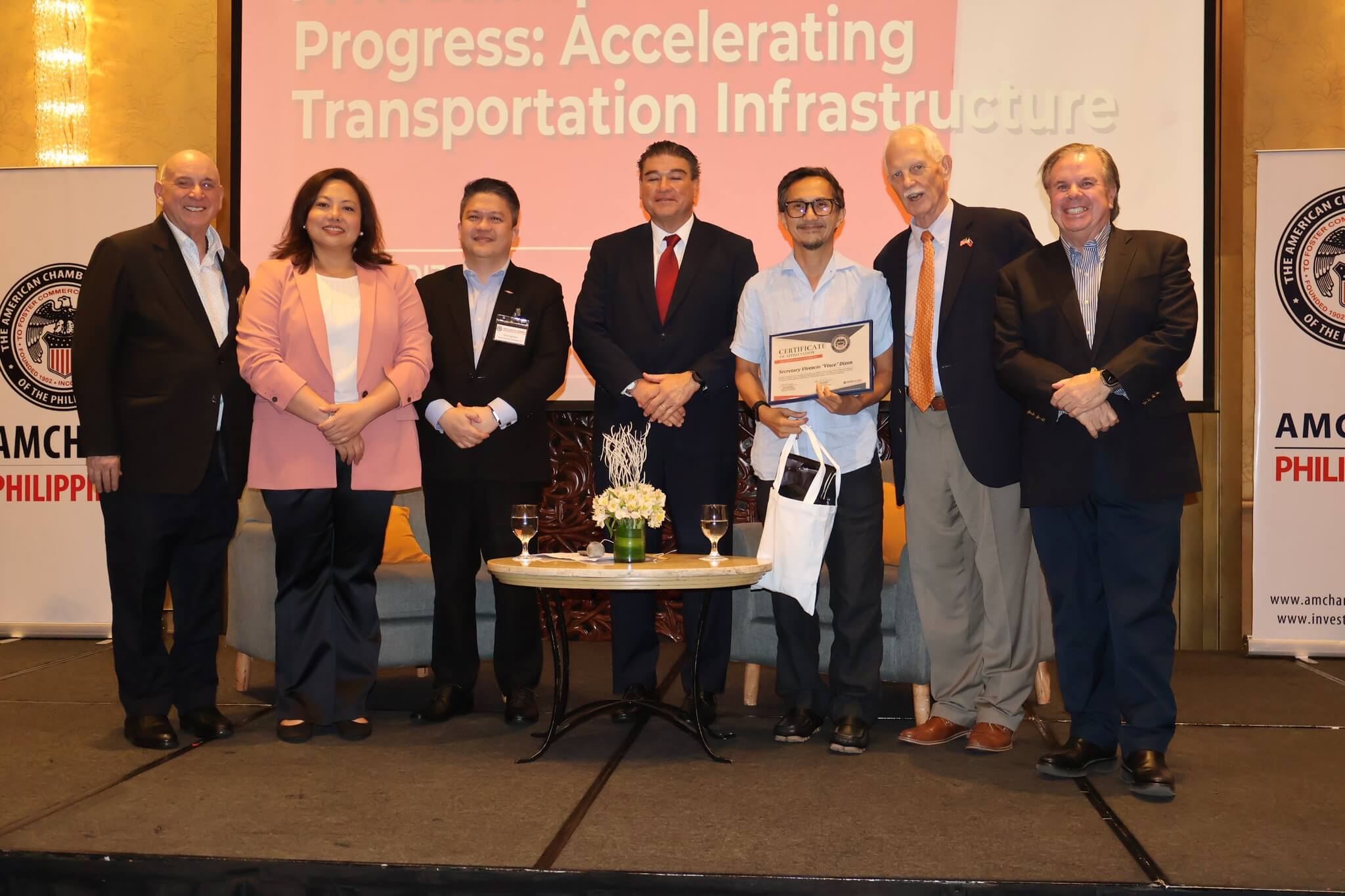
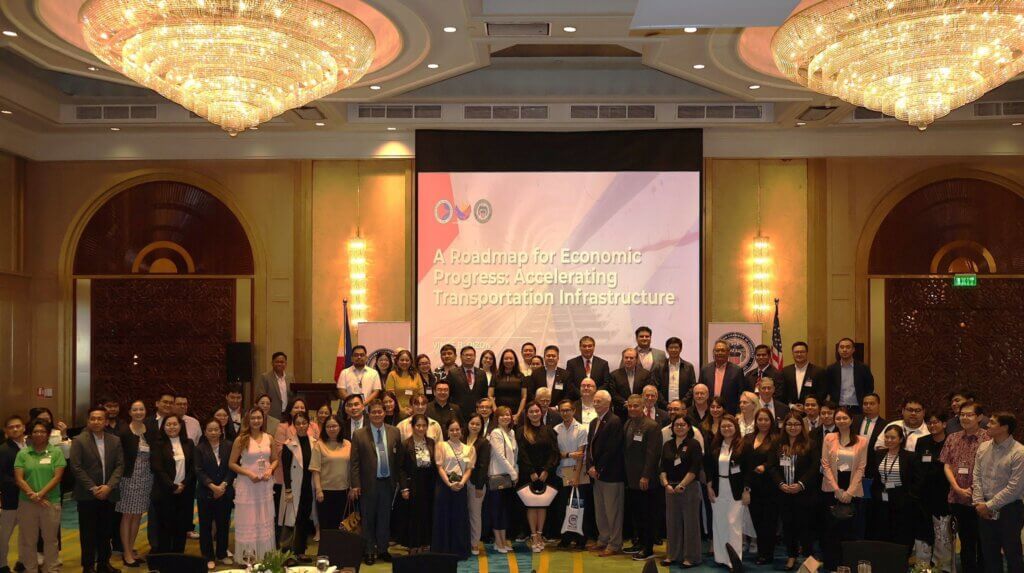
The American Chamber of Commerce of the Philippines (AmCham) recently held its General Membership Meeting (GMM), featuring Department of Transportation (DOTr) Secretary Vince Dizon as the keynote speaker. The event, titled “A Roadmap for Economic Progress: Accelerating Transportation Infrastructure,” spotlighted the government’s ambitious plans to modernize the country’s transport systems and alleviate the daily struggles of commuters.
Putting Commuters First
Secretary Dizon underscored President Ferdinand Marcos Jr.’s directive to prioritize commuters. “The President cares deeply about commuters. Our responsibility is to make commuting easier, fix problems quickly, and ensure long-term solutions,” he stated.
To that end, the DOTr has launched immediate initiatives. These include removing vendors who obstruct passenger movement in busy transport hubs and implementing e-payment systems at MRT-3 to shorten lines and enhance efficiency. Although modest, these measures reflect a practical, commuter-centered approach.

Fast-Tracking Rail Projects
Historically, the Philippines has lagged behind its regional peers in transportation infrastructure. Secretary Dizon pointed out that in many countries, even top executives use public transport. In contrast, Filipino commuters continue to endure unreliable and overcrowded systems due to years of underinvestment.
To reverse this trend, the DOTr is accelerating several flagship projects:
- Metro Manila Subway – The first phase aims for completion by 2030. Despite initial right-of-way delays, this will become the country’s first underground mass transit system.
- North-South Commuter Railway (NSCR) – By 2028, travel time from Clark to Buendia will drop to 55 minutes. The Valenzuela–Malolos segment is expected to be fully operational by 2037, reducing travel time from two hours to just 25 minutes.
- MRT-7 – Extending from Trinoma to San Jose del Monte, Bulacan, this line is slated for completion by 2027, offering much-needed relief for northern Metro Manila commuters.
Collectively, these projects reflect a long-term vision to build a reliable, world-class railway network across Luzon.
Building World-Class Airports
In addition to rail, the government is modernizing airports to support tourism and business growth. Secretary Dizon shared updates on several key developments:
- Caticlan Airport – After a decade of delays, the new 24,000 sqm terminal—backed by San Miguel Corporation and Megawide—is scheduled for completion by 2027.
- Davao Airport – As one of the country’s largest hubs, it is undergoing expansion to meet rising demand.
- Siargao Airport – Despite being the top foreign tourist destination in the Philippines, it remains underdeveloped. Planned upgrades will align its facilities with growing popularity.
Furthermore, ten additional airport projects are in the pipeline under the Public-Private Partnership (PPP) framework, ensuring modern facilities and improved passenger experiences nationwide.
Driving Economic Competitiveness
Secretary Dizon emphasized that transportation infrastructure is not merely about convenience—it is a cornerstone of economic competitiveness. Efficient railways and airports reduce travel times, streamline logistics, attract investors, and boost tourism.
He also stressed the urgency of execution: “The second half of President Marcos Jr.’s term must be better and faster. Enough politics—what people need are results.”

Looking Ahead
The government’s roadmap reveals a clear commitment: prioritize commuters, fast-track major projects, and maximize PPP opportunities. With sustained momentum in the coming years, the Philippines has a real chance to close the infrastructure gap with its regional neighbors and finally deliver modern, efficient, and reliable transportation systems.
Be Part of the Philippines’ Infrastructure Transformation
As the government accelerates the Philippines’ transportation infrastructure projects, opportunities for growth and innovation are opening up across industries. At John Clements Consultants, we help organizations and professionals stay ahead—whether by finding the right talent to support large-scale initiatives or guiding careers toward sectors shaping the nation’s future.
Ready to take the next step? Contact us today and let’s move forward together.

