
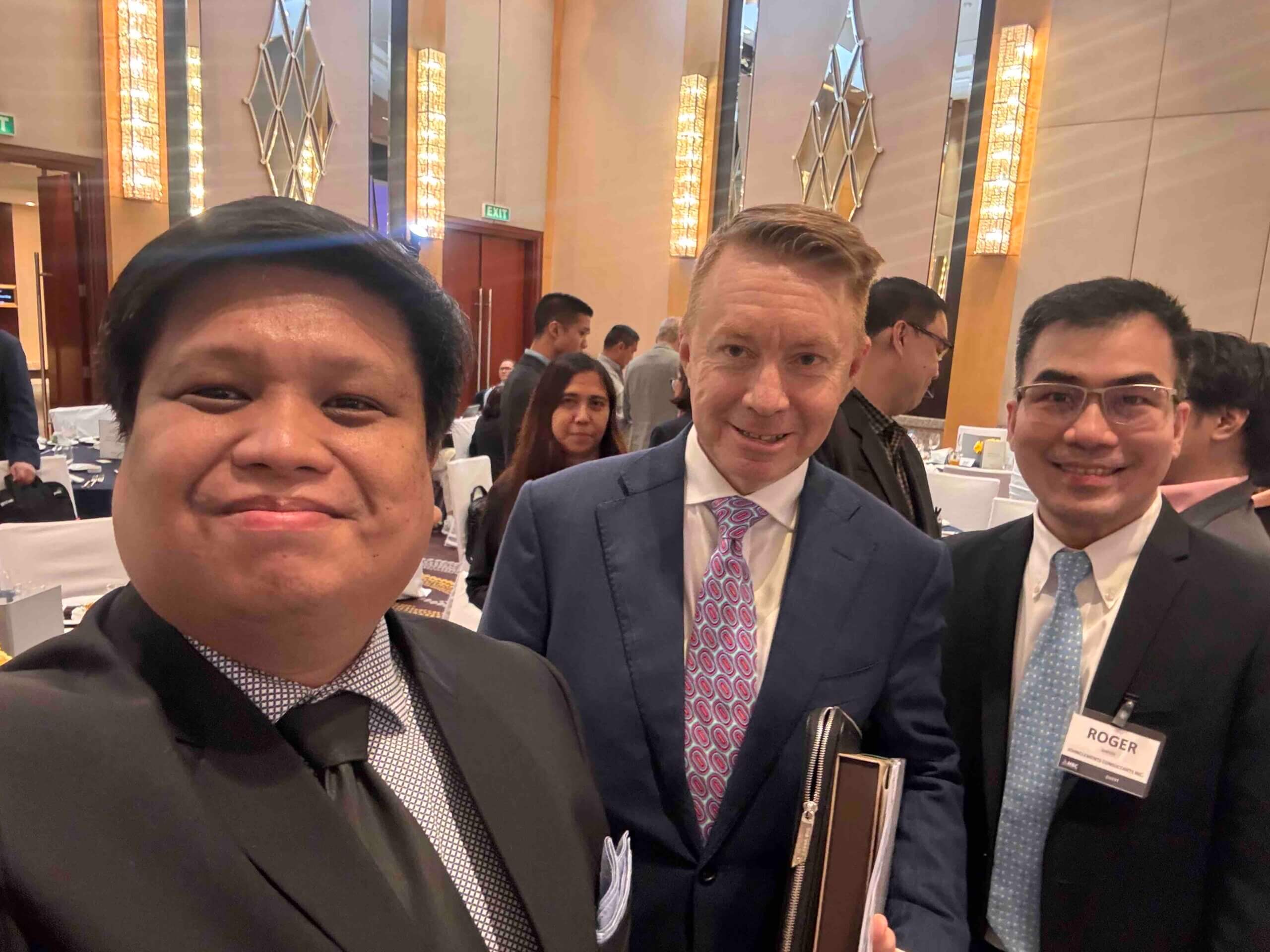
The recent MBC Foreign Leaders Session at Fairmont Makati offered more than policy discussions and diplomatic updates. It gave business leaders a clearer view of how the Australia-Philippines strategic partnership continues to create opportunities in trade, education, infrastructure, clean energy, and workforce development.
Hosted by the Makati Business Club, the event featured Australian Ambassador Marc Innes-Brown and gathered professionals from several industries. The session also coincided with the 80th anniversary of formal diplomatic relations between Australia and the Philippines, which added a deeper sense of significance to the discussion.
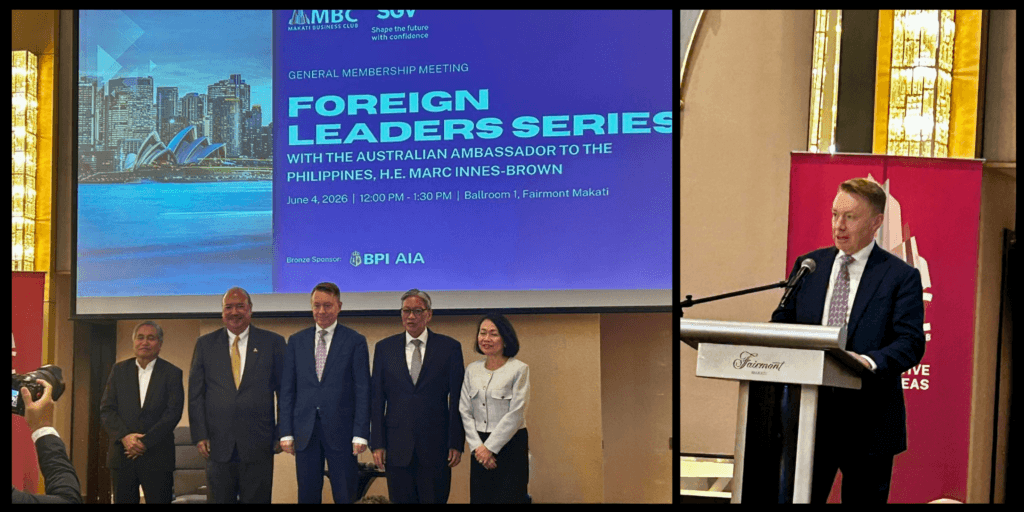
A Partnership Driven by Practical Growth
From the start, the discussion focused on practical outcomes rather than broad diplomatic messaging. Ambassador Innes-Brown highlighted that more than 250 Australian companies already operate in the Philippines and employ over 44,000 people across several industries. These include:
- Banking
- Renewable energy
- Infrastructure
- Professional services
- Education
- Business process outsourcing (BPO)
Specifically, the ambassador described the Philippines as a priority partner under Australia’s Invested 2040 strategy. The initiative supports stronger regional economic integration and encourages investment in clean energy, digital technology, agriculture, education, and infrastructure.
For attendees, this made the Australia-Philippines strategic partnership feel immediate and relevant. The conversation moved beyond diplomacy and focused on actual jobs, investment flows, and skills development.
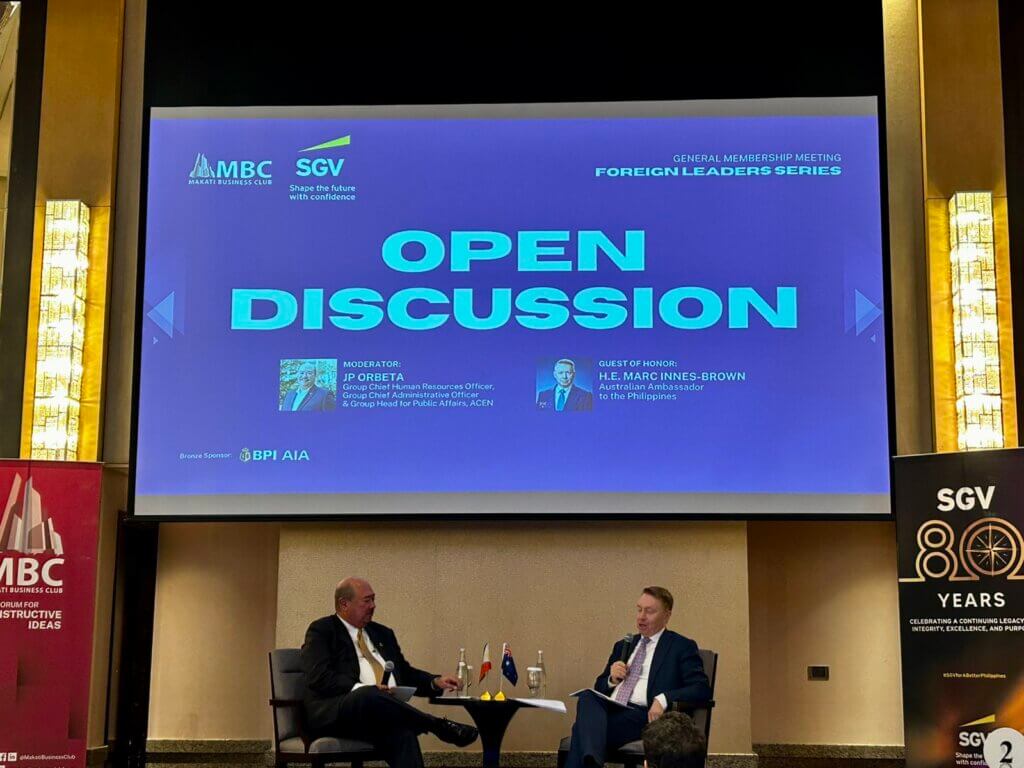
Why the Business Community Is Paying Attention
The event clearly showed how regional stability and economic growth now move together. Consequently, many companies now monitor geopolitical developments as closely as market trends.
During the session, Ambassador Innes-Brown discussed the elevation of bilateral ties to a Strategic Partnership in 2023. He also pointed to stronger defense cooperation, maritime coordination, and development initiatives between both countries.
That connection between business and policy matters. Companies often expand more confidently when governments cooperate on long-term economic and security goals.
For reference, readers can learn more through official resources:
Key Sectors Showing Growth Potential
One of the strongest parts of the session involved sector-specific examples. Rather than speaking in general terms, the ambassador identified industries already seeing momentum.
Emerging Areas for Investment
Attendees heard opportunities connected to:
- Renewable energy
- Gas exploration
- Logistics and infrastructure
- Lithium battery manufacturing
- Agriculture and agri-tech
- Cybersecurity
- Workforce training and education
Furthermore, the discussion highlighted Australia’s participation in the Luzon Economic Corridor and efforts to reduce regulatory barriers through the Progress program.
These examples helped explain how the Australia-Philippines strategic partnership translates into tangible business activity. Investors, educators, and employers can already see projects moving forward across several sectors.
Audience Questions Added Real Value
The Q&A session brought energy and realism to the event. Audience members asked detailed questions about mining, Indigenous community engagement, BPO growth, education reform, and cybersecurity.
Importantly, the ambassador balanced optimism with practical concerns. He emphasized that transparent policies, stable regulations, and consistent governance remain essential for long-term investment confidence.
That honest approach made the event more engaging. It felt less like a ceremonial gathering and more like a working conversation between diplomats, investors, and business leaders.
A Broader Perspective on Regional Collaboration
For many attendees, the session expanded how they viewed international partnerships. The discussion showed that diplomacy directly affects:
- Labor mobility
- Professional training
- Supply chains
- Technology transfer
- Education systems
- Cross-border investments
The Australia-Philippines strategic partnership therefore extends beyond government policy. It shapes the business environment that companies and professionals navigate every day.
In contrast to older models of diplomacy, today’s partnerships focus heavily on workforce readiness, economic resilience, and regional cooperation. That shift creates opportunities for organizations willing to adapt early.
The MBC Foreign Leaders Session succeeded because it connected large regional issues with practical business realities. Ambassador Marc Innes-Brown presented a clear message: the Australia-Philippines strategic partnership continues to deepen across economic, strategic, and social areas.
For companies, educators, and professionals, the session offered valuable insight into where future opportunities may emerge. More importantly, it showed how collaboration between nations can support sustainable growth across industries.
Looking to strengthen your workforce, recruitment strategy, or regional business capabilities?
Connect with the team at John Clements Consultants Inc.: https://www.johnclements.com/contact-us

