
When I boarded my flight from Warsaw back to Manila, I carried more than just souvenirs and photographs. I brought home a full heart and a deeper appreciation for how nations—and leaders—quietly transform themselves over time.
Our recent Harvard Business School AMP reunion in Poland was designed as a few days of learning and reconnection. It became much more: an immersion into a country that has rebuilt itself from devastation to become one of Europe’s most compelling economic success stories, and a living case study in how long‑term vision, discipline, and resilience shape both countries and organizations.
A City Rebuilt, A Story Retold
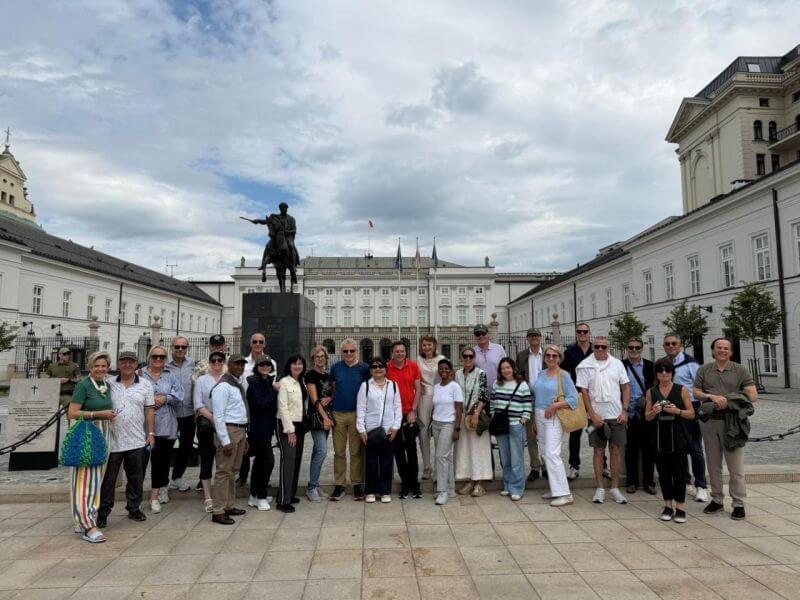
Warsaw is a city that wears its history openly. Our group began with business sessions on “Polish path of growth – investment opportunities,” then stepped outside to see the context behind the numbers. We walked through the Old Town, painstakingly rebuilt after World War II, where the Royal Castle once again anchors a vibrant square alive with restaurants and local life.
It is here that the Constitution of May 3rd was proclaimed in 1791—the second oldest written constitution in the world after that of the United States. That detail, shared by our guide, struck many of us: a reminder that Poland’s democratic aspirations reach far back, even if its path has been anything but linear.
Over lunch at Kuchnia Warszawska, we sampled pierogi and listened to stories about Warsaw’s wartime destruction and post‑war rebirth. Later, we paused at the Tomb of the Unknown Soldier, gazed up at the Grand Opera and National Theatre, and stood before the Ghetto Memorial. Each stop layered new meaning onto our discussions about growth, risk, and investment earlier in the day. You cannot fully understand a balance sheet without understanding the history behind it.
Spaces of Possibility
The following day took us into Warsaw’s present and future. We visited the HTC and the modern Europejski Square, a space intentionally designed for gathering and animation. Its small architecture and public art were created to invite people to linger, to converse, to experience the city differently. The square has won design awards—and sparked debate about how private development shapes public life. As leaders, we recognized this tension: progress is never neutral, and every choice about space, capital, and design has social consequences.
From there we moved to the Norblin Factory, a beautifully repurposed industrial complex that blends heritage with contemporary use. Old structures now house restaurants, shops, and cultural spaces—an elegant metaphor for how legacy organizations can evolve without erasing their past.
Our afternoon in Łazienki Royal Park brought yet another dimension. Created by the last King of Poland as a place of rest, art, and nature, the park invited us to slow down. We walked under generous trees, lingered at cafés, and gathered at the famous Chopin monument set amid a rose garden. Surrounded by music, greenery, and sculpture, it was easy to see why leaders need spaces like this—places that allow reflection and perspective away from the constant tempo of work.
A Journey to the Baltic
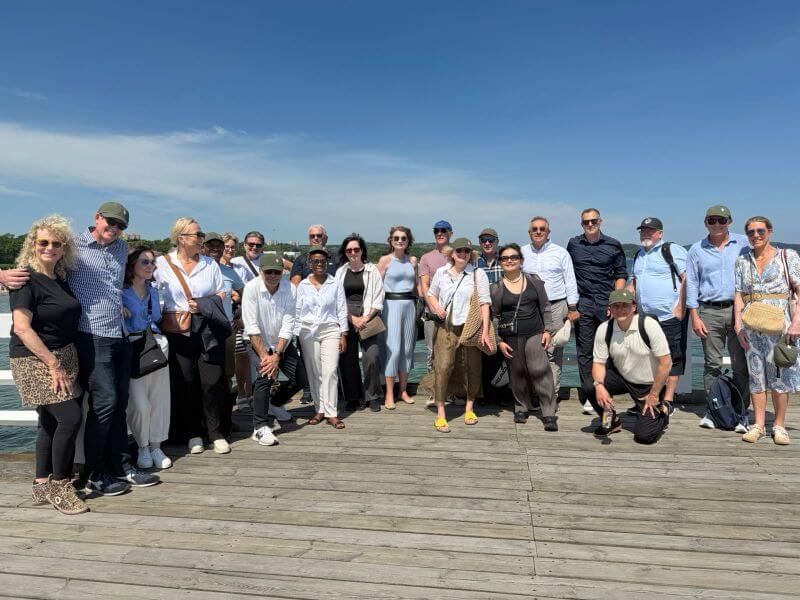
The highlight of our program—and perhaps its emotional center—was the day trip north to Sopot and Gdańsk. An early train whisked us from Warsaw to Sopot, where we walked along the beach and out onto the longest wooden pier in Europe. On that bright morning, with the Baltic breeze on our faces and classmates from around the globe at our side, the word that kept coming to mind was “freedom.”
That word took on deeper meaning an hour later in Gdańsk.
Here, at the European Solidarity Centre, we stepped into a narrative that reshaped not only Poland, but the entire map of Central and Eastern Europe. The permanent exhibition, spread across multiple rooms, immerses visitors in the story of Solidarność: shipyard workers, intellectuals, clergy, and ordinary citizens who challenged an authoritarian system through non‑violent resistance and organized solidarity.
Interactive installations, archival footage, and personal testimonies brought to life what many of us had only known from history books. We saw how the courage of a few can inspire the many, and how persistent, principled insistence on dignity and rights can wear down seemingly immovable structures.
And then we met the man at the heart of that movement.
In Conversation with Lech Wałęsa
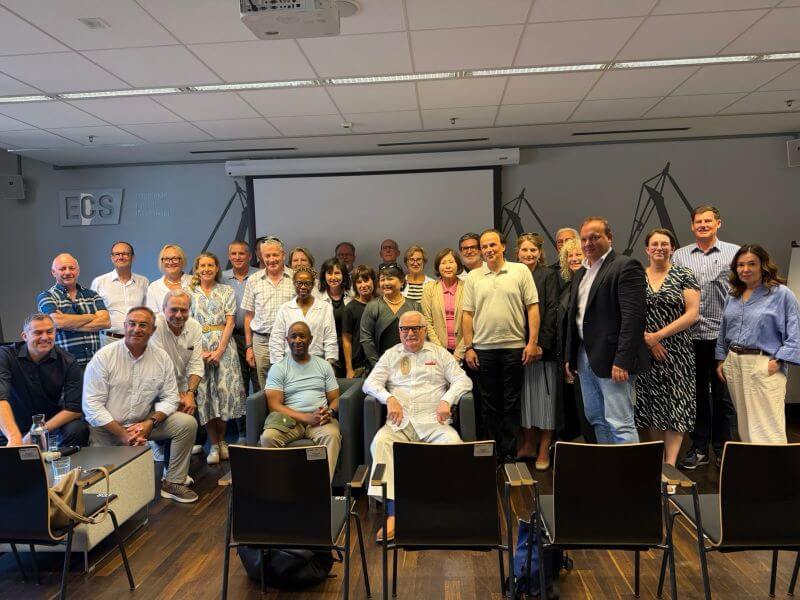
Our group had the privilege of a private meeting with former President Lech Wałęsa—electrician, union leader, Nobel laureate, and one of the key figures in Poland’s democratic transition. Time has given him the ease of storytelling, but there is still a spark in his eyes that speaks of stubborn conviction and a willingness to stand apart.
Listening to him, I was reminded that leadership is often uncomfortable long before it is celebrated. The decisions that look inevitable in hindsight were once contested, lonely, and fraught with risk. For Wałęsa and his contemporaries, there was no guarantee that their efforts would succeed, only the belief that inaction was not an option.
For us, as executives and board members, the parallel was clear: whether in politics or business, the work of change demands clarity of purpose, courage under pressure, and an ability to rally others around a shared vision—even when the endpoint is uncertain.
Lessons in Quiet Transformation
What makes Poland’s story so compelling is that its “miracle” is not the result of a single decisive moment, but of decades of sustained effort. Investment in education. Building competitive industries. Opening to partnerships and foreign capital. Strengthening institutions. Gradually creating opportunities for its people at home and abroad.
As we moved between business sessions, walking tours, and shared meals, I found myself returning to a simple realization: this is what enduring leadership looks like. It is less about dramatic announcements and more about compound progress—small, disciplined decisions, repeated over time, that steadily shift the trajectory.
Organizations face a similar test. The challenge is not only to achieve growth, but to sustain it: to keep investing in people, to remain open to collaboration, and to adapt to an increasingly complex environment without losing sight of core values.
The Power of Community
Of course, this trip was also about reunion. Our AMP cohort is a tapestry of industries, cultures, and life stages, yet our conversations slip effortlessly between macroeconomics, personal transitions, corporate governance, and family. Dinners ran long not because of the menus, but because no one wanted to leave the table.
There is something uniquely energizing about being with peers who have seen one another through career pivots, board challenges, and personal milestones. In Sopot, Gdańsk, and Warsaw, we picked up threads from old discussions and wove in new ones—about AI, geopolitics, sustainability, and the future of work. The intellectual stimulation was real, but so was the laughter.
Looking Forward
As I settle back into life in Manila, I find myself thinking of Poland less as a destination and more as a mirror—a looking glass through which to reconsider my own leadership and the organizations I serve.
Poland’s journey suggests that the most enduring transformations are the ones built quietly, step by step, sustained by resilience and a clear sense of purpose. Our days there offered a powerful reminder that while headlines capture moments, history is written in decades.
And so, I return home with gratitude: for a country that welcomed us, for classmates who continue to inspire me, and for the privilege of learning, once again, that leadership is both a personal and collective journey—one that is never truly finished.
Click here to see more photos.

