
DOH Highlights Progress in Universal Health Care Implementation
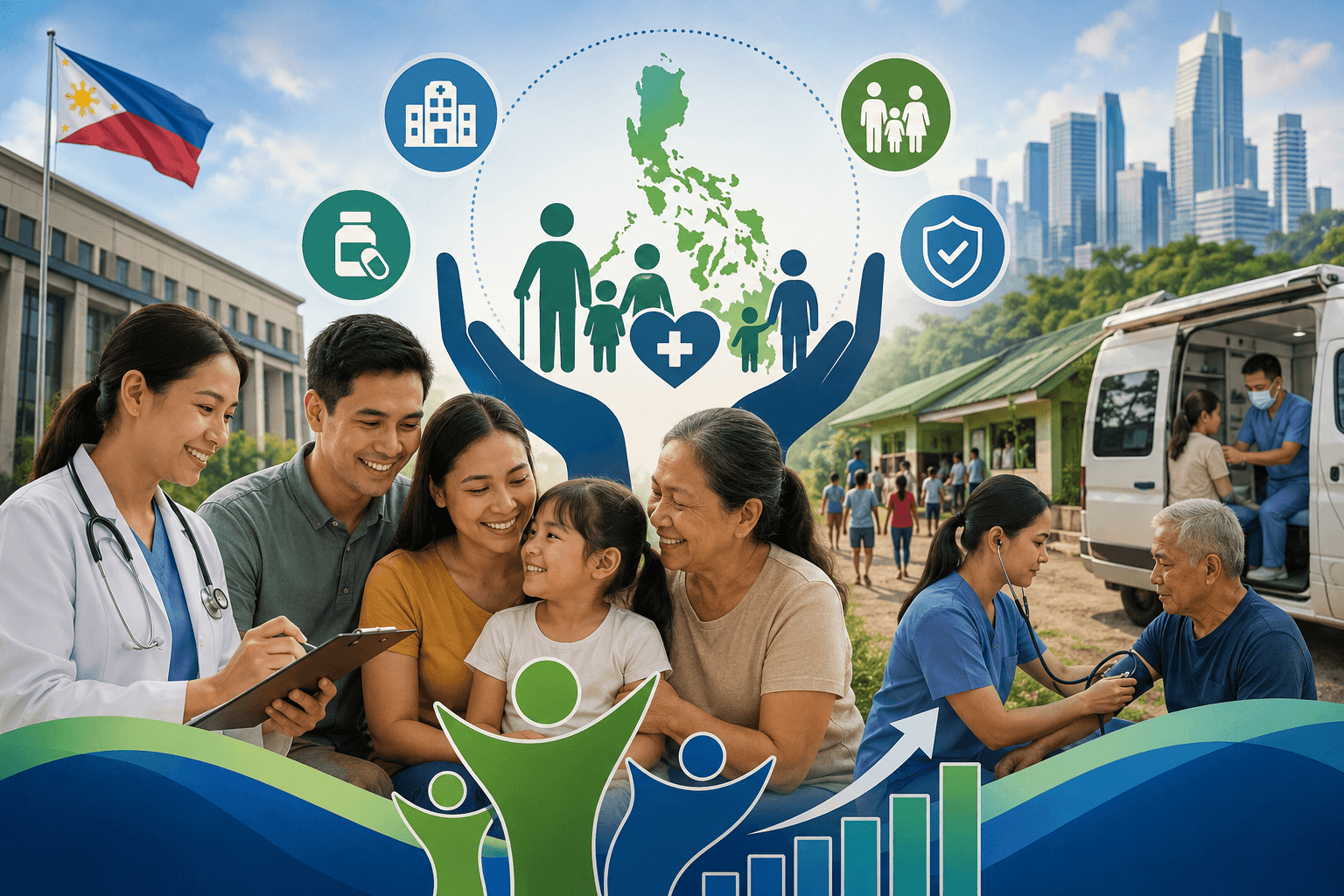
The Department of Health (DOH), through Undersecretary Domingo, presented the country’s progress in implementing the Universal Health Care (UHC) Act. The discussion focused on key reforms, ongoing challenges, and strategic priorities that support universal health care Philippines initiatives and aim to provide equitable, accessible, and affordable health services for all Filipinos.

Addressing Long-Standing Health System Challenges
For decades, the Philippine health system has faced challenges due to its fragmented structure. Decentralization distributed health financing and service delivery responsibilities among national and local governments, PhilHealth, private insurers, and households. Consequently, many communities experienced uneven access to healthcare services, while families carried significant out-of-pocket medical expenses.
Several health indicators continue to require attention. Maternal mortality reached 154 deaths per 100,000 live births in 2021, tuberculosis incidence increased to 650 cases per 100,000 population, and HIV cases rose to an estimated 158,000 in 2022. In addition, health infrastructure remains uneven, with only 23% of provinces meeting recommended hospital bed-to-population ratios.
For more information on Philippine health policies, visit:
Universal Health Care as a Transformative Reform
The Universal Health Care Act of 2019 seeks to ensure that every Filipino receives quality healthcare without suffering financial hardship. At its core, universal health care Philippines reforms focus on three primary goals:
- Better health outcomes
- Responsive and efficient health systems
- Stronger financial risk protection
Furthermore, the DOH’s 8-Point Action Agenda supports these goals by promoting accessible healthcare, digital innovation, disease prevention, emergency preparedness, and health workforce development.
Building a More Responsive Healthcare System
The reform agenda recognizes that healthcare is more than treatment. It also includes prevention, early intervention, and community-based care. As a result, the government continues to strengthen systems that connect patients to primary care providers and essential health services.
Strengthening Health Financing for Sustainable Growth
A major pillar of universal health care Philippines implementation is the Health Care Financing Strategy (HCFS) 2023–2028. The strategy aims to:
- Increase public health investments through sin taxes and public-private partnerships
- Strengthen primary care financing
- Improve access to medicines and essential services
- Promote transparency, accountability, and good governance
By 2028, the DOH plans to achieve several priority outcomes, including:
- Higher immunization coverage
- Reduced stunting and maternal mortality
- Improved tuberculosis and HIV control
- Expanded cancer screening
- Better chronic disease management
- Stronger mental health services
Key Programs Expanding Access to Care
Several flagship programs now bring healthcare closer to communities.
BUCAS Centers and Mobile Clinics
BUCAS Centers provide urgent care services and are expanding to serve the country’s most vulnerable populations. Currently, 62 centers are operational. Meanwhile, mobile clinics and wellness clinics in malls improve access to primary healthcare services.
PhilHealth Konsulta and Community Health Programs
PhilHealth’s Konsulta and YAKAP programs have expanded primary care coverage. These initiatives include consultations, diagnostics, cancer screening, and outpatient medicines through the GAMOT package.
Community-based programs also play a critical role. These include:
- PuroKalusugan
- Proteksyon para sa Altapresyon
- TED (nutrition and exercise promotion)
- Smoke-free and vape-free campaigns
- Substance abuse prevention programs
In addition, the Zero Balance Billing program has provided financial protection to 2.76 million Filipinos and covered about ₱67 billion in healthcare costs.
Measuring Progress Since 2019
The results of universal health care Philippines reforms show measurable progress.
Key achievements include:
- 69.8 million Filipinos linked to primary care providers
- More than 4,000 accredited providers nationwide
- Over 2,000 GAMOT providers supporting medicine access
- 88% of local government units with accredited Konsulta providers
- 100% population coverage under UHC
- Public awareness reaching 74.5% in 2024
Moreover, out-of-pocket healthcare spending fell from 47.9% in 2019 to 41.2% in 2026. Government financing increased to 46.5% of total health expenditures. Specifically, 76 provinces and cities have established organized province-wide health systems.
Healthcare as an Economic Imperative
Healthcare is not only a social investment. It is also an economic strategy.
During the presentation, Usec. Domingo called for stronger collaboration among government agencies, businesses, healthcare providers, and communities. He highlighted the value of public-private partnerships, workplace health programs, and health literacy initiatives.
More importantly, universal health care Philippines efforts contribute directly to workforce productivity and long-term economic growth. When people have access to quality healthcare, they can work, learn, and participate more effectively in society. In contrast, poor health outcomes create economic losses and increase financial hardship for families.
The continued success of universal health care Philippines depends on sustained investment, effective governance, and active participation from both the public and private sectors.
Healthcare as a Driver of Economic Growth
The Philippines has made significant progress in health financing, primary care access, and financial protection under the Universal Health Care Act. While challenges remain, the government’s reforms are creating a stronger and more inclusive healthcare system that supports both public well-being and economic competitiveness.
For organizations seeking insights on workforce health, human capital, and business sustainability, contact the John Clements team today:

