
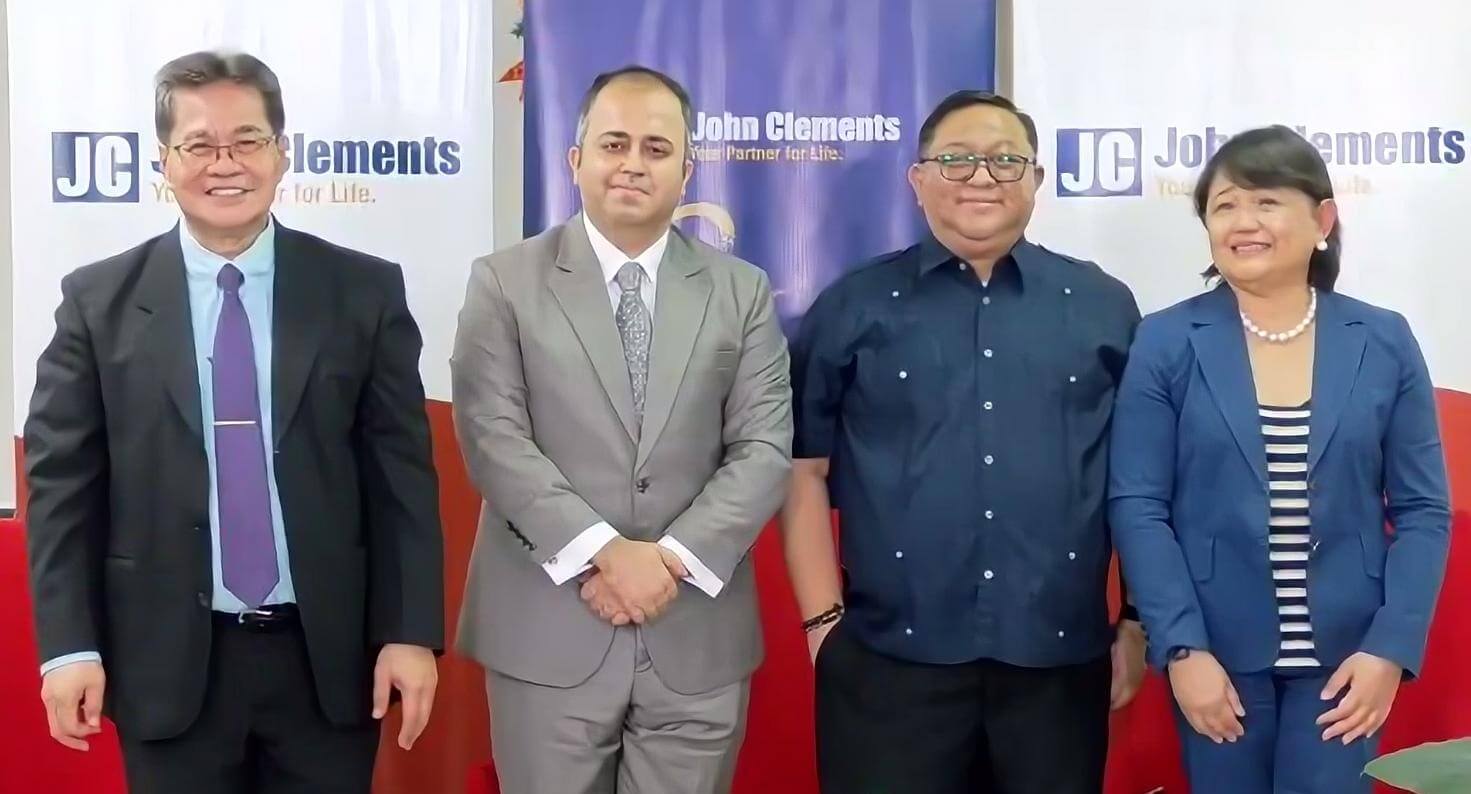
John Clements Consultants opened the year with the first session of Weekly with JC: Economic Briefing, launching a series of conversations aimed at helping clients navigate an evolving economic and business landscape in the Philippines.
To begin, this inaugural session explored the challenges and opportunities facing the Philippine economy as we head into 2026. It featured insights from Jaffar Al-Rikabi, Senior Country Economist at the World Bank, and Jonathan Ravelas, financial market observer and macroeconomic analyst. Together, the economic briefing blended global data with on-the-ground market perspectives, thereby offering participants a balanced view of where the economy stands—and what business leaders should watch moving forward.
The Philippine Economy: A Measured Outlook
Jaffar Al‑Rikabi opened the discussion with highlights from the World Bank’s December 2025 Philippine Economic Update. According to him, economic growth moderated in 2025, primarily due to weaker fixed investment and a slowdown in services exports. Furthermore, looking ahead, growth is expected to remain slower in 2026–2027 compared to 2024, reflecting both domestic constraints and external risks.
Nevertheless, Jaffar emphasized several stabilizing factors that continue to support the Philippine economy:
- Low inflation, averaging around 1.7%, easing pressure on households
- A resilient labor market, sustaining domestic demand
- Steady OFW remittances, providing a reliable consumption base
- Manageable public debt, largely peso‑denominated and domestically held
In addition, he pointed to recent policy developments—including the BSP‘s rate cut and the approval of the 2026 national budget—as signals that could help cushion near-term risks. However, he stressed that long-term resilience would depend on accelerating governance, fiscal, and structural reforms to improve productivity and investment confidence.
Market Perspectives: Domestic Demand as a Growth Anchor
Reacting to the World Bank’s assessment, Jonathan Ravelas shared a cautiously optimistic market view. While he acknowledged global uncertainty and policy-related risks, he highlighted the Philippines’ strong domestic consumption as a key buffer against external volatility. Consequently, this internal demand could support growth of around 5.3%, even amid softer global conditions.
Jonathan also noted that a weaker peso could offer advantages for exports and selected service industries, provided structural bottlenecks are addressed. Moreover, both speakers underscored the importance of reducing the cost of doing business, improving ease of investment, and ensuring policy consistency to attract and retain foreign capital.
AI, Skills, and the Future of Growth
The economic briefing also dedicated significant attention to the implications of AI and automation for the Philippine economy—particularly for services, outsourcing, and knowledge‑based sectors. As a result, the panel emphasized that as the country transitions toward upper‑middle‑income status, the risk of stagnation looms without productivity‑driven growth.
Key themes included:
- The urgent need for reskilling and upskilling to keep the workforce competitive
- The evolving role of AI in reshaping services and shared operations
- The growth potential of tourism and manufacturing as complementary drivers
- The importance of reforms in infrastructure, connectivity, and energy costs
Ultimately, the consensus was clear: technology will continue to reshape industries, and economies that invest early in talent and adaptability will be best positioned to succeed.
Looking Ahead
As the year unfolds, Weekly with JC: Economic Briefing aims to remain a trusted platform for meaningful dialogue—helping leaders cut through uncertainty, understand emerging risks, and identify opportunities for sustainable growth in 2026 and beyond. With this in mind, we look forward to our next session on Thursday, 22 January 2026, as the conversation continues on the critical issues shaping the year ahead.
To stay informed, follow John Clements on LinkedIn, Facebook, and Instagram for announcements on upcoming economic briefings and expert discussions shaping the Philippine business landscape.

