
‘At Christmastime
We let in light, and we banish shade…”
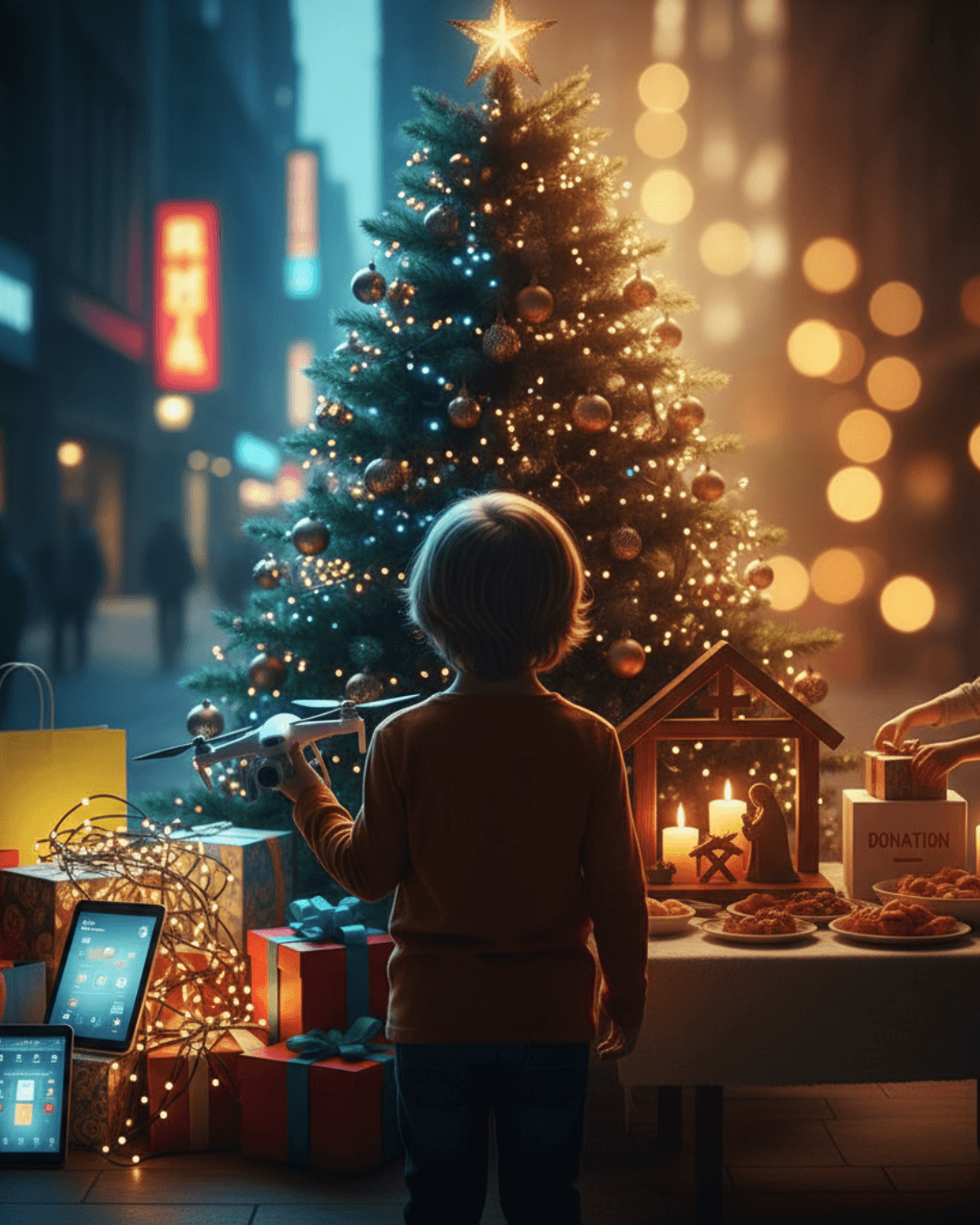
The line plays everywhere this time of year, and in many ways, it’s true. Every December, the world transforms. Streets glow with lights, malls fill with carols, and social feeds overflow with gift guides and holiday hauls. For many kids today, the meaning of Christmas seems tied to gadgets, trends, and whatever is “in.” And honestly, who can blame them? They’re growing up in a world where Christmas is marketed as a shopping season instead of a season of reflection.
But if we pause long enough, we might remember a different kind of Christmas.
When Christmas Was Simple
Growing up, the meaning of Christmas felt different. With six siblings, we didn’t shop often or go to malls whenever we felt like it (back then, shopping meant going to Carriedo). So when my mother said we were buying new clothes and shoes, it felt magical. It wasn’t about excess. It wasn’t about trends. It was about the joy of receiving something thoughtfully given.
Today, kids still get excited about new outfits, but the stakes have changed. Now it’s about phones, tablets, and high-tech gadgets. And it makes me wonder: What happened to the meaning of Christmas?
How Materialism Took Over the Season
This shift isn’t just nostalgia. Studies show that children increasingly associate Christmas with material desires, shaped by advertising and consumer culture. Researchers analyzing children’s Christmas letters found a strong link between the holiday and consumerism, revealing how deeply commercial messaging influences young minds.
The commercialization of Christmas has been evolving for centuries, and kids today are absorbing it faster than ever. But this doesn’t mean the meaning of Christmas is gone. It simply means we need to teach it more intentionally.
The Heart of Christmas: A Story of Love and Courage
The original meaning of Christmas is rooted in a story far deeper than any sale or gift list. It’s a story about Mary and Joseph doing everything they could to protect their newborn child from persecution. It’s a story about humility, sacrifice, and love in the face of danger.
And in a world filled with conflict, uncertainty, and global turmoil, this story feels more relevant than ever.
Children today are growing up in a time when wars are livestreamed, climate anxiety is real, and digital noise never stops. The meaning of Christmas can be a grounding force — a reminder that compassion, courage, and humanity matter more than anything wrapped under a tree.
How We Teach the Younger Generation What Christmas Really Means
Tell the Human Story Behind the Season
Kids understand stories more than lectures. When we tell them about Christmas as a story of love, courage, and a family trying their best in a difficult time, something clicks. They see that Christmas isn’t just about gifts. It’s about people who protected each other, even when life was hard. And when children hear this, they begin to understand that the heart of Christmas is about caring for others, not collecting things.
Model Giving, Not Just Buying
Children learn by watching us. If they see us helping others, they start to believe that kindness is normal. Let them help pack relief goods. Let them choose a toy to donate. These small actions teach a big lesson. Giving feels good. Sometimes even better than receiving. And when kids feel that for themselves, the meaning of Christmas becomes real.
Create Traditions That Don’t Cost Anything
The best memories aren’t always bought. They’re made. Cooking together, telling stories, visiting relatives, or volunteering as a family can stay with a child for years. These moments show them that Christmas is about connection. It’s about time spent, not money spent. And long after the gadgets break or the toys get old, these memories remain.
Talk About Gratitude
Gratitude is powerful. It helps kids slow down and appreciate what they already have. Studies show that grateful children feel happier and less stressed. Christmas is the perfect time to practice this. A simple conversation about what they’re thankful for can shift their focus from “What am I getting?” to “What do I already have?” That shift changes everything.
Why This Matters Now More Than Ever
The world is going through a lot. Conflicts, inflation, climate disasters, political division — kids feel these things even if they don’t fully understand them. The meaning of Christmas can be a reminder that even in chaos, there is hope. Even in darkness, there is light.
Christmas is not about the number of gifts under the tree. It’s about the number of hearts we touch. It’s about the number of people we help. It’s about the moments we choose kindness over convenience.
Passing On the Meaning of Christmas
There may never be a second messiah, but there will always be second chances: to teach; to guide; and to remind children that Christmas is not a shopping season. It is a season of humanity.
Christmas is about choosing kindness even when it is easier to look away. It is about noticing the people who need help and taking action, even if it’s just a small gesture. It is about remembering that love, compassion, and courage matter more than any gift we can wrap.
The meaning of Christmas is not lost. It has not disappeared. It is simply waiting for us to pass it on. And every time we choose generosity over pressure, or gratitude over greed, we keep that meaning alive.
The next generation is watching. They learn from what we celebrate. They learn from what we value. And when we show them that Christmas is about people, not presents, we give them something far more lasting than anything under a tree.
Want More Reflections Like This?
Visit The Lookingglass for more thoughtful, reflective, and purpose-driven articles that help us navigate today’s world with empathy and clarity.

