
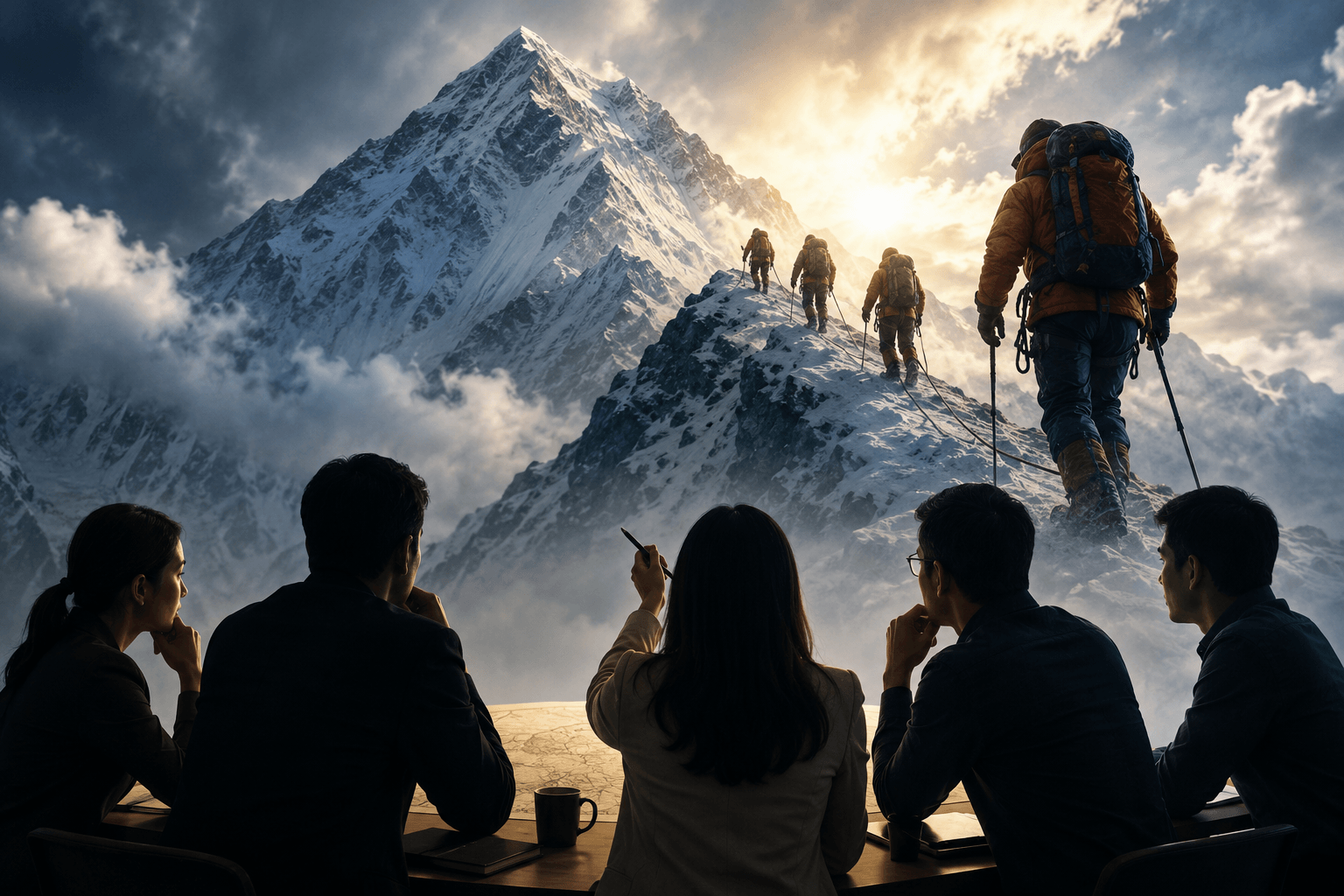
TL;DR
- Session 6 of the John Clements Mid-Level Managers Program used the 1996 Mount Everest disaster as a live case study in leadership.
- Held July 2, 2026, at the Van Gogh Room, John Clements Hub, and facilitated by VP for Outsourcing Rita Estella.
- Participants mapped the Everest expedition onto business roles: guides as leaders, Sherpas as teams, weather as market conditions, clients as commercial pressure.
- Three takeaways: judgment beats experience, small decisions carry big weight, and the team you bring back defines real success.
Leadership rarely gets tested on the way up. It gets tested on the way down — when the summit is in sight, the team is exhausted, and someone has to decide whether pushing forward is worth the risk. That question set the tone for Session 6 of the John Clements Mid-Level Managers Program, where we studied Team Leadership through one of the most examined leadership failures in history: the 1996 Mount Everest disaster.
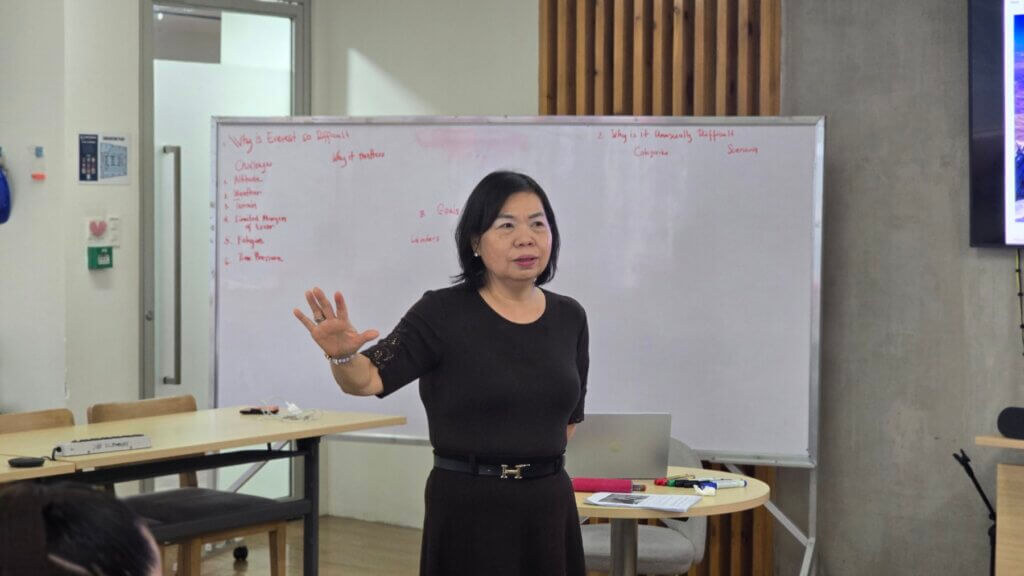
We held the session on July 2, 2026, at the Van Gogh Room of the John Clements Hub. Rita Estella, our Vice President for Outsourcing, facilitated.
We didn’t start with theory. We started with introductions — who we are, what we actually do day to day. Then came a short detour into my own hobby, mountaineering, which turned out to be the perfect bridge into the day’s real subject. From there, we stepped into a real-world scenario that forced us to confront decision-making, communication, accountability, and risk management under extreme pressure.
I was genuinely grateful to be part of this program. It exists to build the leadership capabilities of John Clements’ future leaders through a blended approach spanning strategic thinking, team leadership, communication, organizational effectiveness, and digital agility. Session 6 made that philosophy tangible: it took a historic tragedy and turned it into a business leadership conversation that stuck.
Part 1: The Case Discussion — Mount Everest, 1996
The morning threw us straight into the hard questions, the ones without clean answers. We wrestled with balancing business goals against team safety, communicating decisions with clarity, exercising judgment under pressure, and recognizing when protecting people should outweigh hitting a target. Every discussion pulled the Everest case back into our own workplace.
The most useful part of the session, for me, was mapping the expedition onto business terms. Guides became leaders. Sherpas became support teams. The weather became the market. Client expectations became commercial pressure. Once you see the mountain that way, the parallel is hard to unsee — leadership principles hold whether you’re managing a summit push or a Q3 deliverable.
For the full account of what happened on the mountain that day, Britannica has a detailed timeline. Harvard Business School’s Working Knowledge also breaks down the decision-making failures in more depth.
Part 2: Topic Discussion and Group Activity
Discussion wasn’t the whole session. We broke into groups, argued over leadership calls, challenged each other’s assumptions, and worked through practical approaches to managing risk and growing future leaders. Nobody was hunting for the one correct answer. We were after different perspectives — and a shared respect for careful decision-making and collective accountability.
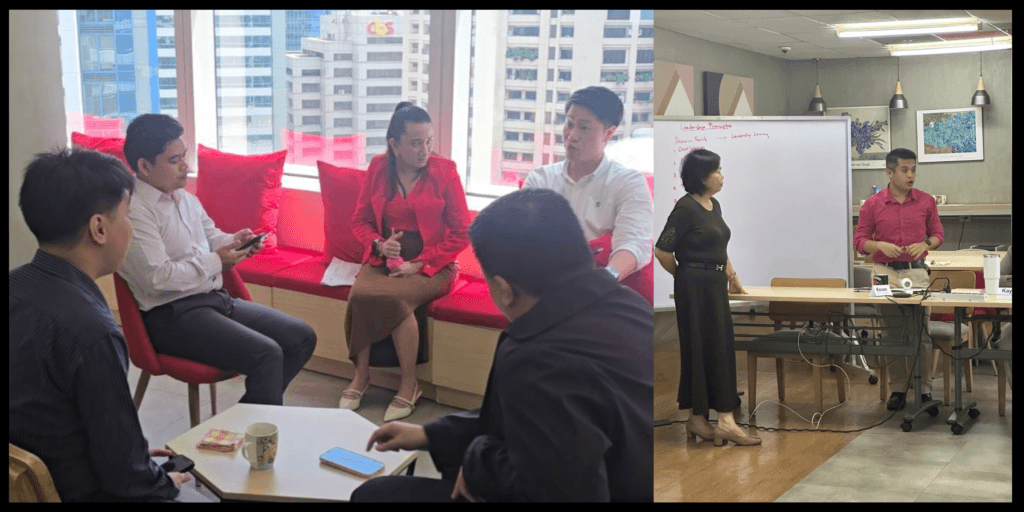
One message came up again and again: you don’t measure leadership success by reaching the summit. You measure it by whether the team can still function afterward — capable, resilient, ready to start over if it has to. We also talked about digging past surface-level information, sorting what you can control from what you can only influence or accept and acting before small problems turn into disasters.
My key takeaways:
- Judgment beats experience. Good leaders look past credentials. They gather facts and decide from there.
- Small decisions carry big weight. Catch issues early. Know what you can control or influence. Act before minor problems snowball.
- The team you bring back defines success. Hitting the goal matters. But leadership that leaves the team stronger — not depleted — is what lasts.
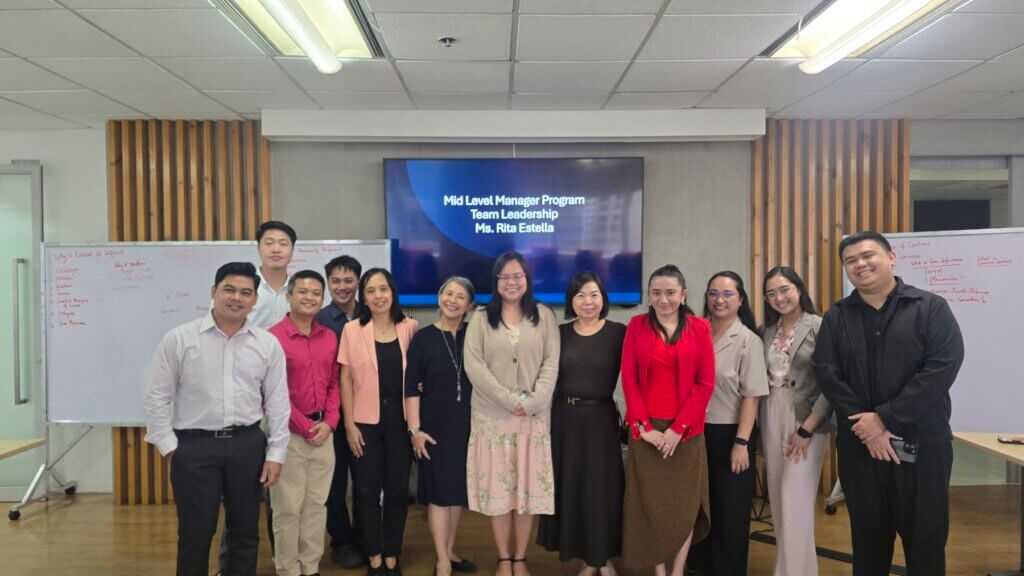
I still have a lot to learn, and that’s exactly what makes this program worth showing up for. This isn’t only about leading others better. It’s about becoming someone who makes wiser calls, builds real relationships, and leaves things better than he found them.
If you’re building leadership capability in your own organization — for managers who need more than theory — the John Clements Mid-Level Managers Program offers a learning experience grounded in real business dilemmas. Sometimes the sharpest leadership lessons show up nowhere near a classroom. Sometimes they’re waiting on the way to the summit.
Want your managers thinking this way?
Explore the John Clements Mid-Level Managers Program and see how it sharpens decision-making across your leadership bench.

