

They really were not joking when they said continuous learning is John Clement’s virtue. The inaugural Learning Bites session of 2026 kicked off with energy, intention, and genuine reflection. More than just a scheduled learning event, it served as a meaningful starting point for the year—one that encouraged participants to pause, look inward, and realign their personal and professional goals.
Hosted under John Clements Consultants, Inc., the session reflected the organization’s long-standing commitment to developing people, building leaders, and creating purposeful growth. As a new hire who had joined only three weeks prior, I entered the session with curiosity and a strong desire to learn beyond the bubble I am familiar with. What unfolded exceeded expectations and left a lasting impression.
Setting the Tone for Reflection
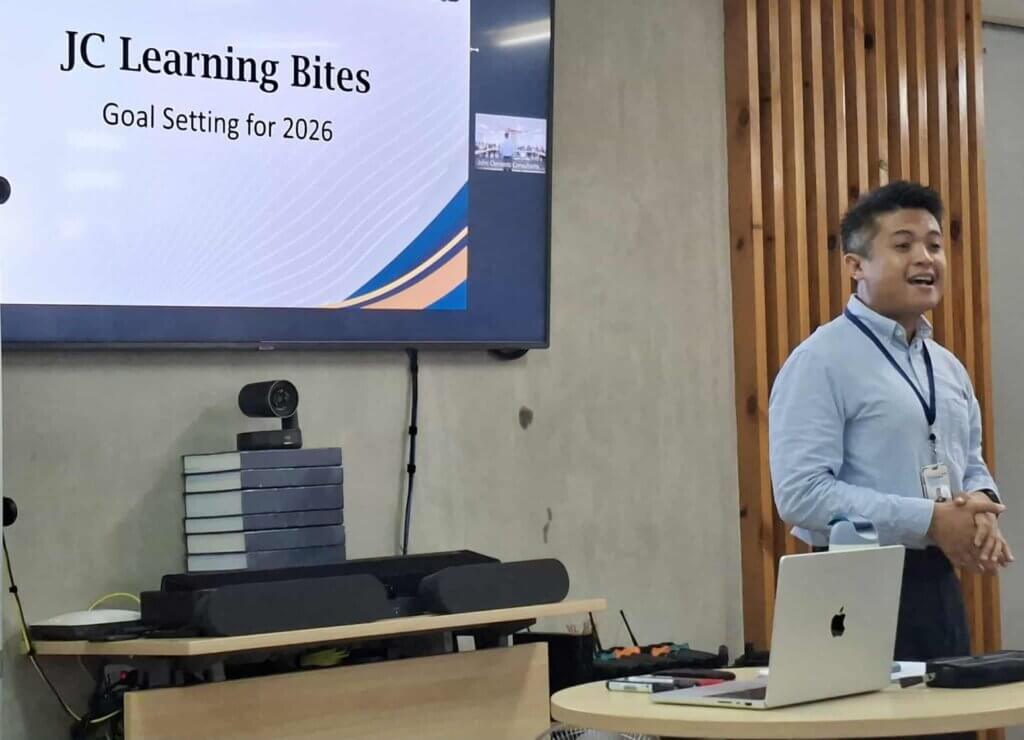
The session opened with Sir Keven, who warmly welcomed participants and framed the importance of beginning the year with introspection. Instead of rushing into action, he emphasized the value of reflection, learning, and intention. This opening grounded the session and prepared everyone for a deeper discussion on goal setting and purpose.
The atmosphere felt open and inviting. Participants were encouraged not only to listen, but to engage thoughtfully with the ideas being shared.
Leading with Clarity and Connection
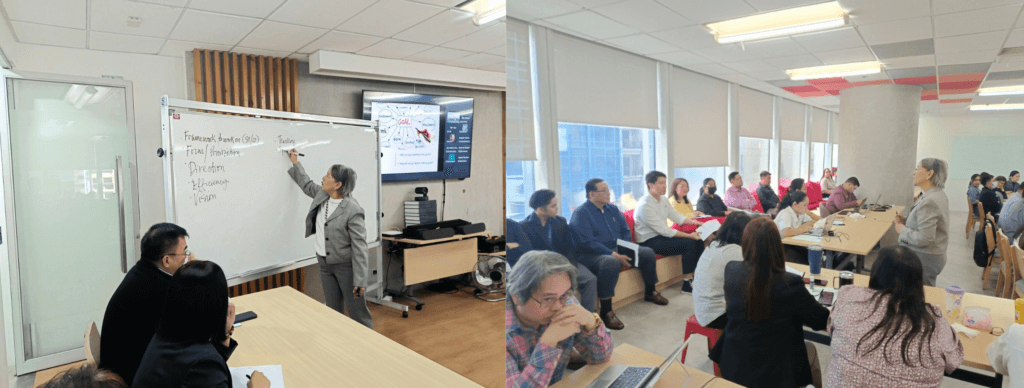
Dr. Grace Alcid, the sole speaker and facilitator, guided the discussion with remarkable eloquence and clarity. Her delivery balanced structure with warmth, making complex concepts easy to understand and deeply relatable, making it very hard for us participants to doze off. All jokes aside, she remained focused throughout the session while maintaining a personable and engaging presence.
Through personal anecdotes, Dr. Grace appealed to both logic and emotion, which literally is the whole point of the discussion. These stories helped bridge theory and lived experience, allowing participants to see how goal setting applies not only in professional contexts but also in everyday life.
Redefining What a Goal Really Is
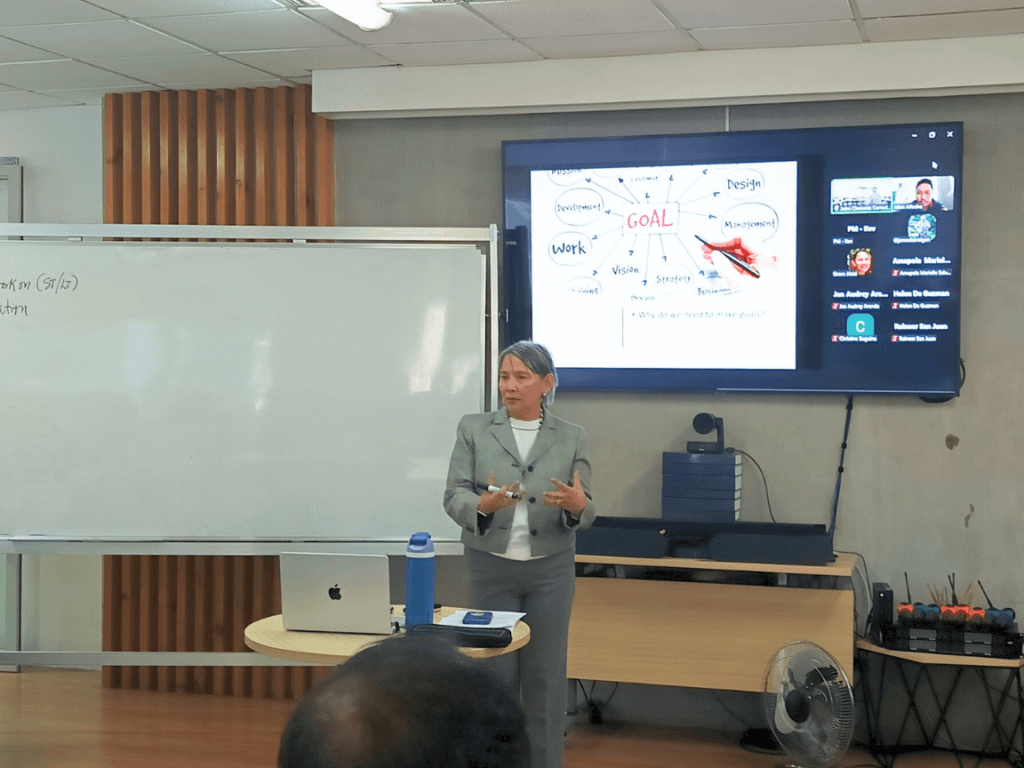
A central question framed the discussion: What is a goal, and why do we need one?
Dr. Grace described a goal not as a simple target, but as a framework. Goals help individuals focus, prioritize, and avoid wasting time and resources. When goals are clearly defined, progress becomes visible, and direction becomes easier to maintain.
She emphasized the importance of both long-term and short-term goals. Long-term goals provide vision, while short-term goals create movement and momentum. Together, they help individuals see where they are at any given point in time and determine what adjustments may be needed.
Focus and prioritization emerged as key themes. Without clear goals, effort becomes scattered. With them, energy is directed toward what truly matters.
Shared Insights from the Room
During the discussion, Dr. Grace invited several participants to respond to simple yet reflective questions about their goals, how they plan for them, and how they track progress. Ms. Eme shared that she views goals as a framework that provides structure and direction. Excel emphasized the importance of focus and prioritization when planning goals. Jolo highlighted that taking action—no matter how little—means progress is already happening. Allen stressed the value of having a specific and clear vision, while Glen spoke about tracking goals to stay aware of progress and gaps. Sir Roger added a practical perspective, sharing how tools such as spreadsheets help him monitor and manage his goals consistently.
Though I wasn’t called to share my perspective, I already had an answer in mind: one framed through analogy. I see short-term goals as the individual steps of a staircase, each one necessary and deliberate, while long-term goals represent the destination at the top. Without the smaller steps, the climb feels impossible; without a clear summit, the steps lose their purpose. This perspective shaped how I listened to the discussion, reinforcing the idea that meaningful goals are built through intention, progress, and direction.
The Personal Charter: Anchoring Your “Why”
The session then moved into deeper reflection with the introduction of the Personal Charter. Dr. Grace explained that before defining goals, individuals must first understand their “why.”
She encouraged participants to create a personal mission statement rooted in their core values. This approach helps ensure that goals remain aligned with personal beliefs, even when challenges arise. Goals may change over time, but values should remain intact.
Referencing the words of Simon Sinek, Dr. Grace explained that understanding one’s “why” connects to the limbic system—the part of the brain responsible for emotion and decision-making. What we choose to fill in people’s lives, she noted, ultimately defines our purpose.
Internal Life’s Dreams and Meaningful Goals
As the discussion progressed, the room filled with laughter, curiosity, and shared learning. The topic of Internal Life’s Dreams emphasized that effective goals must have clarity, meaning, and accountability. They should also acknowledge obstacles rather than ignore them.
At this point, engagement was palpable. Ears were attentive, eyes were focused, and minds were actively processing new insights. Learning felt collective rather than individual.
Turning Reflection into Action
After the discussion, participants enjoyed a brief break with egg sandwiches—a light and refreshing pause that sparked conversation and renewed energy. Soon after, the session transitioned into an activity focused on action.
Each participant wrote down individual goals before forming small groups to share their “what” and “why”. These conversations were open and sincere. By the end of the activity, everyone walked away with a much clearer set of goals than they had just ninety minutes earlier.
The difference was noticeable. Reflection had turned into clarity.
A Reflection of the John Clements Culture
This session reflected the broader mission of John Clements Consultants, Inc.—an organization dedicated to people development, leadership, and purposeful growth. With decades of experience in talent solutions and leadership development, John Clements continues to create spaces where individuals can grow not only as professionals but as whole individuals.
For many participants, especially those new to the organization, Learning Bites 2026 felt foundational. It reinforced the idea that growth begins with intention and is sustained through reflection and accountability.
Turn Reflection into Purposeful Action
Inspired by Learning Bites 2026? Take the next step in aligning goal setting and purpose with real-world impact. John Clements Consultants, Inc. offers leadership development, talent solutions, and learning programs designed to help individuals and organizations grow with intention.
If you’re ready to turn reflection into clarity and meaningful progress, contact us today and start your journey toward purposeful growth.

