

“The quality of your life is built on the quality of your decisions.”
— Ray Dalio
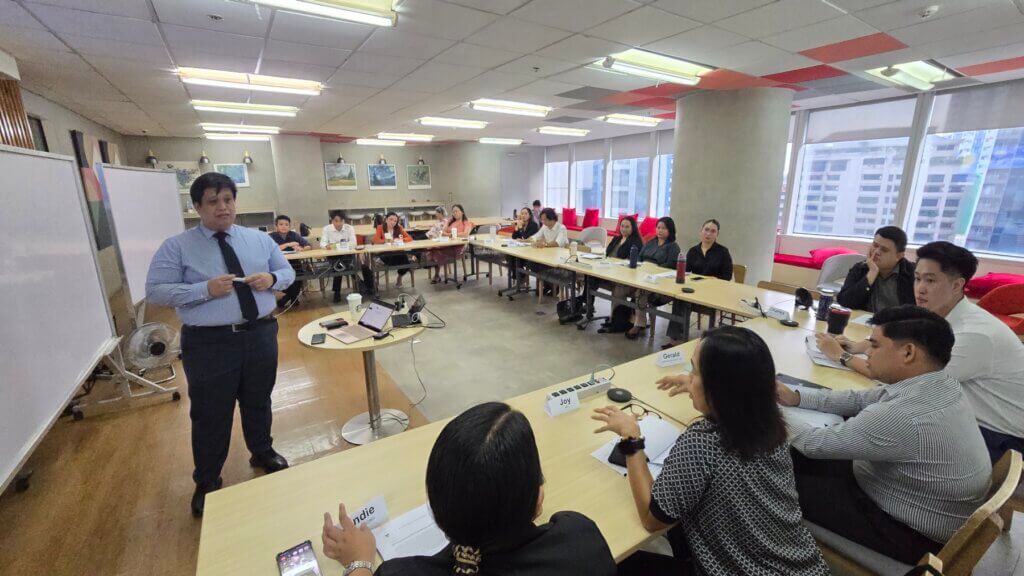
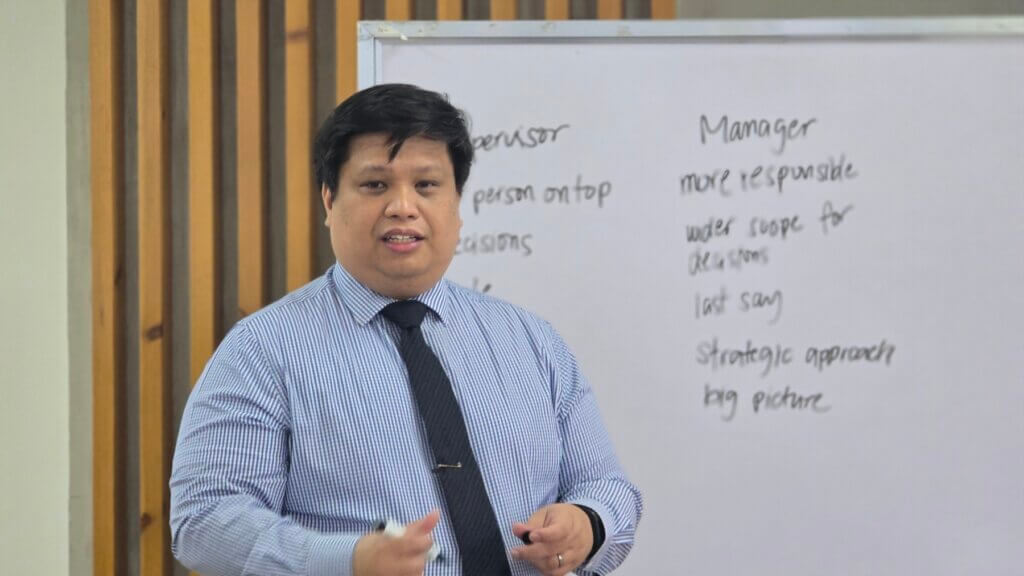
Have you ever made a decision that felt right, only to realize later that it was based more on assumptions than facts? That question stayed with me throughout our second Breakthrough Development Program (BDP) session on Decision-Making facilitated by Dr. Grace Alcid. What I expected to be a discussion about choosing between candidates turned into a deeper lesson on bias, fairness, and the responsibility that comes with making decisions that affect other people’s careers.
Through the case study “Defining Moments: Whom Should We Promote?”, we explored the complexities of decision-making in the workplace. Before the discussion, I believed decision-making was simply about choosing the best person for a position. However, the session showed me that making a sound decision often requires much more than selecting between two qualified options.
A Case That Challenged My Assumptions
The case focused on Alan Smith, a senior manager who needed to choose between two qualified candidates, Mita Anand and John Merriweather, for a key management position.
Both candidates had strong performance records and relevant experience. Mita was known for her outgoing personality, broad perspective, and willingness to speak her mind. John, on the other hand, was a consistent performer who was respected by colleagues and considered a strong fit for the existing team.
The discussion became more complex when Mita’s behavior at a company party entered the conversation. She participated in karaoke and stayed out late, prompting questions about whether her actions reflected the qualities expected of a future manager.
That detail immediately caught my attention. I found myself asking, “Should this really affect the decision?”
Looking Beyond Personal Opinions
For me, an employee’s performance, leadership capability, experience, and potential should carry greater weight when promotion decisions are made. Participating in karaoke or staying out late does not automatically suggest that someone lacks managerial potential.
Consequently, the case highlighted how easily personal opinions can influence decision-making in the workplace, even when we believe we are acting fairly and objectively.
Learning to Separate Facts from Assumptions
One of my biggest takeaways from the session was the importance of distinguishing facts from assumptions.
The facts were clear:
- Mita had a strong performance record.
- She possessed relevant experience.
- She attended the company party.
- She stayed later than some colleagues.
However, assuming that these actions would make her a poor manager was not a fact. It was an interpretation.
This realization made me reflect on how often we make quick judgments in everyday situations. Sometimes, one action, one conversation, or even a first impression shapes our perception of another person.
Furthermore, we may not notice when personal biases begin influencing our conclusions. Because of this session, I was reminded to pause and ask an important question:
“Do I have enough evidence to support this judgment, or am I making assumptions?”
That question is especially important when our decisions can affect another person’s career, opportunities, and professional growth.
The Value of Different Perspectives
Another aspect of the BDP session that I appreciated was hearing the viewpoints of my colleagues.
Not everyone approached the case the same way, some focused on performance results, while others emphasized leadership potential, teamwork, personality, and organizational fit.
Listening to different perspectives reinforced an important lesson. There is often more than one way to interpret a situation.
Critical Thinking Matters
Hearing diverse viewpoints does not mean automatically agreeing with them. Instead, it encourages deeper analysis.
Specifically, effective decision-making in the workplace requires leaders to evaluate whether opinions are supported by evidence rather than assumptions. When people challenge our thinking, they help us identify blind spots and consider possibilities we might otherwise overlook.
For me, good decision-making involves remaining open-minded, listening carefully, and being willing to reconsider my initial conclusions when new information emerges.
Applying the Lesson to Recruitment
As someone who works in recruitment, I found this topic especially relevant to my daily responsibilities.
Recruitment professionals make decisions constantly. We review résumés, conduct interviews, assess qualifications, compare applicants, and recommend candidates for positions.
Every applicant brings a unique background, personality, and set of strengths.
There are times when a candidate has an impressive résumé but may not be the best fit for a role. In contrast, another candidate may appear less remarkable on paper yet demonstrate exceptional potential during an interview.
Because of this session, I realized that relying solely on a gut feeling is not enough. Instead, I should evaluate evidence that demonstrates a candidate’s likelihood of success.
By focusing on:
- Relevant qualifications
- Actual work experience
- Demonstrated competencies
- Job requirements
- Leadership potential
I can provide more objective recommendations and support stronger decision-making in the workplace.
The same principle applies when collaborating with colleagues, resolving concerns, or making decisions about my own career. Fairness and objectivity should guide the process rather than emotions or assumptions.
Practical Tools for Better Decisions
During the session, we also discussed several decision-making tools that help improve analysis and structure:
- Decision Matrices
- SWOT Analysis
- Pros-and-Cons Analysis
- Cost-Benefit Analysis
These tools help organize information, compare alternatives, and evaluate potential outcomes.
Likewise, the Civil Service Commission emphasizes objectivity, merit, and fairness in professional evaluation and personnel decisions (https://www.csc.gov.ph/).
However, one lesson stood out above all others: analysis should support action, not prevent it.
Sometimes, we do not have complete information. Sometimes, uncertainty remains. In those situations, we must assess available evidence, understand potential consequences, and move forward with confidence.
My Biggest Takeaway
Looking back on BDP Session 2, I realized that good decision-making is not simply about choosing the best option. It involves understanding context, questioning assumptions, evaluating evidence, and considering multiple perspectives before acting.
If Session 1 taught me the importance of managing my time and learning when to say no, Session 2 taught me the importance of slowing down and asking why before making a choice.
Moving forward, I want to apply these lessons not only in recruitment but also in my personal life. I know I will still make mistakes. Nevertheless, I can become more mindful of how I assess situations, process information, and make choices.
At the end of the day, successful decision-making in the workplace does not always come from having all the answers. Sometimes, it comes from asking the right questions before making a decision.
Ready to Develop Stronger Leadership and Decision-Making Skills?
The ability to make thoughtful, objective, and effective decisions is a critical leadership competency. Discover how the John Clements Leadership Institute helps professionals build practical leadership skills that drive results.

