
Imagine your manager, your peers, and the people who report to you rating how you lead. Anonymously. No filters, no small talk, and no chance to explain yourself. That is a 360-degree assessment. And on Wednesday, September 23, 2026, we learned how to survive one before it even arrived.
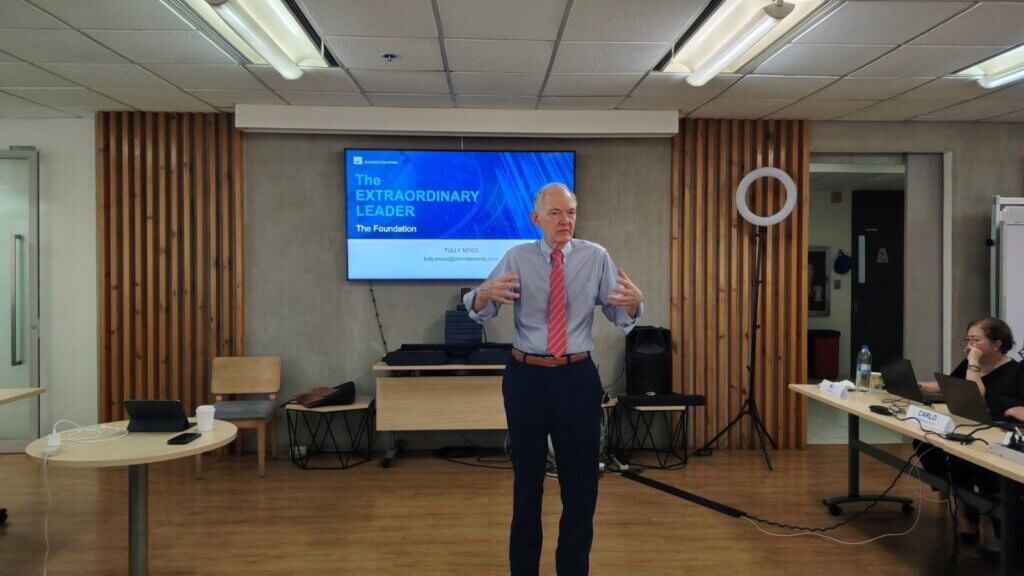
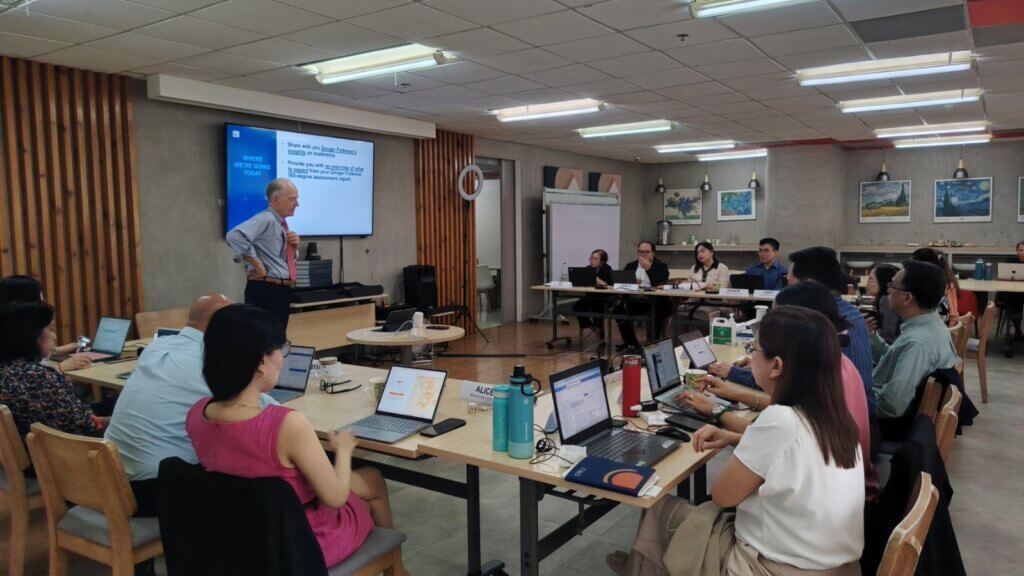
Tully Moss, Business Coach and Consultant at John Clements Leadership Institute, opened our Zenger Folkman debrief with what felt like a safari warning: brace yourselves, folks, a herd of wildebeests is coming. (Author’s note: Tully never mentioned wildebeests. I’m exaggerating, but only slightly.) Our reports hadn’t landed yet. For four hours, he prepared us for the stampede.
What Is a 360-Degree Assessment?
A 360-degree assessment gathers anonymous feedback from everyone around you: your manager, peers, direct reports, and other colleagues. It shows the gap between how you see yourself and how others experience you.
That gap is bigger than most of us think. Organizational psychologist Tasha Eurich found that about 95 percent of people believe they are self-aware, yet only 10 to 15 percent truly are.
Zenger Folkman measures leaders on 19 competencies and compares their scores with the 75th and 90th percentiles of a global database of more than 1.5 million assessments. The bar sits high on purpose. To protect anonymity, a rater group appears separately only when at least three people from that group respond.
Good Does Not Equal Extraordinary
Tully kept returning to one idea: good does not equal extraordinary.
Zenger Folkman’s research links extraordinary leaders to lower turnover, happier customers, and more engaged teams. The good news? You don’t need to be perfect. According to Zenger Folkman, leaders with no profound strengths sit around the 34th percentile in overall effectiveness. Three profound strengths likely place a leader in the top 20 percent, and five push a leader into the top 10.
Why measure at all? Tully compared leading without a 360 to wandering a giant mall without a directory. You keep walking, but you never know where you are.
How to Read Your Report Without Losing Your Mind
A Zenger Folkman report runs more than 30 pages, so Tully pointed us to the pages that matter most. The competency rankings page lists all 19 competencies from strongest to weakest against the global norms. Three pages of written comments cover strengths, organizational needs, and potential fatal flaws. The gap analysis compares your self-ratings with everyone else’s and exposes possible blind spots.
One page does something clever. It maps your competence, your passion, and what your organization needs. Where all three overlap, you find your sweet spot, the best place to invest your growth.
Tully also gave us a rule worth framing don’t hunt for the person behind that one sharp comment. Outliers happen. Maybe a rater had a rough week. Look for themes instead, the points more than one person raised.
Surviving the Stampede
Zenger Folkman even names the emotional ride: SARA. First comes surprise, then anger or anxiety, then rejection, and finally acceptance.
The goal is to reach acceptance faster. Tully urged us to treat feedback as a gift. Some gifts fit perfectly. Others need tailoring. Either way, someone took the time to give it.
When I finally received my feedback report, the wildebeests showed up right on schedule. Some of the feedback shook me. But who am I kidding? I don’t blame them. Because Tully had prepared us, I skipped the detective work, looked for themes, and reached acceptance sooner than I expected.
From Feedback to Growth
A 360-degree assessment only works if you act on it. After reviewing the report, each leader builds a development plan. Fix any fatal flaw first. Then pick one strength and push it toward the 90th percentile.
Growth doesn’t have to be linear, either. Tully used Manny Pacquiao as an example. Pacquiao doesn’t only throw punches to sharpen his boxing. He jumps rope, runs hills, and does sit-ups. Leaders can do the same by building companion skills that lift a core strength.
Perception may not be the whole truth, but it is the reality others work with. And only one person can change it.
“Feedback is the breakfast of champions.”
— Ken Blanchard
Frequently Asked Questions
What is a fatal flaw in a 360-degree assessment?
A fatal flaw is a weakness serious enough to overshadow your strengths and stall your career. A low score alone doesn’t make one. Zenger Folkman checks four criteria before calling it a true fatal flaw.
Should I focus on my lowest scores?
Not unless one of them is a fatal flaw. Zenger Folkman’s research shows leaders gain far more by building a few profound strengths.
Should I thank my raters?
Yes. Each rater spends 15 to 30 minutes on your survey. A quick thank-you message shows respect and encourages honest feedback next time.
Who should take a 360-degree assessment?
Anyone who leads people, from first-time managers to senior executives, and wants an accurate picture of their impact.
Ready to Face the Herd?
Great leaders aren’t born knowing their blind spots. They find them, own them, and grow. To learn more about the Zenger Folkman 360-Degree Assessment program, contact John Clements Leadership Institute today.

