

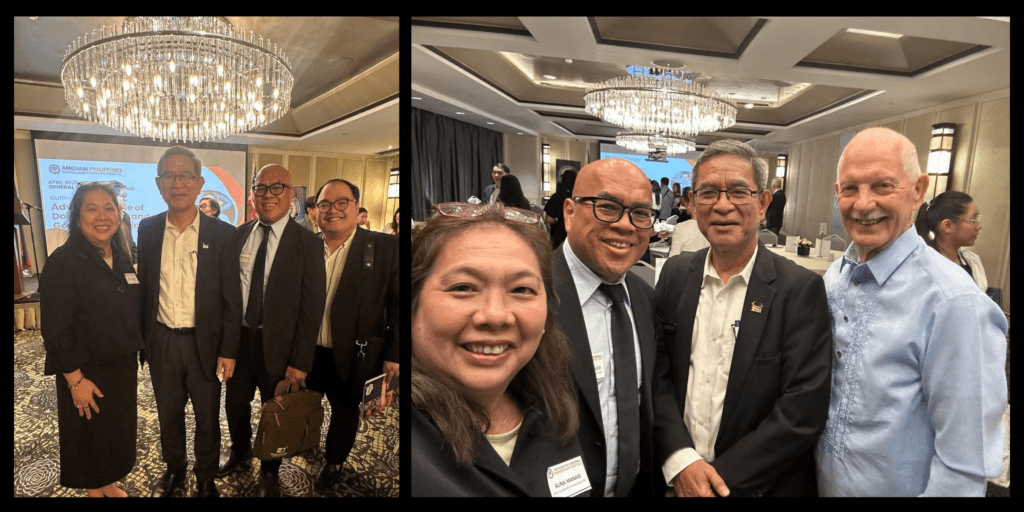
I attended the American Chamber of Commerce (AmCham) Philippines General Membership Meeting at the Makati Diamond Residences, where Secretary Ernesto Perez, Director General of the Anti-Red Tape Authority (ARTA), shared his vision for improving how government works with the private sector.
One of the key takeaways was how ARTA is reshaping the perception that government is a barrier to doing business. Instead, the goal is for government to become a partner—something businesses have long hoped to see. This shift is central to cutting red tape and fostering trust.
The Ease of Doing Business Law
Secretary Perez described the Ease of Doing Business (EODB) Law as a “mindset changer.” Instead of businesses navigating multiple agencies, government agencies should coordinate internally. This “whole-of-nation” approach encourages collaboration among agencies and local government units (LGUs), reducing inefficiencies.
Furthermore, efficiency is not just about faster paperwork—it directly impacts economic growth. When processes are clear and predictable, businesses gain confidence to invest and expand. See official details here: https://arta.gov.ph
Digitalization as a Game Changer
A major part of ARTA’s strategy is digitalization. Platforms rolled out include:
- Philippine Business Regulations Information System (PBRIS): A central database of regulations.
- ARTEMIS: A monitoring tool ensuring agencies follow service standards.
- Electronic Business One-Stop Shop (e-BOSS): Enables online business registrations and renewals.
- Tala (AI assistant): Integrated into the eGov PH app to answer queries and handle complaints.
Specifically, these tools reduce opportunities for corruption and delays, making cutting red tape a tangible reality.
Real-Life Impact
Secretary Perez shared compelling examples:
- Telecom sector: Energizing cell towers used to take 300 days. With reforms under Executive Order 32, this was reduced to 59 days.
- Local project delays: A project stalled for three years was resolved within 24 hours after ARTA intervened.
In contrast to past inefficiencies, these reforms demonstrate measurable progress.
Renewable Energy and the “Best Model”
ARTA is also improving renewable energy processes through the “Best Model.” Provincial governments act as single entry points for investors, coordinating internally with different offices. Consequently, projects outside major cities can move forward more smoothly.
Learn more about renewable energy reforms here: https://www.doe.gov.ph
Accountability and Enforcement
Accountability is a cornerstone of ARTA’s work. Officials who ignore the EODB Law face suspension, dismissal, fines, or even jail time. ARTA also provides template letters businesses can use when encountering unreasonable requirements. This strengthens compliance and reinforces the drive to cut red tape.
Measuring Results and Global Support
Looking ahead, ARTA is focusing on measurable outcomes. With support from international partners like the UK government and the Asian Development Bank, they are tracking how much time and money businesses save due to reforms. This data-driven approach ensures credibility and sustainability.
Conclusion: Toward a Business-Friendly Future
Overall, the discussion was encouraging. While challenges remain, ARTA’s reforms are making government processes simpler and more business-friendly. If sustained, these efforts could attract more investments and support long-term economic growth in the Philippines.
Cutting red tape is not just about paperwork—it’s about building confidence, efficiency, and opportunity.
At John Clements Consultants, we specialize in helping organizations streamline workforce strategies and seize new opportunities in a more business-friendly environment.
Contact Us today to explore how we can support your growth.

