
Filipino consumers are rewriting the rules — and every FMCG brand in the Philippines needs to pay attention. Here’s what industry leaders revealed about the trends reshaping the market right now.
A New Kind of Filipino Shopper Has Arrived
The Filipino shopper has changed. Price alone no longer drives purchase decisions. Today’s consumers are intentional, values-led, and highly selective about where — and why — they spend their money.
So, what does this mean for FMCG brands? A lot.
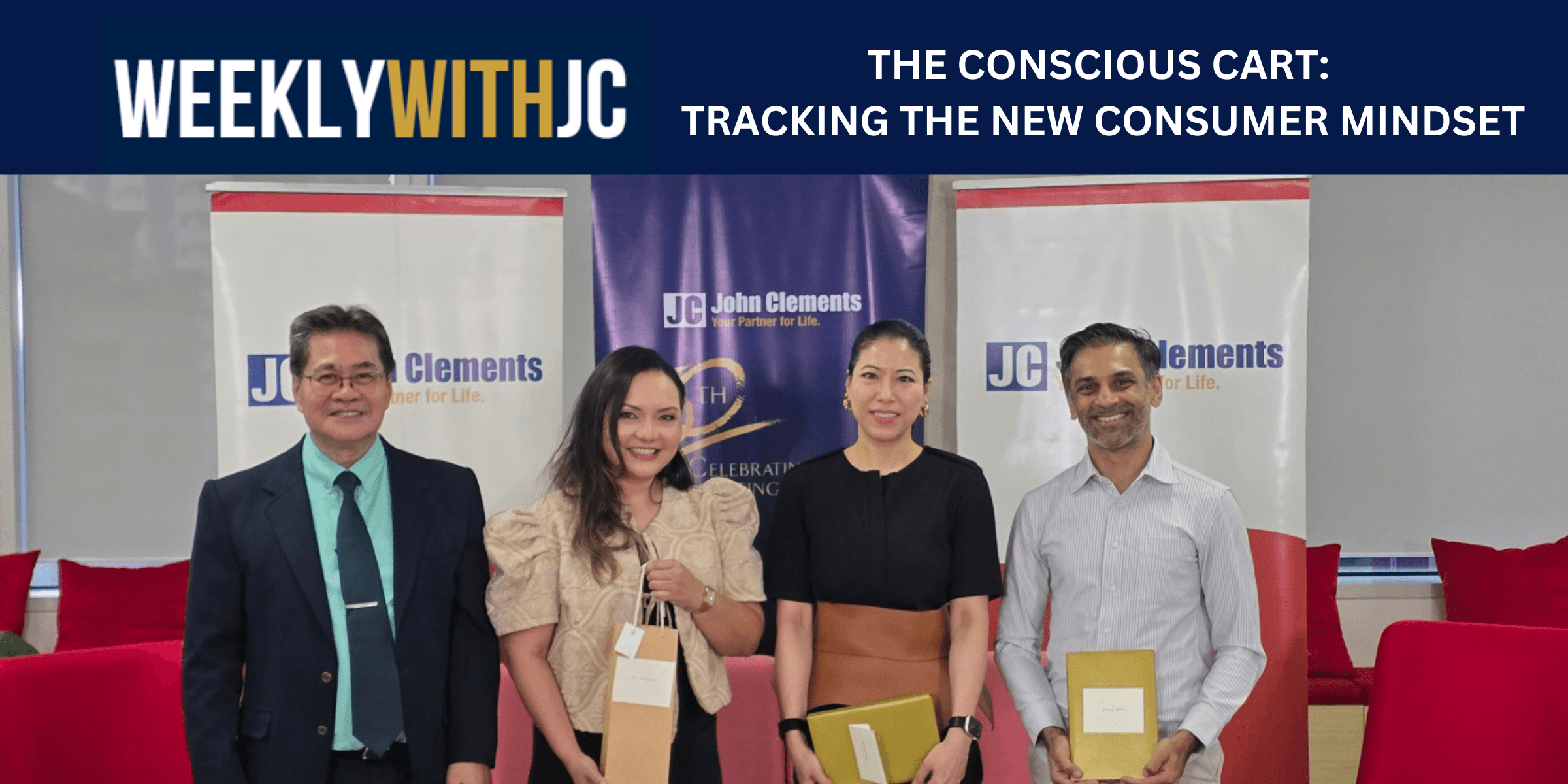
This shift took center stage during the 12th session of John Clements’ weekly briefing series, “The Conscious Cart: Tracking the New Consumer Mindset.” Three senior industry leaders joined the conversation: Rachanatorn “Nok” Laohaphan (General Manager, Diageo Philippines), Sandeep Mathew (Revenue Management Expert, Ex-Unilever and Ex-Bain), and Faye Matriano (Marketing Director, Century Pacific Food). Together, they unpacked the macro trends, consumer behavior shifts, and strategies that matter most for FMCG Philippines today.
The Macro Picture: Real Opportunities, Real Headwinds
First, the good news. The Philippines holds strong economic fundamentals. GDP growth sits at a projected 5.5 to 5.7%, and a young, growing population continues to expand the consumer base. For FMCG brands, this demographic dividend creates a clear long-term opportunity.
However, the short-term picture gets complicated. Nok identified several headwinds the sector must navigate:
- Political volatility and corruption scandals create uncertainty in business planning.
- Middle East geopolitical tensions push global energy prices higher, which raises logistics and supply chain costs for local brands.
- Growth runs on price, not volume — consumers spend more pesos but buy less overall.
- Heavy reliance on overseas remittances leaves consumer spending vulnerable to global shifts.
Still, Sandeep pointed out that the Philippines’ young, digitally active population — particularly Gen Z and millennials — sets the market up well for sustained FMCG growth. The headwinds are real, but so is the opportunity.
5 Consumer Trends Driving Change in FMCG Philippines
Understanding what drives the modern Filipino shopper is the first step to winning their loyalty. Here are the five trends every FMCG brand needs to track.
1. Value Over Price
Filipino consumers no longer chase the lowest price tag. Instead, they seek the best value. Brands that lead with quality, purpose, and relevance — alongside competitive pricing — win both shelf space and loyalty.
In the alcohol category, for example, consumers cut back on frequency but choose more deliberately when they do drink. They want a meaningful experience, not just a cheap option.
2. Experience Over Possession
Across categories, consumers now prioritize experiences over accumulating things. This reshapes how FMCG brands must position their products — not as commodities, but as part of a lifestyle or memorable occasion. Cocktail bars and on-premise venues are seeing renewed interest as a result.
3. Health and Wellness Consciousness
Health-conscious behavior has gone mainstream. It is no longer a niche concern. Nok confirmed this is a global trend that accelerates fast in the Philippines, especially among younger consumers who read ingredient labels, track nutritional data, and question alcohol content. FMCG brands that adapt — through reformulation or portfolio diversification — stay relevant. Those that don’t, fall behind.
4. Digital Convenience and E-Commerce
Filipino consumers increasingly use digital channels to discover, compare, and buy. Faye and Sandeep both noted that FMCG companies that invest in e-commerce infrastructure capture more of the next growth wave — especially among Gen Z buyers who expect seamless online shopping.
5. Purpose-Driven Brand Identity
Perhaps the biggest shift of all: consumers — particularly Gen Z — actively align purchases with brands that stand for something. Purpose-driven positioning now drives commercial outcomes. It is no longer a nice-to-have in the FMCG industry. It is a baseline expectation.
Why the Philippines Alcohol Market Defies the Global Trend
Here’s a surprising data point: the global beverage alcohol market fell 3.7% due to shifting consumer behavior and economic slowdown. Yet the Philippines ranks among the top six value growth markets globally for alcohol.
How does that happen?
Several factors explain it:
- Strong local brands with deep cultural roots, like San Miguel’s Ginebra
- Wide distribution networks that reach even remote communities
- Premiumization — consumers trade up within accessible price tiers
- Spritz and low-ABV growth that taps into the health-wellness trend without cutting drinkers out
Diageo’s strategy shows what works: a diverse portfolio across price points and occasions, combined with local market adaptation and OFW network engagement. The lesson for the local FMCG brands is clear — know your market deeply and build around it.
How Smart FMCG Brands Are Adapting Right Now
Knowing the trends is one thing. Acting on them is another. Here’s how leading FMCG organizations in the Philippines are responding:
Private Labeling
As budgets tighten, brands and retailers explore private label options that deliver quality at accessible prices — without eroding premium brand equity.
Pack Size Optimization
Smaller SKUs and sachet formats keep products within reach across income levels — from the sari-sari store to the SM Hypermarket. Flexible pack sizing is a proven accessibility strategy for FMCG Philippines brands.
Supply Chain Agility
Century Pacific Food’s pandemic-era adaptability serves as a strong case study here. Brands that build flexible supply chains respond faster when external shocks hit. Agility is now a competitive advantage, not just a crisis tool.
E-Commerce Investment
From direct-to-consumer platforms to marketplace integrations, FMCG brands push digital infrastructure forward to meet consumers where they already spend time and money.
Authentic, Community-Led Marketing
The shift from one-to-many broadcasting to many-to-many community-driven engagement is accelerating. Brand evangelists, user-generated content, and authentic storytelling outperform traditional advertising — particularly with younger audiences. Real voices convert better than polished campaigns.
AI Is Already Reshaping FMCG Strategy
Artificial intelligence is no longer a future conversation for the FMCG industry. It arrives now. Companies already deploy AI for trend forecasting, demand planning, and market-sensitive copywriting. The brands that build AI literacy today will read consumer signals faster and act on them more precisely than those that wait.
The broader question, whether AI poses a long-term threat to BPOs that many Filipino families depend on, stays open. But FMCG organizations that prepare now hold a clear strategic edge.
The Skills FMCG Professionals Need Next
The talent landscape shifts alongside the market. Leaders at the session pointed to three skills that define the next generation of FMCG professionals in the Philippines:
- Agility — adapt strategies quickly as conditions change
- Authenticity — build genuine brand relationships, not transactional ones
- Holistic thinking — connect supply chain, marketing, HR, and finance into one cohesive direction
These are no longer soft skills. They are the difference between brands that lead and brands that lag.
The Lipstick Effect: What Economic Downturns Reveal About Consumers
One of the session’s most telling behavioral insights was the “lipstick effect.” During economic downturns, small luxury and beauty products often see increased sales. Consumers don’t stop spending — they redirect it toward affordable moments of joy.
COVID made this vivid: Zoom calls drove beauty product purchases even as broader incomes shrank. For local brands, the implication is direct. Understand where consumer spending redirects during hard times and position accordingly. The brands that do will take disproportionate share.
The FMCG Philippines Opportunity Is Real — But It Demands Adaptation
The Filipino consumer today is smarter, more values-driven, and more digitally empowered than any earlier generation. For FMCG brands in the Philippines, this moment is both the most challenging and most opportunity-rich in recent memory.
The winning playbook looks like this: lead with genuine value, invest in authenticity, go deep on digital, diversify your portfolio, and stay agile. Brands that commit to these moves will not just survive the disruption; they will define what FMCG leadership looks like in the Philippines for the next decade.
Don’t Miss What’s Coming Next
The conversation doesn’t stop here. John Clements’ FMCG and HR Leadership Series brings together the sharpest minds in the industry — and the next session could be the one that changes how you lead.
Check out our website to see the full lineup of upcoming events, speaker announcements, and exclusive session recaps.
Follow us on social so you never miss an update — because in today’s market, the leaders who learn fastest win.

