

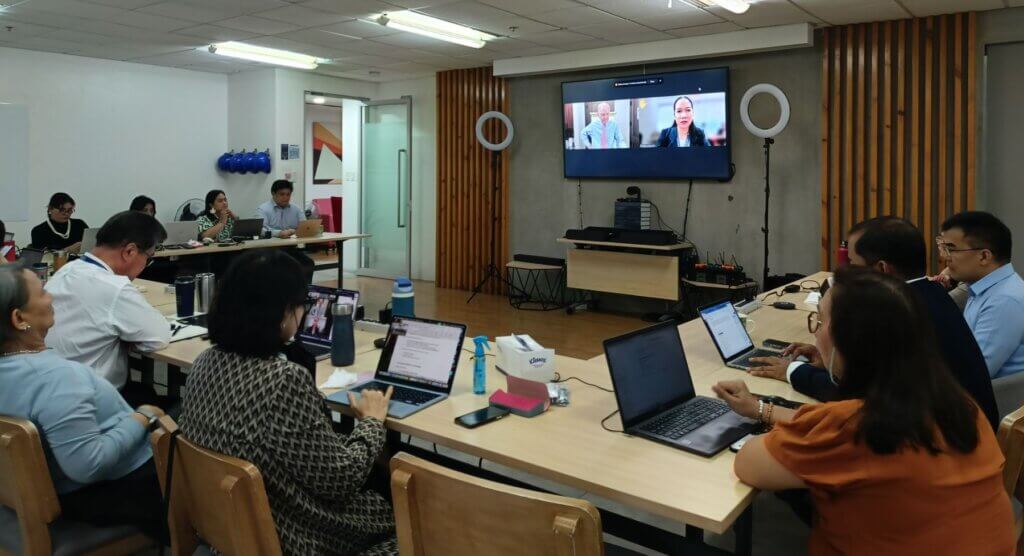
In the fourth session of our John Clements EMBA session, the topic of financial forecasting was tackled centered on Levi Strauss & Co. For more than a century, Levi Strauss & Co. built its global brand on instinct. Denim was their language, and experience guided their decisions. But as the HBS case “Data-Driven Denim” shows, there came a point where gut feel alone couldn’t keep up—especially in forecasting.
Forecasts at Levi’s are not just numbers in spreadsheets. They shape investor expectations, influence leadership decisions, and set the tone for market confidence. When forecasts miss, the consequences are immediate: excess inventory, steep discounting, margin pressure, and uncomfortable conversations with investors. In a volatile global economy, forecasting became not just a financial exercise but a strategic necessity.
Why Forecasting Became Critical
Today’s environment is unpredictable. Consumer demand shifts rapidly, fashion cycles shorten, and tariffs add layers of uncertainty. Levi’s realized that instinct could no longer provide the precision required to navigate these challenges. Structured forecasting became essential for survival.
The importance of forecasting is echoed by global institutions. The World Bank highlights how data‑driven decision‑making strengthens resilience in uncertain economies. Similarly, Harvard Business Review stresses that companies embracing analytics outperform peers in both profitability and market share.
Where Manual Forecasting Fell Short
For decades, spreadsheets and judgment sufficed. But as Levi’s expanded globally, biases and errors became more visible. Manual forecasting struggled to capture the complexity of diverse markets, supply chains, and consumer behaviors. Transitioning to AI‑driven models allowed Levi’s to validate assumptions, reduce risk, and bring discipline to decision‑making.
This shift reflects a broader trend in corporate finance. According to McKinsey & Company, advanced analytics can improve forecasting accuracy by 20–30%, directly impacting margins and investor confidence.
Why Levi’s Partnered with Wipro
Instead of building analytics internally, Levi’s chose to partner with Wipro. This collaboration accelerated modernization, challenged legacy thinking, and safeguarded data governance. By leveraging external expertise, Levi’s avoided the pitfalls of slow adoption and ensured that forecasting became embedded in its operating rhythm.
Partnerships like these are increasingly common. The OECD notes that collaboration between firms and technology providers is critical for scaling innovation responsibly.
Forecasting as Strategic Maturity
Levi’s journey underscores a vital lesson: forecasting is not about replacing human judgment—it’s about enhancing it. Smarter systems build trust, protect margins, and drive sustainable growth. Forecasting, done right, becomes a marker of strategic maturity.
For leaders, the takeaway is clear. Forecasting is no longer a back‑office function; it is a boardroom priority. Companies that embrace data‑driven forecasting position themselves to thrive in uncertainty, while those that cling to instinct risk falling behind.
Ready to Transform Your Strategy?
Levi’s story is a reminder that instinct must be paired with insight. Forecast smarter. Grow faster. At John Clements Consultants, we help organizations strengthen financial forecasting, leadership development, and organizational growth. Explore how our leadership programs can guide your business decisions with proven expertise.
Learn more at: www.johnclements.com

