

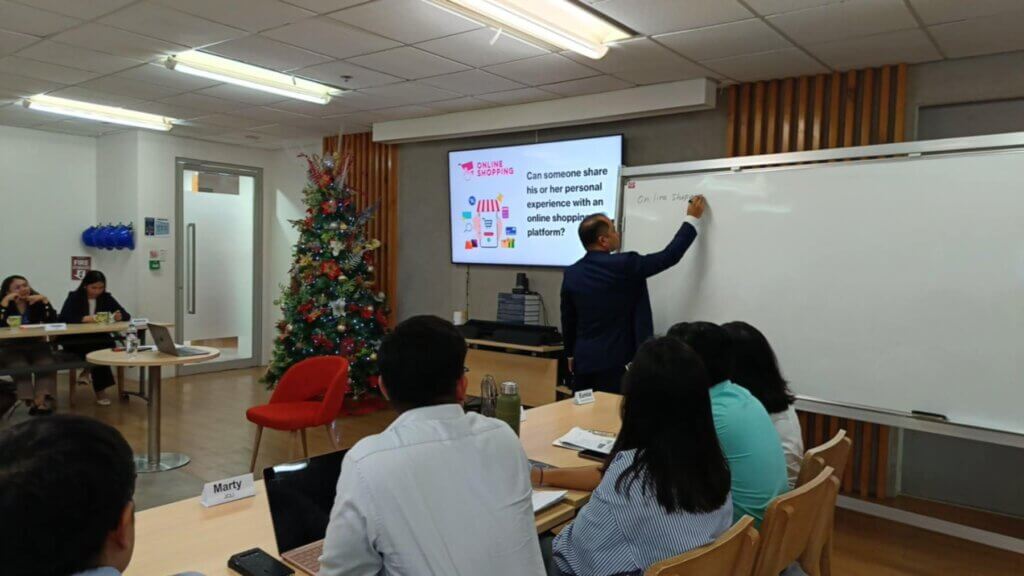
As part of our Breakthrough Development Program series, Mr. Patrick Dayao, a Business Unit Head of the Outsourcing Group at John Clements, facilitated a session on Balancing Customer Centricity with Employee Engagement.
In today’s business world, “customer centricity” is a phrase you hear everywhere. Companies want to be more responsive, more personal, and more experience-driven. However, there’s a twist many leaders overlook: you can’t build a truly customer-centric organization without first nurturing strong employee engagement.
It sounds obvious, yet it’s surprising how many companies try to upgrade customer experience while their employees are burned out, under-supported, or just not excited to come to work. The truth is simple: happy, empowered employees create happy, loyal customers. Therefore, if one side of that equation slips, the entire experience falls apart.
So how do you create a balance where both customers and employees feel valued? Let’s walk through it step by step.
Why Employee Engagement Is the Core of Customer Centricity
Think about the best customer experience you’ve ever had. It probably wasn’t just the product; rather, it was the person you interacted with. Engaged employees show up with energy and genuine care. They listen better, solve problems faster, and bring empathy to the moment.
Conversely, when employees are disengaged, customers feel it instantly. And no amount of customer-journey mapping, automation, or loyalty programs can fix that.
In other words, employee engagement is the engine that powers customer-centricity. Without it, the strategy remains merely a slogan.
The Pitfalls of Putting One Priority Over the Other
Many organizations unintentionally over-index on one side:
Too Much Customer Centricity, Not Enough Employee Support
This can look like:
- Unrealistic service expectations
- Policies that favor customers but frustrate staff
- Pressure to “delight” without the right tools or training
As a result, employees burn out. They feel like they’re constantly giving but rarely supported. Consequently, customers pick up on that tension.
High Employee Engagement, But No Customer Focus
On the other hand, some organizations invest heavily in culture, perks, and engagement surveys but don’t actually connect those efforts to customer needs. Employees may feel good internally, yet without alignment, the customer experience becomes inconsistent or confusing.

Neither extreme will work. Instead, the magic happens in the middle when companies design experiences with both groups in mind.
How to Successfully Balance Both
Here are practical ways organizations can build a culture where customer centricity and employee engagement reinforce each other instead of competing.
1. Involve Employees in Designing Customer Experience
Employees, especially frontline teams, see customer pain points firsthand. Therefore, including them in decision-making not only leads to smarter solutions but also boosts ownership and engagement.
2. Remove Friction with Better Tools and Processes
If employees spend more time battling systems than helping customers, everyone loses. Moreover, streamlining workflows, updating technology, and giving clear guidelines dramatically improve both experiences.
3. Empower Employees with Autonomy
Nobody likes being micromanaged. Consequently, giving employees the freedom to make small decisions, bend a policy when reasonable, and use their judgment empowers them to create personalized, memorable customer moments.
4. Show Employees How Their Work Impacts Customers
Share positive reviews. Talk about success stories. Bring real customer voices into team meetings. In addition, when employees see the ripple effect of their work, purpose and motivation increase.
5. Celebrate Wins That Reflect Both Values
Don’t just celebrate hitting sales numbers; instead, celebrate customer thank-you messages, innovative service ideas, and teamwork that led to happier outcomes.
Why Getting This Right Pays Off
When organizations balance these priorities intentionally, something powerful happens:
- Employees feel valued and motivated
- Customers feel seen and cared for
- Turnover drops, loyalty rises, and service becomes more consistent
- The entire culture shifts toward long-term, sustainable success
Ultimately, it becomes a positive feedback loop: engaged employees lead to delighted customers, and delighted customers reinforce employee pride.
Final Thoughts
Balancing customer centricity with employee engagement isn’t just good HR or good CX; it’s good business. Furthermore, companies that treat the two as a shared strategy rather than separate initiatives build stronger cultures, stronger relationships, and stronger results.
If you want your customers to feel valued, start by valuing your employees. After all, the alignment between the two is where real customer experience transformation begins.
Ready To Transform Both Your People and Your Customers?
Unlocking true customer centricity starts with empowering your employees—and you don’t have to do it alone. John Clements Consultants provides leadership development and organizational solutions that help companies build highly engaged teams and exceptional customer experiences.
Finally, take the next step toward a more aligned, people-powered organization. Contact us today and let’s start building the culture your business deserves.

