
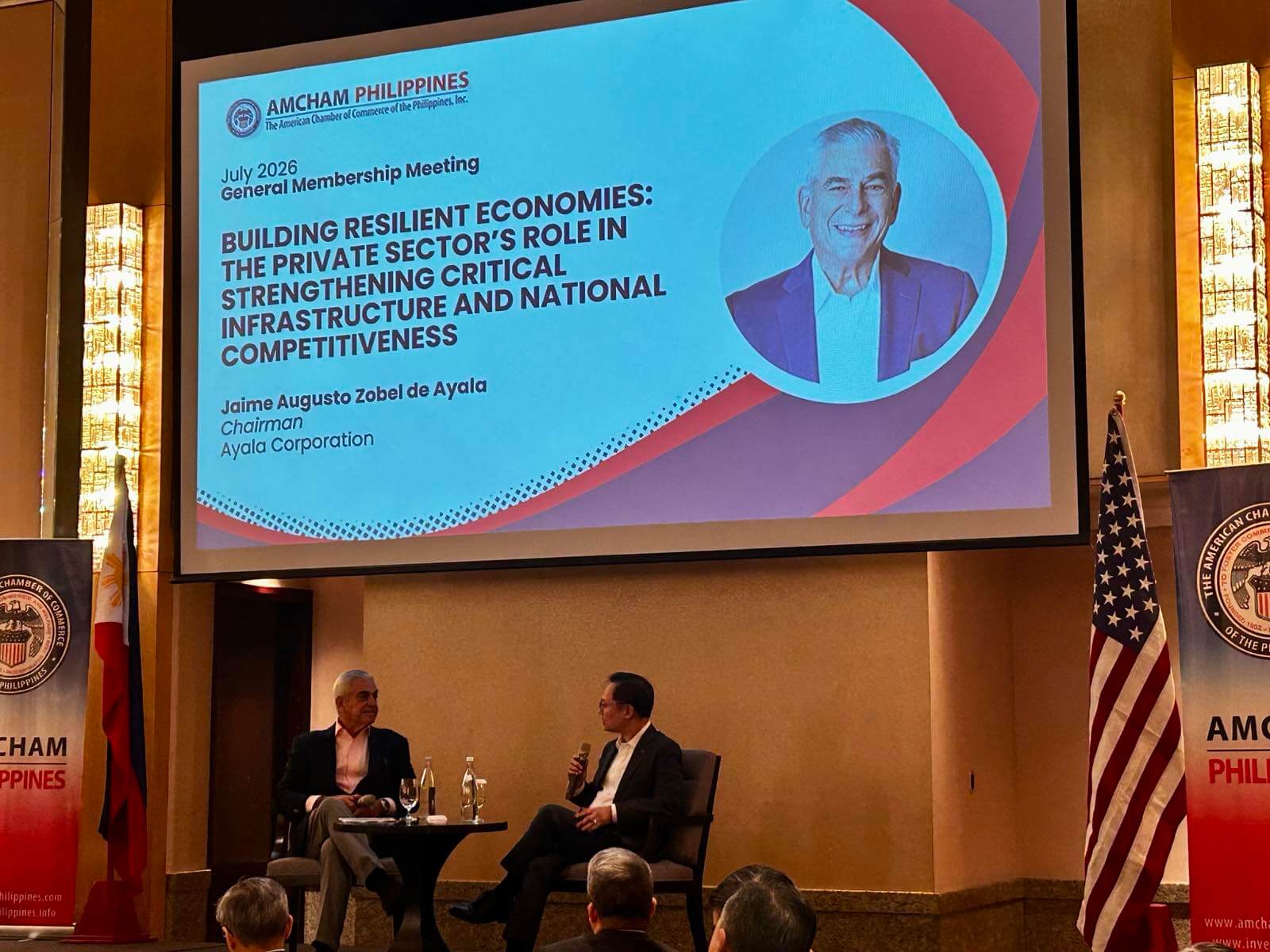
Insights from AmCham Philippines’ “Building Resilient Economies” Forum with Jaime Augusto Zobel de Ayala
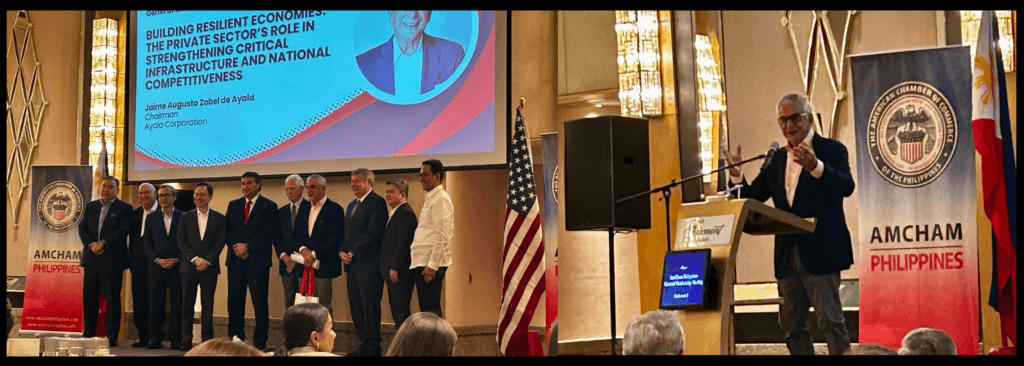
Last July 15, I attended AmCham Philippines’ event, Building Resilient Economies: The Private Sector’s Role in Strengthening Critical Infrastructure and National Competitiveness, held at Fairmont Makati. The keynote speaker was Jaime Augusto Zobel de Ayala, Chairman of Ayala Corporation, whose message was both practical and forward-looking.
The Philippines has already shown that it can recover from crises. However, the next challenge is to build a nation that can compete globally, attract investment, and create inclusive growth with greater consistency.
For me, the forum was not simply a discussion about infrastructure or business policy. It was a reminder that resilience should evolve into Philippine national competitiveness. The country is widely recognized for its ability to recover from natural disasters, economic shocks, and uncertainty. However, resilience alone is not enough. To reach its full potential, the Philippines needs a stronger investment narrative, better infrastructure, deeper public-private collaboration, and sustained investment in human capital.
Resilience Must Lead to Reinvention
One of my strongest takeaways from the forum is that the Philippines must move beyond simply surviving disruption. It must actively reinvent itself.
Filipinos are known for resilience. Yet resilience should not be the final destination. Instead, it should serve as the foundation for a long-term vision that inspires confidence among citizens, investors, businesses, and international partners.
Countries that succeed on the global stage do not rely on potential alone. They:
- Define clear economic priorities.
- Align resources behind those priorities.
- Build credibility through consistent execution.
- Create confidence among investors and stakeholders.
The Philippines has the talent, strategic location, growing market, and international relationships needed to achieve more. Consequently, it must communicate a clearer vision of the economy it wants to become.
Creating a Stronger National Investment Brand
Why Perception Matters
Another important lesson was the value of a compelling investment brand.
Many neighboring economies have successfully positioned themselves in specific areas. Singapore is associated with innovation and global connectivity. Vietnam has emerged as a manufacturing hub. Thailand has developed strong tourism and food industries. In contrast, the Philippines often struggles to communicate its competitive strengths with the same clarity.
A stronger national narrative can help attract long-term investment and elevate Philippine national competitiveness.
The Private Sector’s Role
Organizations such as AmCham Philippines and the broader business community can help by:
- Identifying priority growth sectors.
- Promoting investment opportunities.
- Supporting consistent messaging between government and industry.
- Encouraging long-term economic planning.
Specifically, sectors with significant potential include:
- Renewable energy
- Digital infrastructure
- Logistics and supply chains
- Healthcare
- Tourism
- Advanced manufacturing
- Education
For further information on investment and economic development initiatives, readers may visit:
Critical Infrastructure Drives Competitiveness
Infrastructure is more than a support system. It is a central driver of economic growth.
Roads, airports, seaports, power systems, telecommunications networks, logistics corridors, data centers, and water infrastructure determine how efficiently a country moves people, goods, services, and information.
The Opportunity of the Luzon Economic Corridor
The discussion highlighted the Luzon Economic Corridor as a major opportunity to strengthen:
- Logistics
- Manufacturing
- Supply chains
- Energy security
- Digital connectivity
For me, this reinforced an important point: infrastructure planning should always connect to a broader economic strategy.
When infrastructure supports investment, innovation, job creation, and regional development, it becomes a catalyst for Philippine national competitiveness.
Furthermore, the country should not wait for every variable to be perfectly aligned before acting. Where momentum exists, both government and the private sector should move quickly to transform opportunities into viable projects.
Additional infrastructure and policy information can be accessed through:
Public-Private Partnerships Must Encourage Execution
Public-private partnerships (PPPs) emerged as another major theme during the forum.
Private capital can accelerate infrastructure development, but success depends on clear, fair, and practical rules. Investors need confidence that agreements will be honored and projects can generate reasonable returns. At the same time, government must protect the public interest and maintain accountability.
What stood out to me was the broader impact of successful infrastructure projects. A new road, transit link, or power facility does more than improve mobility or energy access. It also stimulates:
- Business activity
- Local employment
- Community development
- Government revenues
Therefore, PPP frameworks should encourage execution rather than create unnecessary barriers. The objective is simple: build responsibly, build efficiently, and build with urgency.
Readers interested in PPP initiatives may visit:
People Are the Most Important Infrastructure
Human Capital Creates Long-Term Value
Perhaps the most meaningful lesson from the event was that infrastructure is not only physical.
Education, healthcare, nutrition, workforce development, and access to opportunity are equally important. In many ways, people are the country’s most valuable infrastructure asset.
The Philippines possesses a strong demographic advantage. However, this advantage becomes meaningful only when people are healthy, skilled, employable, and equipped to participate fully in the economy.
This connection between human development and Philippine national competitiveness cannot be overstated.
Preparing for the AI Era
The discussion also explored the impact of artificial intelligence.
As AI reshapes industries, the Philippines can strengthen sectors where human interaction remains highly valuable, including:
- Healthcare
- Tourism
- Education
- Business services
- Customer experience roles
Filipino empathy, adaptability, and service orientation remain powerful advantages. With the right investments, these strengths can support sustainable economic growth in the years ahead.
Local Collaboration Builds Trust and Results
National policies matter. However, many projects succeed or fail at the local level.
Local governments understand community needs, operating realities, and implementation challenges. Consequently, businesses that build strong relationships with local leaders often find greater opportunities for meaningful collaboration.
Examples discussed during the forum included:
- Renewable energy projects
- Electric mobility initiatives
- Healthcare partnerships
- Education and workforce programs
These examples demonstrated that collaboration does not have to remain theoretical. When public and private sectors focus on shared outcomes, they can create solutions that are practical, scalable, and measurable.
Key Takeaways
Several themes emerged throughout the discussion:
- Resilience should evolve into reinvention.
- A stronger investment brand can attract long-term capital.
- Infrastructure supports economic growth and regional development.
- Effective PPPs accelerate project delivery.
- Human capital remains the country’s greatest competitive advantage.
- Local collaboration strengthens execution and trust.
Together, these priorities can strengthen Philippine national competitiveness and position the country for sustained growth.
From Potential to Competitiveness
My main takeaway from the AmCham Philippines forum is that the country’s future depends on alignment—alignment between vision and execution, infrastructure and people, national policy and local action, and public goals and private-sector capability.
The Philippines does not lack potential. What it needs is the discipline to organize that potential into a clear national direction.
The private sector has a critical role in this journey. It can contribute capital, innovation, technical expertise, and execution capability. More importantly, it can help build confidence that the country is ready not only to recover from challenges but also to lead in areas where it possesses natural strengths.
In the end, building resilient economies means creating a nation that attracts investment, strengthens communities, expands opportunities, and enables people to thrive. The Philippines has already demonstrated its ability to bounce back. The next step is to build forward—with clearer purpose, stronger infrastructure, deeper collaboration, and greater confidence in the Filipino people.
Let’s work together to build stronger organizations, create more opportunities for Filipino talent, and contribute to a more competitive Philippines.
Connect with John Clements Consultants today: https://www.johnclements.com/contact-us/

