

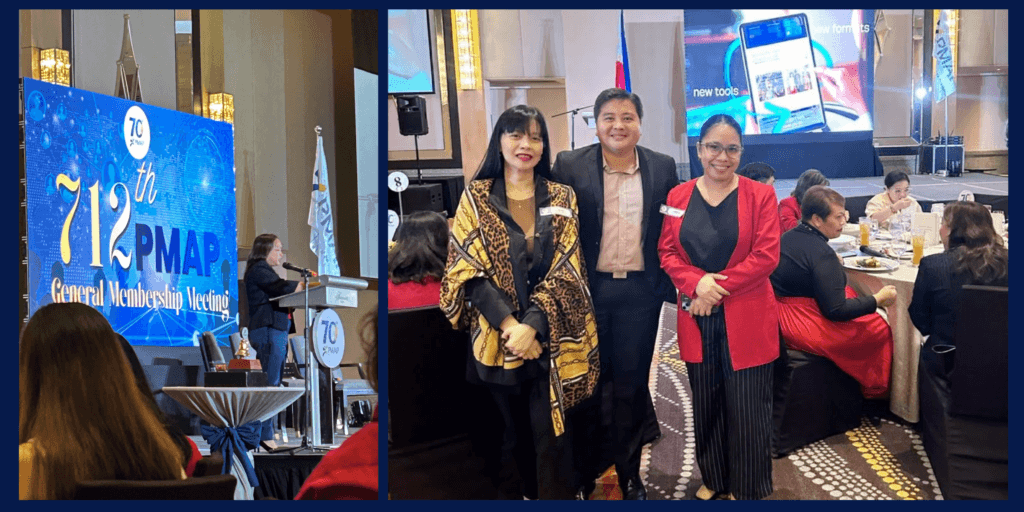
The 712th General Membership Meeting of the People Management Association of the Philippines (PMAP) highlighted how organizations can navigate disruption and transformation. The panel discussion, “Powering the Next HR Shift,” focused on strategy, capital, and technology, with insights from leaders across industries.
Three Key Pillars Guiding the Future of HR
Disruption
Rapid changes in technology, evolving employee expectations, and a multi-generational workforce are reshaping how organizations operate. Companies must adapt strategies and skills to remain competitive.
Design
Organizations must redesign processes, build digital workplaces, and adopt leadership models that encourage innovation. Aligning HR strategies with business goals ensures talent development supports long-term success.
Destination
Leadership must prepare for the future of work by integrating AI with human capabilities, building skilled workforces, and fostering collaboration between people and machines.
Insights from the Panel Discussion
- Jerry Ngo (East West Bank): Disruption is constant, but today’s speed is unprecedented. Automation and AI are transforming industries rapidly.
- Panel Consensus: AI will not replace humans. Instead, the future of HR involves collaboration between AI and people, enhancing productivity while preserving creativity and judgment.
- Risks of Overuse: Excessive automation can reduce critical thinking. Concerns include data privacy, regulation gaps, and accountability when AI systems err.
Benefits of AI in HR
AI offers significant advantages when applied responsibly:
- Improved decision-making through data analysis and trend prediction.
- Enhanced customer experience with personalized services.
- Increased operational efficiency by automating repetitive tasks.
HR’s Role in Workforce Transformation
HR professionals must lead the shift by:
- Upskilling and reskilling employees.
- Encouraging adaptability and openness to change.
- Designing modern ways of working aligned with organizational goals.
This leadership ensures that human skills—creativity, empathy, and judgment—remain central in the future of HR.
Key Takeaways
- Embrace Change: Adapt quickly and continuously improve skills.
- Adopt AI Responsibly: Balance automation with human oversight.
- Human Skills Remain Essential: Creativity and leadership cannot be replaced.
- HR Must Lead Transformation: Guide employees through disruption and innovation.
Conclusion
The panel reinforced that technology and human talent must work together. The future of HR lies in collaboration, adaptability, and responsible innovation. By embracing disruption and aligning strategies with business goals, HR can shape organizations that thrive in the digital age.
For more insights and upcoming events, visit John Clements Contact Us. Connect with us on social media to stay updated on HR trends and innovations.

