
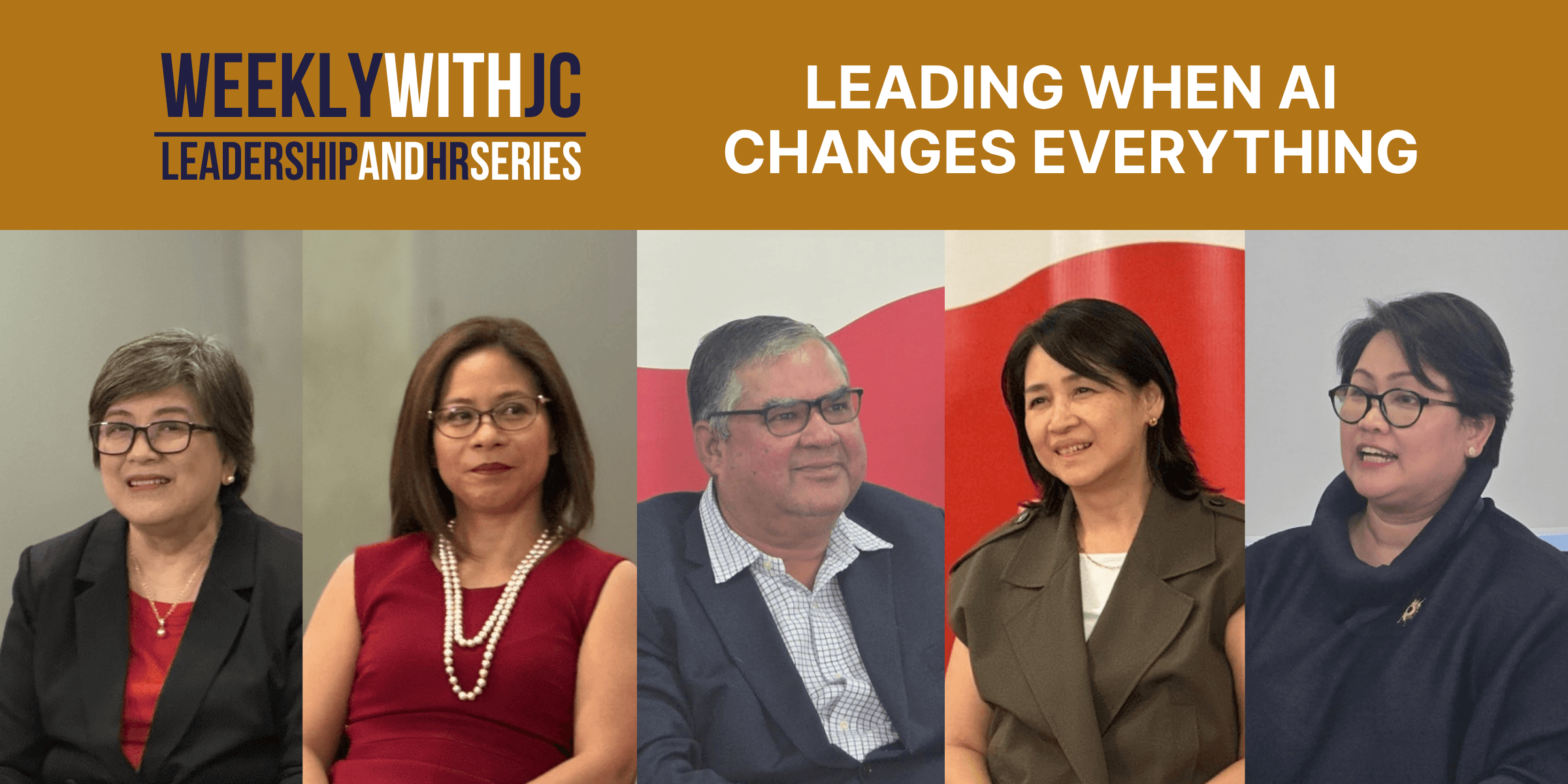
Last May 7, industry leaders and HR professionals came together for a meaningful discussion about how Artificial Intelligence (AI) is reshaping leadership, workplace culture, and the future of work. The event, titled Leadership and HR Series: Leading When AI Changes Everything, featured respected speakers who shared insights on digital transformation, ethical leadership, and the increasing impact of AI across organizations.
Balancing Innovation with Empathy
Featured speaker Pushkar Misra (Business Consultant, Ex-President & CEO – APAC, Hinduja Global Solutions) along with panelists Vanee Gosiengfiao, (General Manager, Avon Philippines) Michelle Alarcon (President, Z-Lift Solutions, Inc) with moderator Michelle Guce (Chief Human Resources Officer, Malayan Insurance Co., Inc) highlighted the importance of balancing innovation with empathy, ethical leadership, and strong human connection in the workplace. As more companies integrate AI-driven technologies, leaders and HR professionals face challenges in adapting while ensuring employees remain engaged, motivated, and supported.
Michelle Guce, FVP and Chief HR & Admin Officer of Malayan Insurance Co., Inc., emphasized the value of people-centered leadership in today’s digital era. She explained that although technology can streamline operations and improve productivity, organizations must continue prioritizing employee well-being, trust, and collaboration. Effective leaders create workplaces where employees feel empowered and secure despite ongoing technological changes.
AI Leadership as Responsibility
Pushkar Misra, a business consultant and former President & CEO APAC of Hinduja Global Solutions (HGS), shared his expertise on organizational transformation and the evolving role of AI in business. He pointed out that AI should not simply be viewed as a technological tool, but also as a leadership responsibility. While AI can automate processes, analyze information quickly, and improve efficiency, strong leadership remains necessary to guide teams, inspire employees, and make ethical decisions.
For context on responsible AI use, see: https://www.nist.gov/artificial-intelligence
Adaptability and Continuous Learning
Meanwhile, Vanee Gosiengfiao and Michelle Alarcon shared perspectives on embracing innovation while maintaining strong leadership values and employee engagement. They emphasized adaptability, continuous learning, and creating workplace cultures that encourage collaboration and innovation. Their insights showed how organizations can embrace AI while keeping people at the center of every decision.
Human Qualities Remain Essential
One of the most impactful statements shared during the discussion was, “AI Has a Fatal Flaw. It Can’t Be Human.” This message reminded participants that despite the capabilities of AI, it cannot replace human qualities such as empathy, creativity, compassion, and emotional intelligence. These qualities remain essential in building strong relationships, maintaining trust, and creating positive workplace environments.
Jobs, Upskilling, and Transformation
The discussion also addressed concerns about AI replacing jobs. Pushkar Misra explained that throughout history, technological advancements have transformed industries and job roles rather than eliminating the need for human workers. Consequently, employees are encouraged to continuously enhance their skills and remain open to learning new technologies. Upskilling and adaptability were highlighted as critical factors for success in today’s rapidly changing work environment.
For workforce development resources, visit: https://www.dole.gov.ph
Ethical AI Leadership
Another key topic discussed was ethical leadership and responsible AI implementation. The speakers stressed that organizations must use AI fairly, responsibly, and transparently, especially in areas such as hiring, employee evaluation, and decision-making. Companies were urged to establish ethical standards and avoid bias when using AI-driven systems.
Key Learnings for Leaders
The discussion provided several important takeaways:
- AI leadership should enhance human capabilities rather than replace people entirely.
- Adaptability and continuous learning are essential.
- Empathy and emotional intelligence remain vital leadership qualities.
- HR professionals play a crucial role in helping employees adjust to workplace transformation.
- Ethical AI must be prioritized in every organization.
- Upskilling is necessary in an evolving digital workplace.
Conclusion
Overall, the Leadership and HR Series: Leading When AI Changes Everything discussion offered valuable insights into the future of work in the age of AI leadership. The session reminded participants that while technology continues to evolve, human connection, ethical leadership, and compassion will always remain important. More importantly, the event encouraged leaders and professionals to embrace innovation while ensuring that people remain at the heart of every organization.
Ready to explore how your company can strengthen leadership in the age of AI? Contact Us today.

