
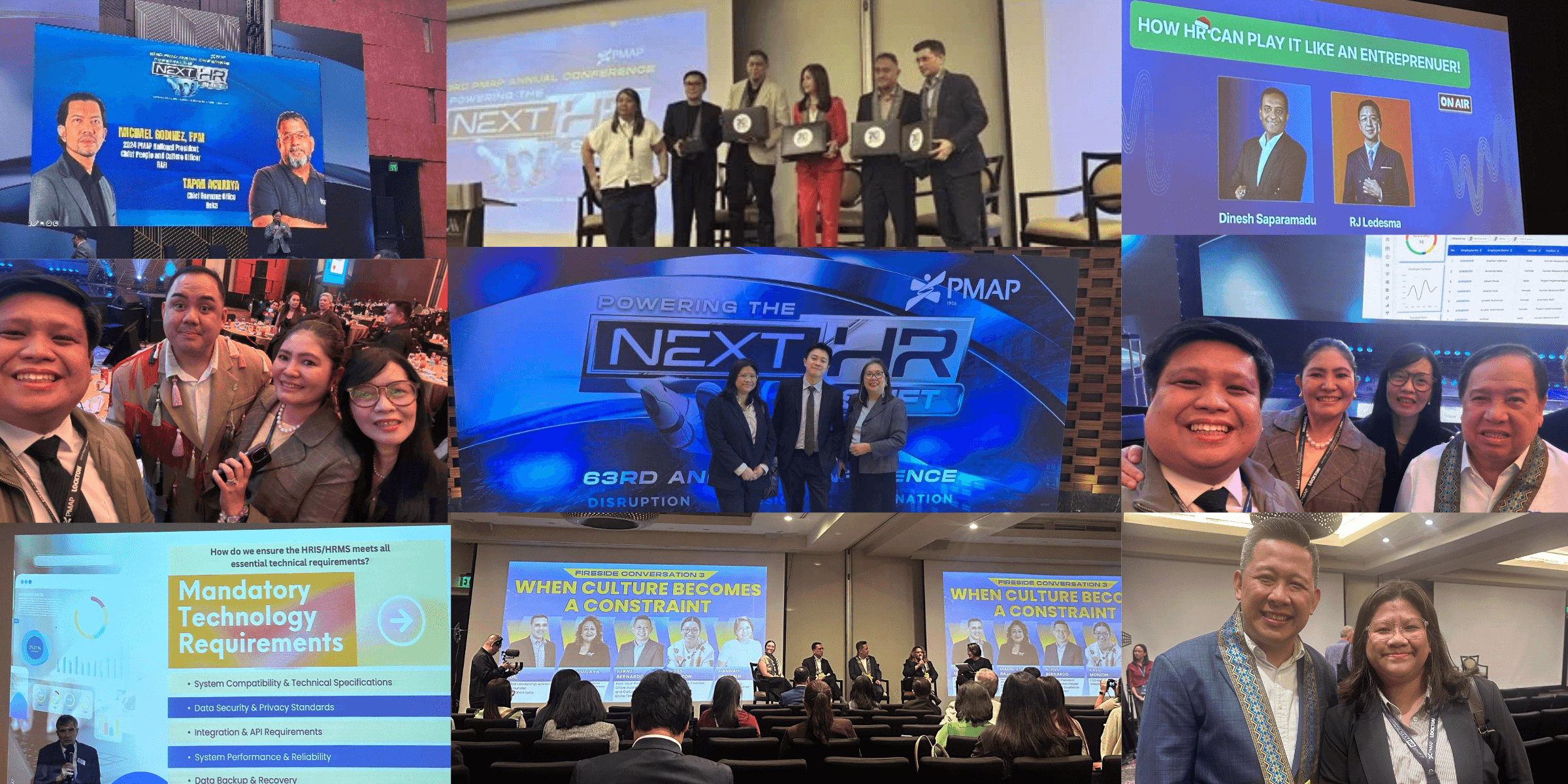
What will separate future-ready organizations from those left behind? According to the discussions on Day 2 of the PMAP Annual Conference 2026, the answer goes beyond technology. From AI readiness and workforce architecture to culture transformation and employee wellbeing, the sessions explored how organizations can adapt, innovate, and grow in a rapidly changing world.
As they explored the day’s plenaries and breakout sessions, Dan, Lesther, Alina, and Eunice uncovered lessons that reached far beyond traditional HR practices. Together, their insights highlighted the growing need for organizations to balance innovation with responsibility, empower people at every level, and build cultures that can adapt while keeping employees at the center of every decision.
For additional insights on labor and workforce trends in the Philippines, organizations may refer to https://www.dole.gov.ph and https://www.pmap.org.ph.
Contributing Writers: Dan Napa, Lesther Calimon, Alina Manaig, Eunice Javier
Key Themes from Day 2
Several themes emerged throughout the conference:
- Responsible AI adoption
- Workforce design and skills-based organizations
- Trust-based leadership
- Employee wellbeing and retention
- Culture transformation
- Fairness, equity, and inclusion
- Strategic HR technology implementation
Consequently, these topics painted a clear picture of where HR is headed in the coming years.
The Shifting Seat of Power: Influence, Expertise, and Accountability
Information Creates Influence
During the fireside chat The Hidden Power Shifts in the Organization, Lesther explored how organizational power is changing in today’s workplace.
The session emphasized that while formal authority still matters, influence increasingly comes from access to information, expertise, and the ability to contribute meaningful ideas. As technology gives more employees access to data, organizations can benefit from broader participation in discussions and decision-making.
However, the speakers stressed an important point: access alone does not create value. Employees must also know how to analyze information, think critically, and turn insights into action.
The Growing Role of Frontline Expertise
Lesther also noted the rising importance of frontline employees. Those closest to customers, operations, and day-to-day challenges often have insights that senior leaders cannot easily see.
Therefore, organizations should empower employees to share their expertise while maintaining clear governance structures. This balance allows decisions to be made closer to the work without sacrificing accountability.
Leadership in a More Distributed Workplace
Another lesson centered on the changing role of leadership. Rather than directing every decision, leaders increasingly act as connectors and facilitators. They bring together the right people, encourage collaboration, and help teams solve problems effectively.
At the same time, successful organizations establish clear ownership and decision rights to prevent confusion and delays.
Human Judgment Still Matters
Finally, Lesther learned that organizations must focus on skills as much as job titles. As AI tools become more common, accountability becomes even more important.
Technology can provide recommendations and insights. Yet human judgment, oversight, and responsibility must remain at the center of decision-making. Ultimately, organizations that balance empowerment, innovation, and accountability will be better positioned for long-term success.
From Managing People to Designing Work
HR as a Workforce Architect
In another fireside chat, The Rise of the Workforce Architect: HR’s New Identity, Lesther learned how the HR function continues to evolve beyond traditional people management.
The discussion emphasized that recruitment, payroll, compliance, and employee relations remain important. However, HR’s future role extends further. Today’s HR professionals must help design workforce structures, align roles with business priorities, and maximize employee capabilities.
Specifically, the session showed how HR is moving from process management to workforce architecture.
Balancing Technology and Human Insight
Another major takeaway involved balancing technology, business acumen, and human understanding. The speakers emphasized that AI should create opportunities for more strategic work, including:
- Workforce planning
- Leadership development
- Capability building
- Organizational transformation
Furthermore, success should be measured not only through completed activities but also through business outcomes and employee impact.
The Fairness Paradox: Moving Beyond Equal Treatment
Equality, Equity, and Meritocracy
During The Myth of Equal Treatment, Lesther explored the relationship between equality, equity, and meritocracy.
The session challenged the belief that treating everyone the same automatically creates fairness. Employees bring different experiences, strengths, and circumstances to work. As a result, they may require different types of support to access opportunities and succeed.
True fairness involves creating equitable opportunities for employees to contribute, develop, and advance.
Leadership’s Role in Fairness
The speakers also highlighted that fairness extends beyond policies and representation. It appears in everyday decisions involving:
- Development opportunities
- Recognition programs
- Performance feedback
- Career advancement
Therefore, HR leaders must continually review policies and practices to ensure they remain transparent, evidence-based, and aligned with both organizational goals and employee success.
Redesigning Work in the Age of AI
AI Readiness Requires Workforce Transformation
During the plenary session Governance, Employment, Organizations in the Age of AI, Dan explored how AI is reshaping workforce design.
A key takeaway was that successful AI transformation requires organizations to rethink roles, capabilities, and workforce structures. Rather than replacing employees, digitalization should allow people to focus on work that requires critical thinking, creativity, collaboration, and judgment.
As automation increases, HR must help employees build new skills and prepare for emerging opportunities.
Governance and Responsible Innovation
Another key lesson focused on organizational readiness. The panel highlighted the importance of:
- Building AI fluency across the workforce
- Establishing governance frameworks
- Focusing on outcomes instead of activities
- Maintaining ethics and accountability
Consequently, AI readiness is not simply about purchasing new tools. It is about building a culture of continuous learning and responsible innovation.
For guidance on responsible digital transformation and governance, organizations may also explore https://dict.gov.ph and https://www.sec.gov.ph.
Trust as the Backbone of HR
Why Trust Matters More Than Ever
During the PMAP Partner-Led Plenary Trust as the Backbone of HR, Dan gained insights into how trust influences leadership effectiveness.
The speakers introduced the Trust Quotient (TQ) and reinforced a simple message: in a world shaped by AI and constant change, trust remains one of the strongest differentiators for leaders.
Technology can provide information. Trust, however, creates influence.
Becoming a Trusted Advisor
The session emphasized that trust is built through:
- Credibility
- Reliability
- Empathy
- Genuine concern for others
The discussion around the three levels of resistance to change, “I don’t get it,” “I don’t like it,” and “I don’t like you,” demonstrated that leaders must address emotional concerns alongside technical challenges.
As a result, HR professionals can create greater business impact by becoming trusted advisors who connect people, technology, and organizational goals.
People, Wellbeing, and AI
Shared Ownership of Talent Decisions
Alina attended sessions on talent management, wellbeing, and AI adoption.
In Who Owns Talent Decisions?, she learned that effective talent management is a shared responsibility. HR safeguards fairness and process integrity. Business leaders own talent outcomes. Ultimately, CEOs remain accountable for organizational success.
This perspective positions HR as a strategic advisor rather than a gatekeeper.
Wellbeing Drives Performance
In Maximize Productivity and Retention Through Wellbeing and Psychosocial Risk, a clear connection emerged between wellbeing and performance.
Employees perform better when organizations actively address:
- Mental health
- Workplace stress
- Psychological safety
- Leadership wellbeing
Therefore, organizations that invest in employee wellbeing are more likely to improve retention and productivity.
The Human Advantage in an AI World
Another notable session, Beyond the Prompt: The Human Advantage and Genuine Risk in an AI World, examined risks such as misinformation, deepfakes, data privacy concerns, and accountability challenges.
Alina learned that organizations must pair innovation with governance. They must also invest in continuous reskilling to ensure employees can work effectively alongside new technologies.
When Culture Becomes a Constraint
Preserving Values While Embracing Change
During When Culture Becomes a Constraint, Eunice explored how culture can either support or hinder growth.
The speakers warned that siloed teams, resistance to new ideas, poor communication, and a lack of psychological safety can signal deeper cultural problems.
In contrast, healthy cultures evolve while remaining anchored in strong values.
HR’s Strategic Role
The discussion reinforced HR’s role in identifying cultural barriers and aligning people practices with business priorities.
Ultimately, strong cultures are not defined by preserving the status quo. Instead, they succeed because they adapt when circumstances demand change.
Turning HR Wishes into Action for 2027
During All HR Wants for Christmas Is?, Eunice learned that effective HR leaders do not wait for perfect conditions.
Instead, they:
- Embrace innovation
- Learn from failure
- Challenge outdated practices
- Act with accountability
- Focus on creating value
The speakers encouraged HR professionals to think like intrapreneurs. In today’s environment, completing tasks is no longer enough. Leaders must also identify opportunities, solve problems, and drive business outcomes.
HR Tech Minus the Headache
Choosing Technology That Creates Real Value
The session HR Tech Minus the Headache focused on selecting technology based on business needs rather than attractive features.
Eunice learned that organizations should evaluate HR systems based on their ability to:
- Solve operational challenges
- Improve efficiency
- Support employees
- Scale with growth
- Protect sensitive data
Technology Should Serve People
Another key takeaway was that technology only succeeds when people find it useful.
Effective implementation requires strong project management, clean data, clear objectives, and user adoption. The best HR solutions are not always the most advanced. Often, they are the tools that align closely with organizational goals and improve employee experiences.
Looking Ahead
Across the various sessions, a common theme emerged throughout the PMAP Annual Conference 2026: the future of HR sits at the intersection of technology, leadership, and human-centered transformation.
From AI governance and workforce design to trust, wellbeing, culture, and fairness, the lessons shared by Dan, Lesther, Alina, and Eunice demonstrated that organizations must think beyond technology alone. Leaders need to build adaptable cultures, develop future-ready skills, and create workplaces where people can thrive.
Day 2 of the PMAP Annual Conference 2026 reinforced a powerful message. Technology may accelerate change, but people, leadership, and purpose will determine its success.
As the insights from the PMAP Annual Conference 2026 continue to shape workplace conversations, organizations have an opportunity to rethink how they develop talent, embrace innovation, and prepare for the future of work.
The lessons from the PMAP Annual Conference 2026 show that the most successful organizations will be those that combine technological progress with strong leadership, sound governance, and a genuine commitment to people.
Continue the Conversation
Looking to strengthen your workforce, leadership pipeline, or HR strategy? Contact the experts at John Clements to learn how we can help your organization navigate the future of work.

