
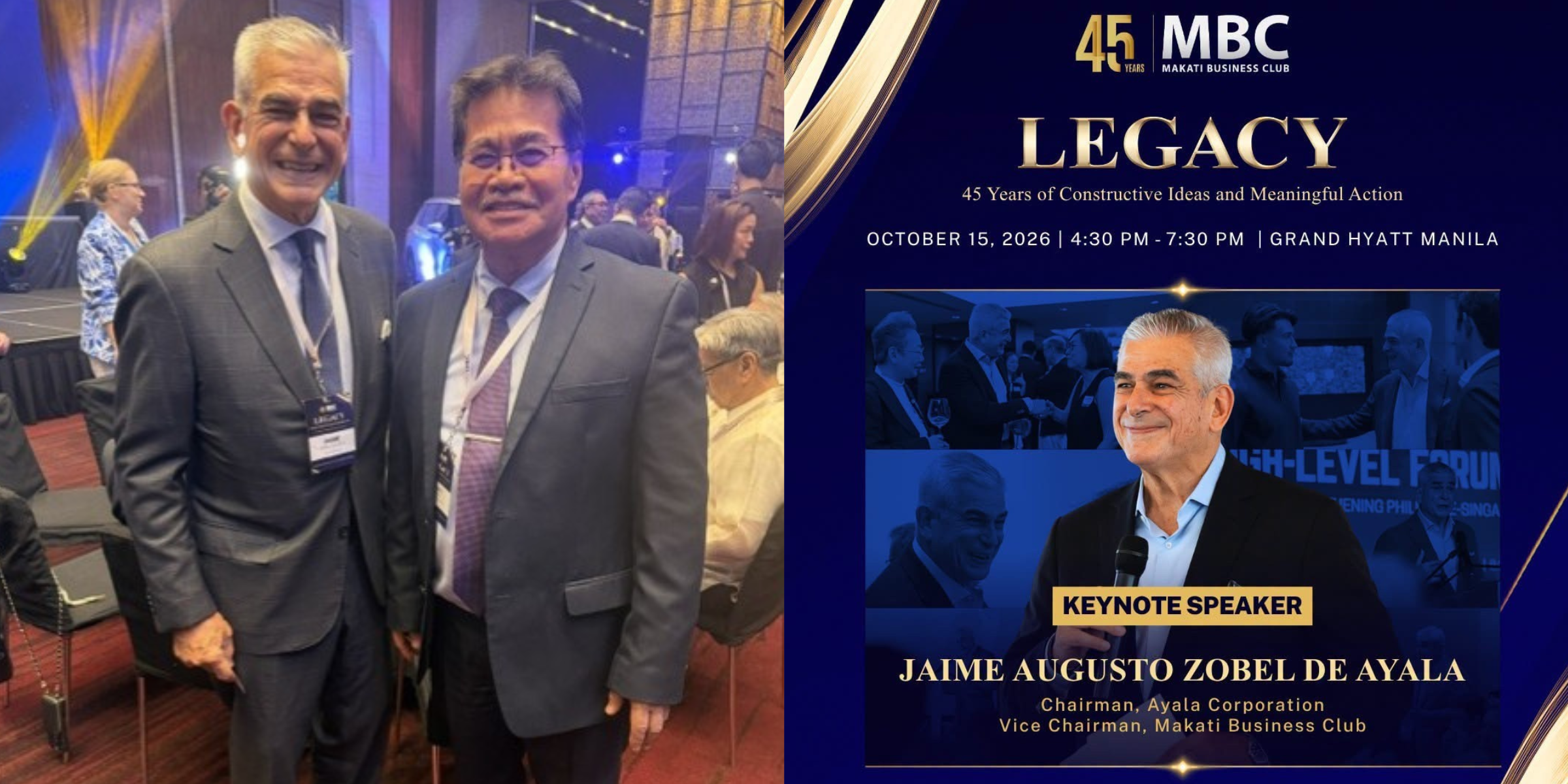
Under the theme “45 Years of Constructive Ideas and Meaningful Action,” the celebration featured Jaime Augusto Zobel de Ayala (JAZA), Chairman of Ayala Corporation and Vice Chairman of MBC, as keynote speaker. His message highlighted the continued relevance of the organization’s founding principles and emphasized the need for business leaders to work together in addressing the country’s most pressing challenges.

A Legacy Built on Shared Responsibility
Founded in 1981 by Enrique Zobel and fellow industry leaders, the Makati Business Club emerged during a period of political and economic uncertainty. Its founders came from different industries, including competing businesses, yet they shared a common belief: the country’s interests must come before individual corporate concerns.
Their vision was simple but powerful. Business leaders should help strengthen society and support democratic institutions. Forty-five years later, that spirit of collective responsibility remains just as important.
Why National Prosperity Matters
According to JAZA, business success and national progress are closely connected. A strong economy attracts investment, generates jobs, and creates opportunities for Filipinos. Consequently, sustainable growth depends on broad participation across society.
Furthermore, businesses thrive when communities thrive. This connection highlights why private-sector leaders must remain engaged in issues that affect the country’s long-term development.
Navigating New Challenges and Opportunities
Today, the Philippines operates in a more complex environment. Geopolitical tensions, supply-chain disruptions, rapid technological advances, and climate-related risks continue to shape economic realities.
At the same time, these challenges present significant opportunities.
Key growth drivers include:
- Expansion of the digital economy
- Investments in infrastructure
- Development of renewable energy
- Participation in global semiconductor supply chains
- Growth in advanced manufacturing initiatives such as Pax Silica
Specifically, these developments could strengthen the country’s competitiveness and position the Philippines as an important player in regional and global markets.
For additional information on national economic priorities, readers may refer to:
Building the Right Foundation
Realizing these opportunities requires more than ambition. Government projects must demonstrate accountability and transparency. In addition, investors need reliable infrastructure, sustainable and competitively priced energy, and stronger social services.
Education and healthcare deserve particular attention. Every Filipino should have access to quality services that enable participation in economic growth and national progress.
The Importance of Cross-Sector Collaboration
For JAZA, long-term development depends on collaboration among government, business, civil society, and international partners. Such cooperation can help accelerate innovation, strengthen talent development, and attract investment and technology.
This is where the Makati Business Club continues to play an important role. The organization serves as a platform for constructive dialogue and collective action around shared national priorities.
Priorities that Must Remain Front and Center
According to the discussion, several issues deserve continued attention:
- Good governance
- Transparency and accountability
- Rule of law
- Technological advancement
- Food security
- Talent development
- Sustainable economic growth
These priorities affect not only businesses but also the country’s overall competitiveness and resilience.
From Ideas to Meaningful Action
As the Makati Business Club celebrates 45 years of engagement, its legacy extends beyond the ideas it has generated. More importantly, it is reflected in the actions those ideas inspire.
In contrast to short-term thinking, the organization continues to advocate solutions that support lasting progress. Its work demonstrates how collaboration can lead to meaningful outcomes for both business and society.
Today, the Makati Business Club remains a strong advocate for a Philippines that is prosperous, inclusive, and globally competitive.
Looking Ahead
Ultimately, building the nation Filipinos aspire to have requires a shared commitment from government, business, and civil society. As JAZA reminded his audience, the future is not something the country simply waits for. It is something that people can deliberately shape through leadership, cooperation, and action.
The challenge is clear: work together, act with purpose, and help build the country that every Filipino deserves.
Connect With Our Team
Interested in learning more about leadership, talent solutions, and workforce strategies that help organizations grow and succeed? Contact us at John Clements today!

