

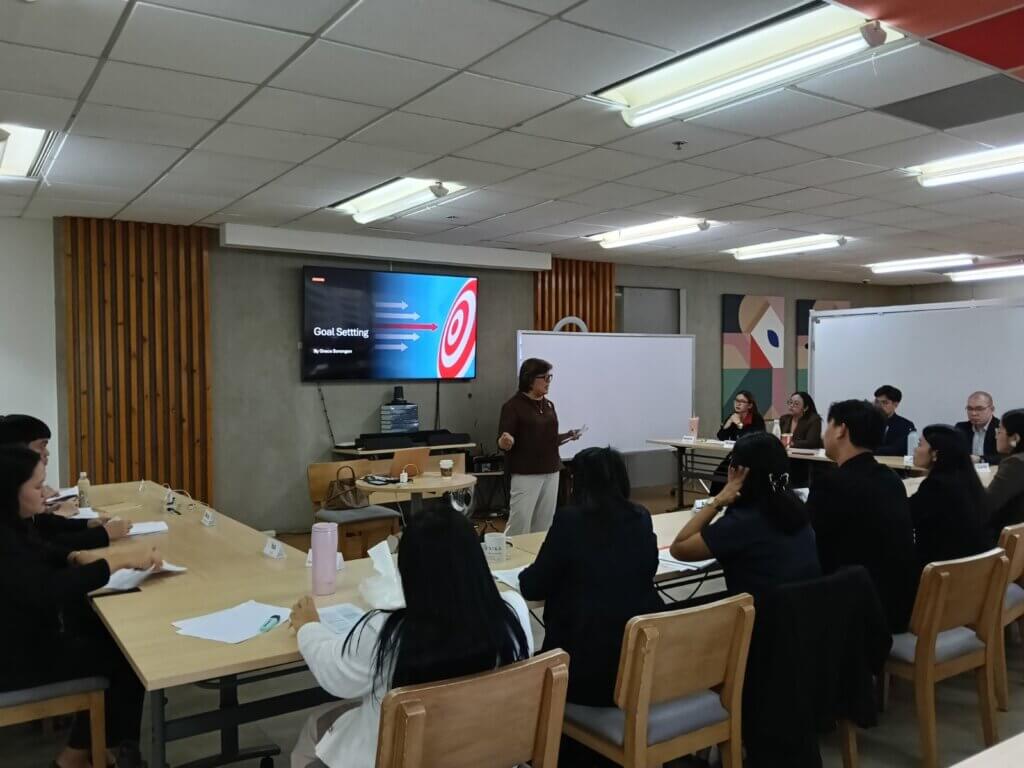
Organizations often invest in leadership development programs to build future-ready professionals. However, one of the most valuable lessons from any development journey is not simply learning new skills. It is learning how to understand oneself. This was the central theme of the Breakthrough Development Program: Managing Oneself, facilitated by Ms. Evelyn Grace C. Sorongon, Executive Vice President of the Service Delivery Hub.
The session challenged participants to look beyond traditional goal setting and reflect on a deeper question: Who am I, and why am I pursuing my goals? Through meaningful discussions, self-reflection activities, and the case study “In Search of a Second Act,” participants gained valuable insights into self-awareness and goal setting, personal leadership, and intentional career development.
Why Leadership Starts with Self-Understanding
The session began by encouraging participants to identify their expectations and reflect on why they chose to attend the program. Rather than focusing immediately on career aspirations or performance targets, the discussion emphasized the importance of understanding oneself first.
A recurring message throughout the session was that leadership development is intentional. Growth does not happen by accident. Instead, individuals must actively define what they want to achieve and take ownership of their development journey.
Participants were asked to think about their goals for the next 12 months and, more importantly, examine why those goals mattered.
This simple exercise revealed an important truth: many people know what they want, but fewer understand why they want it. Without clarity of purpose, even well-defined goals can lose meaning over time.
Furthermore, strong leaders understand that personal growth begins with reflection before action. Self-awareness and goal setting provide the foundation for making decisions that align with long-term aspirations.
The Hidden Challenge Behind Goal Setting
One of the most impactful lessons from the session was the idea that goal setting is not merely about determining what to accomplish. It is about understanding who we are.
Many people view goals as destinations. They focus on promotions, financial achievements, certifications, or business milestones. While these objectives are important, the session highlighted that meaningful goals begin with self-awareness rather than targets.
Questions Worth Asking Yourself
Participants were encouraged to ask themselves difficult but necessary questions:
- Did I truly choose this goal?
- Why does this goal matter to me?
- Am I pursuing my own aspirations or someone else’s expectations?
- Does this goal align with my values and strengths?
These questions shifted the conversation from achievement to purpose. Rather than chasing goals because they appear impressive or expected, individuals were challenged to pursue goals that genuinely reflect who they are and who they want to become.
Consequently, self-awareness and goal setting become interconnected processes. Understanding one without the other often leads to misalignment and frustration.
When Too Many Opportunities Become a Problem
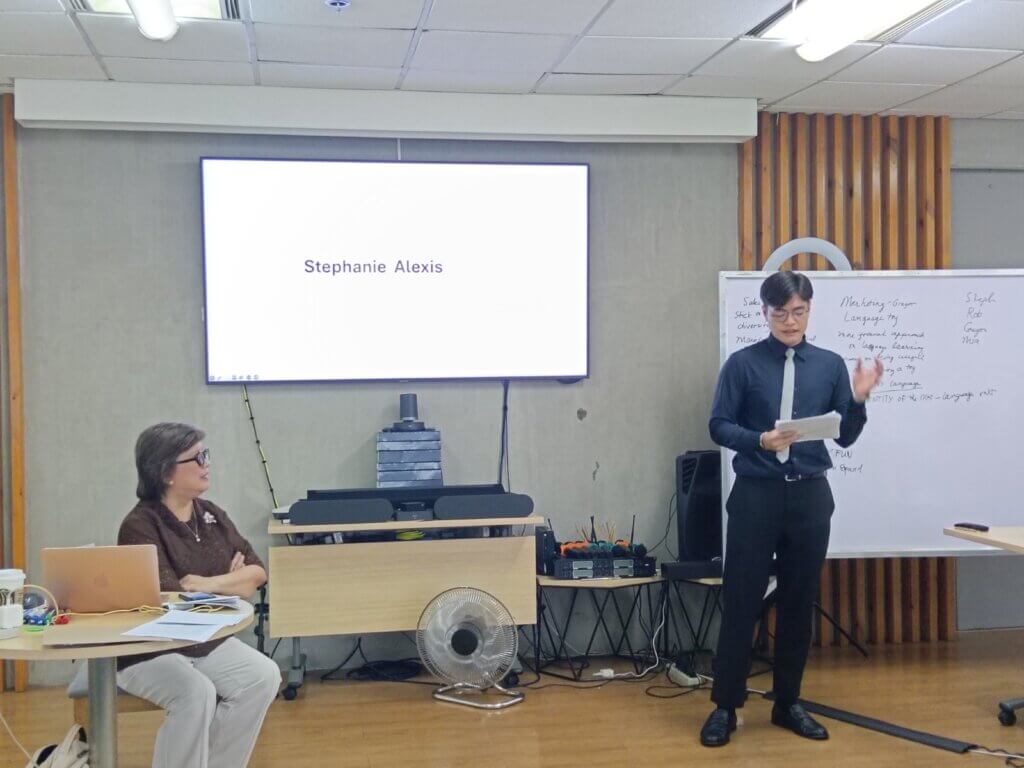
A significant portion of the session focused on the case study “In Search of a Second Act.” The story centered on Steph, an entrepreneur known for her intelligence, creativity, persistence, and ability to identify business opportunities.
Participants admired Steph’s entrepreneurial mindset. She demonstrated courage in building partnerships, launching products, and pursuing innovative ideas. Her ability to create opportunities showed strong business instincts and a willingness to take calculated risks.
However, her strengths also revealed a critical challenge.
Steph had so many opportunities available that deciding which path to pursue became increasingly difficult. Instead of struggling to create options, she struggled to choose among them. This led participants to discuss whether her situation reflected a business problem, a leadership challenge, or a personal issue.
The consensus was that it involved elements of all three.
Understanding Analysis Paralysis
The case illustrated a common reality faced by high-performing professionals. Success often creates more opportunities, responsibilities, and expectations. Without clarity and focus, individuals can become overwhelmed by competing priorities and experience what is commonly known as analysis paralysis.
The issue is not always a lack of opportunities. Sometimes, the real challenge lies in determining which opportunities deserve our attention.
In contrast, professionals who practice self-awareness and goal setting often find it easier to prioritize opportunities that align with their values and long-term vision.
Why Every “Yes” Requires a “No”
Another powerful insight from the session was the recognition that goal setting requires making choices.
Every “yes” inevitably means saying “no” to something else.
Time, energy, attention, and resources are limited. As a result, effective goal setting is not about pursuing everything that seems possible. It is about identifying what matters most and committing to it.
This perspective encourages discipline and intentionality. Individuals must learn to filter opportunities through the lens of their values, long-term vision, and desired contribution.
The case of Steph clearly demonstrated this principle. Her challenge was not a lack of ambition or capability. Rather, she needed to determine which opportunities aligned most closely with her purpose and future direction.
Five Questions That Can Shape Your Career Direction
A key framework discussed during the session focused on managing oneself through self-reflection.
Essential Self-Reflection Questions
Participants were encouraged to continually ask:
- What are my strengths?
- How do I perform best?
- What are my values?
- Where do I belong?
- What should my contribution be?
These questions move beyond job titles and organizational charts. They encourage individuals to understand the unique value they can bring to their teams, organizations, and communities.
The discussion also highlighted that career goals should not simply revolve around obtaining the next position. Promotions can be rewarding, but they should not be the sole measure of success.
Instead, career aspirations should emerge from understanding where one can make the greatest contribution. When individuals align their work with their strengths and values, they are more likely to remain engaged, motivated, and effective.
Specifically, self-awareness and goal setting help professionals identify opportunities where they can create meaningful impact rather than merely pursue status.
The Lesson That Lasts Beyond the Session
Perhaps the most meaningful takeaway was the realization that a goal you do not truly own will rarely receive your best energy.
It is easy to pursue goals influenced by external pressures, expectations, or comparisons. Yet sustainable success requires personal commitment. Goals become more powerful when they are rooted in self-awareness and genuine purpose.
The session reinforced that personal growth is not only about achieving results. It is also about becoming the person capable of achieving those results responsibly and meaningfully.
Being intentional with our actions, decisions, and even the information we consume can shape the direction of our lives. Every choice contributes to the person we are becoming.
According to the Philippine Civil Service Commission, self-development and continuous learning play an important role in professional growth and leadership effectiveness.
Ultimately, maturity is not measured by the number of goals we achieve. It is measured by the wisdom and self-awareness we develop to choose the right goals in the first place.
Who Are You Becoming Along the Way?
The Breakthrough Development Program: Managing Oneself served as a timely reminder that leadership begins from within. Before managing teams, projects, or organizations, individuals must first learn to manage themselves. Through self-awareness and goal setting, intentional decision-making, and personal accountability, professionals can build careers and lives that are both successful and meaningful.
As we continue our professional and personal journeys, let us remember that the most important question is not simply “What do I want to achieve?” but “Who do I want to become?”
Interested in strengthening your leadership capabilities and accelerating your professional growth? Explore the programs offered by the John Clements Leadership Institute and take the next step in your leadership journey.

