
The Philippines has reached upper-middle-income status. This is something to celebrate. It means the country has made strong progress over the past 15 years, with higher incomes and a growing economy.
But this is not the end of the journey. It is the beginning of a more difficult stage.
Slower Growth and Rising Prices Ahead
The World Bank expects the economy to grow more slowly over the next two years. It projects growth of around 4.4 percent in 2025 and 3.7 percent in 2026. Inflation is also a problem. Prices have been rising, especially for food, transport, and electricity.
The Toll on Lower-Income Families
This is hardest on lower-income families. Poorer households spend most of their money on daily needs. When prices go up, they have less left for education, healthcare, savings, and other important expenses.
Businesses are also creating fewer jobs than before. Consumer spending has slowed, businesses are being more careful about investing, and unemployment has increased. Around 594,000 more people were unemployed in the first five months of 2026.
A Path to Lower Poverty
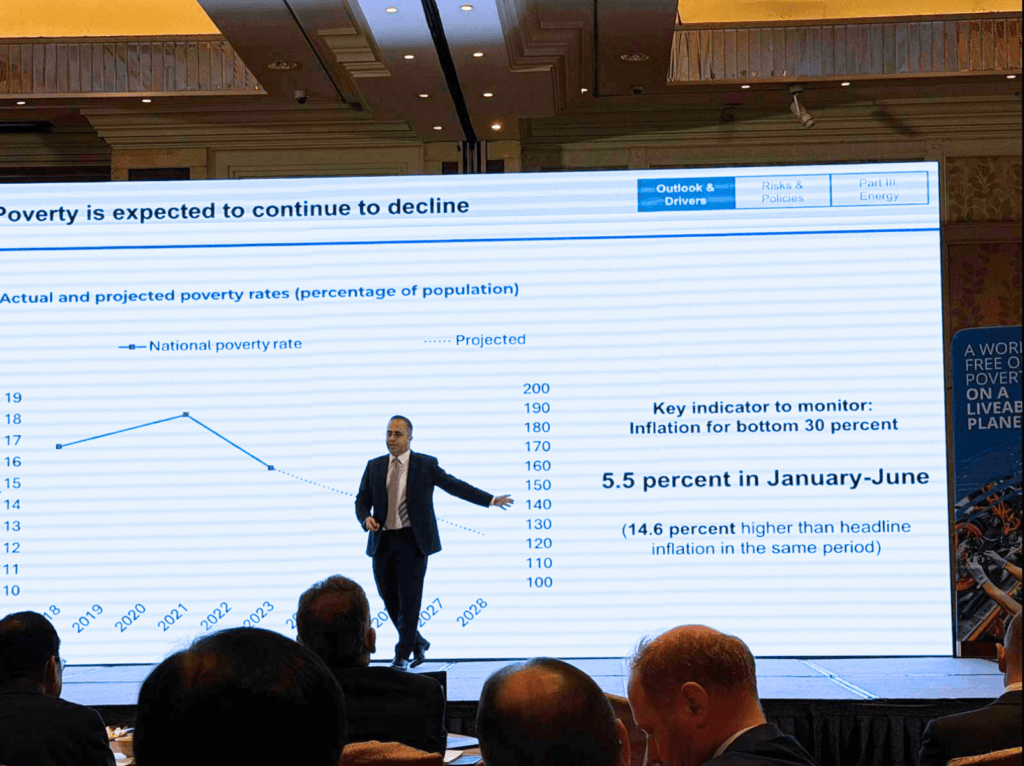
Still, there is encouraging news. The World Bank expects poverty to continue falling. It could reach around 11 to 12 percent by 2027 or 2028. But this will only happen if the country keeps supporting families who need help, manages inflation, and creates more jobs.
The Philippine government has chosen to give support mainly to poorer and more affected groups, instead of giving broad subsidies to everyone. This is a good approach. Broad subsidies are very costly, and they often help people who do not really need assistance. However, the government must make sure that support reaches all families who are struggling.
Avoiding the Middle-Income Trap
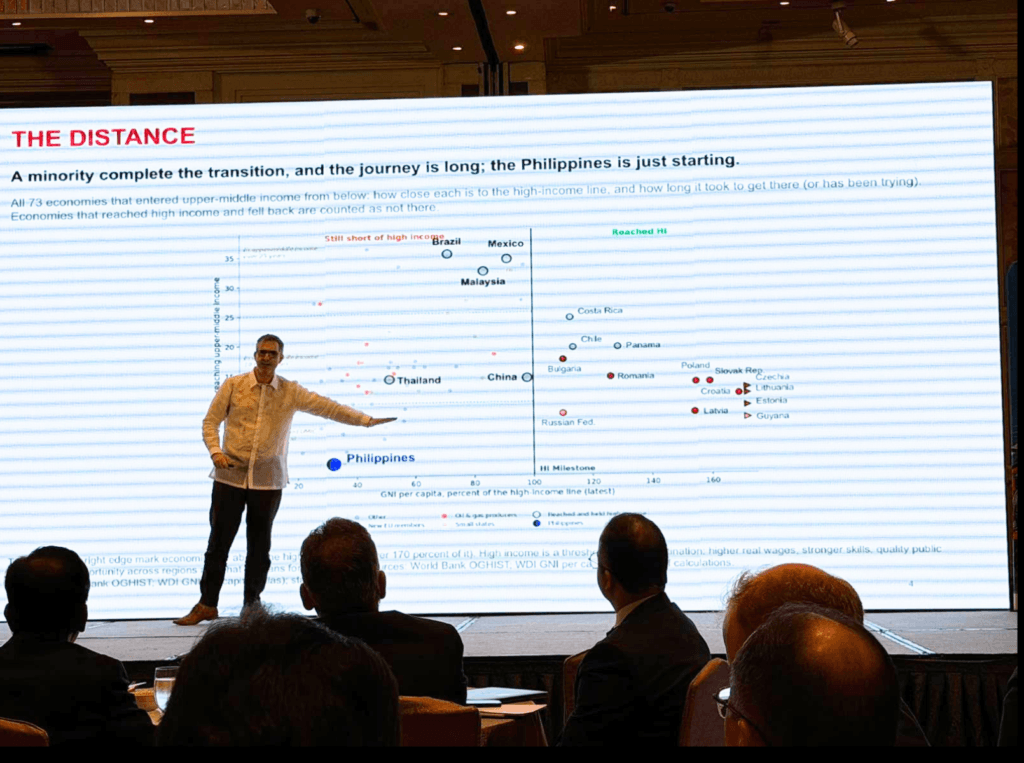
The bigger challenge is what happens after becoming an upper-middle-income country. Many countries reach this level but find it hard to move up further. Some stay there for many years. Others even move backward because of weak policies, poor governance, or economic problems.
For the Philippines to keep moving forward, it must improve not only how much it invests, but also how well it uses its money, people, and resources.
The country needs better roads, ports, internet access, schools, and training. It needs to make it easier for businesses to start, grow, and hire people. It needs fairer competition so that more companies—not only a few large ones—can succeed. It also needs stronger government systems, so the government actually carries out good policies properly.
The High Cost of Electricity
One major issue is electricity. Power prices in the Philippines are still higher than in many neighboring ASEAN countries. High electricity costs make life harder for families. They also make it more expensive for businesses to operate.
The country has made progress in renewable energy, such as solar and wind power. However, it has still not built or completed many approved renewable-energy projects. The government and private sector need to work faster. They must bring these projects online, improve the electricity grid, and make the power market more competitive.
If energy reforms succeed, electricity prices in Luzon could fall by around 28 percent between 2026 and 2030. This could help families save money, help companies expand, and create around 161,000 more jobs, especially in manufacturing.
Looking Beyond the Usual Growth Drivers
The Philippines must also look beyond its usual sources of growth. It needs to develop more kinds of exports, strengthen the IT-BPO industry, improve technology and skills, and prepare better for natural disasters and climate change.
Beyond a Higher Economic Label
The country has already come a long way. Reaching upper-middle-income status shows that progress is possible. But the real goal is not just a higher economic label.
The real goal is for more Filipinos to have stable jobs, better wages, affordable electricity, good public services, and real opportunities—whether they live in Metro Manila or in other parts of the country.
Leadership That Can Deliver This Next Stage
Moving past upper-middle-income status will take more than sound policy on paper. It will take leaders in government and business who can execute with discipline, adapt quickly, and turn plans into results. The John Clements Leadership Institute is committed to developing exactly this kind of leadership. Explore our programs to learn how we help organizations build the leaders the Philippines needs for its next stage of growth.

