
TL;DR:
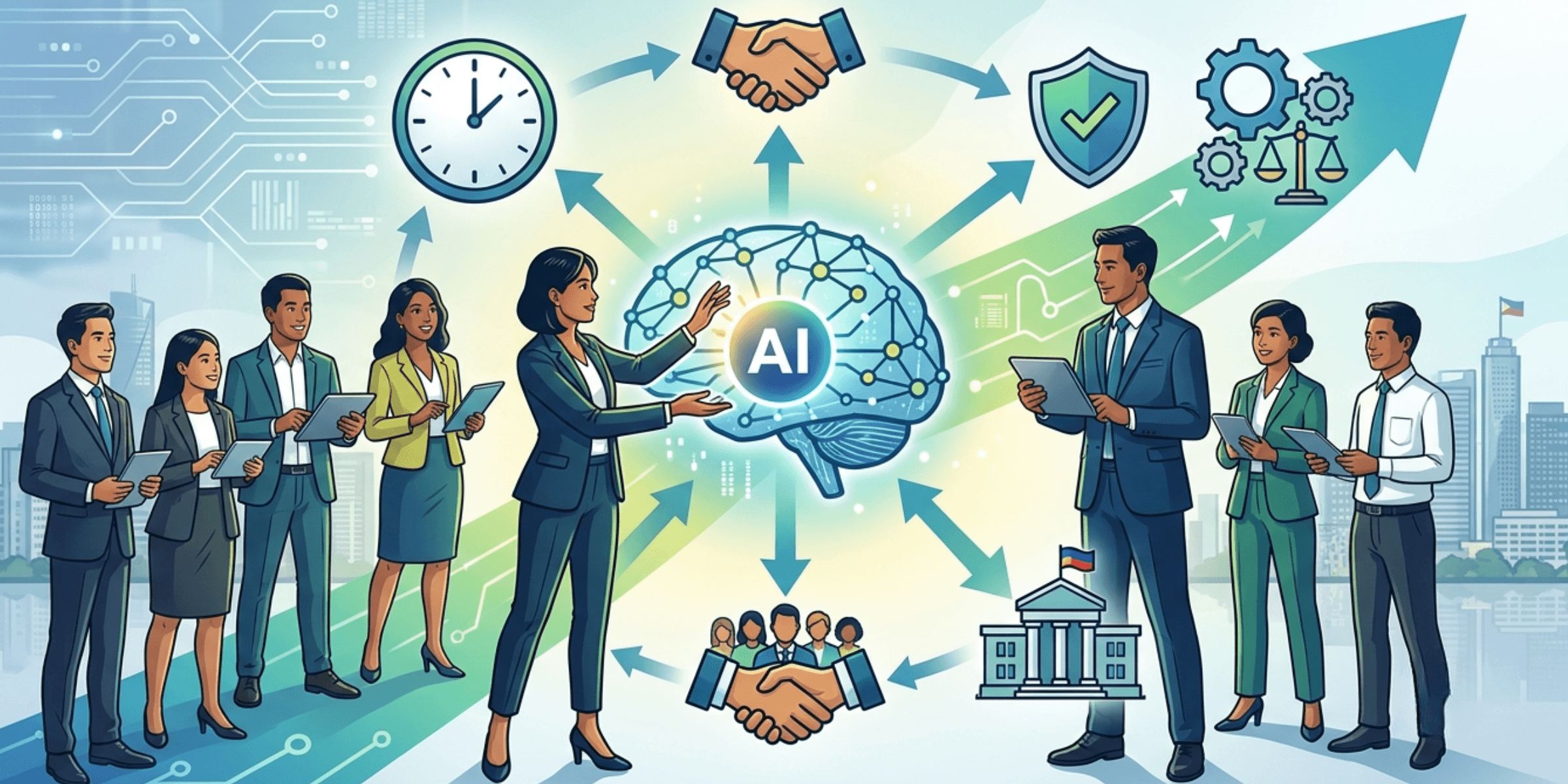
At the 2nd MAP x KPMG Technology Summit, Philippine business, government, and technology leaders agreed that scaling AI safely is a leadership challenge, not just a technical one. Key takeaways: treat AI adoption as a strategic priority rather than an IT project, build governance and guardrails alongside innovation, invest in employee education as new AI-related roles emerge, and keep human verification at the center of cybersecurity. Read on for the five leadership lessons from the summit.
Artificial intelligence has become one of the most talked-about technologies in recent years, but conversations have evolved far beyond the excitement of new tools. Organizations are now asking a more important question: How do we scale AI responsibly while maintaining trust, governance, and security?
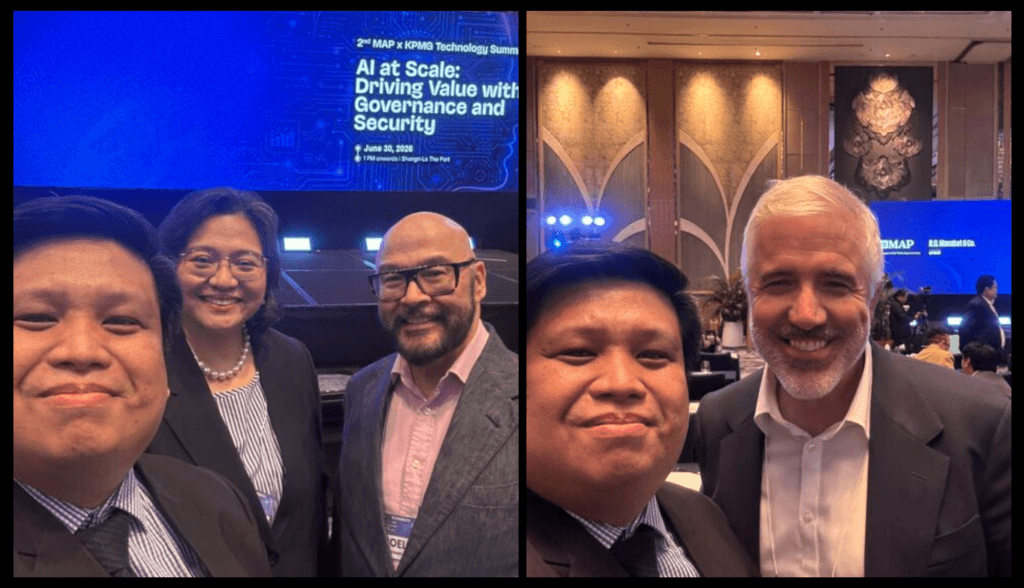
This was the central theme of the 2nd MAP x KPMG Technology Summit: “AI at Scale – Driving Value with Governance and Security,” held at Shangri-La The Fort. Organized by the Management Association of the Philippines (MAP) and KPMG in the Philippines, the summit brought together leaders from government, technology, consulting, cybersecurity, and the IT-BPM industry to discuss how AI is reshaping organizations and the responsibilities that come with its adoption.
Leadership, Not Technology, Drives Successful AI Adoption
What stood out throughout the day was that the discussions were not centered on the latest AI model or the next breakthrough application. Instead, the speakers consistently emphasized that successful AI adoption is ultimately a leadership challenge. Technology may be the catalyst, but people, governance, and trust will determine whether organizations realize its full potential.
Governance and Trust Take Center Stage
One of the strongest messages came during the opening remarks. Sharon Dayoan, CEO of KPMG in the Philippines, highlighted that as AI becomes increasingly embedded in how organizations work, innovation must be accompanied by transparency, accountability, and responsible governance. This message was reinforced by MAP President Donald Lim, who challenged business leaders to view AI not as an IT initiative but as a strategic priority that will influence how organizations make decisions, create value, and remain competitive.
This leadership perspective was further reinforced by DICT Secretary Henry Aguda in his keynote address. He emphasized that innovation alone is not enough; public trust must grow alongside technological advancement. As AI becomes more integrated into public services and private enterprise, transparency, fairness, human oversight, and accountability become essential. The rise of deepfakes, misinformation, scams, and increasingly sophisticated cyber threats demonstrates that governance can no longer be viewed as an afterthought. Instead, it must evolve alongside innovation to ensure that AI continues to serve people responsibly.
From “AI Governance” to Responsible AI Adoption
Michelle Alarcon, President of the Analytics & AI Association of the Philippines, introduced a perspective that resonated with many attendees. Rather than focusing on the term “AI Governance,” she encouraged organizations to think in terms of Responsible AI Adoption. Governance, she argued, should not exist simply to satisfy regulators. It should become a permanent organizational capability that enables AI to be deployed safely and effectively. She challenged organizations not to ask whether they should adopt AI. Instead, they should ask whether AI is truly the right solution for the problem they are trying to solve. It was a timely reminder that successful digital transformation begins with understanding business needs. It does not begin with implementing technology for its own sake.
AI Is Reshaping Jobs, Not Eliminating Them
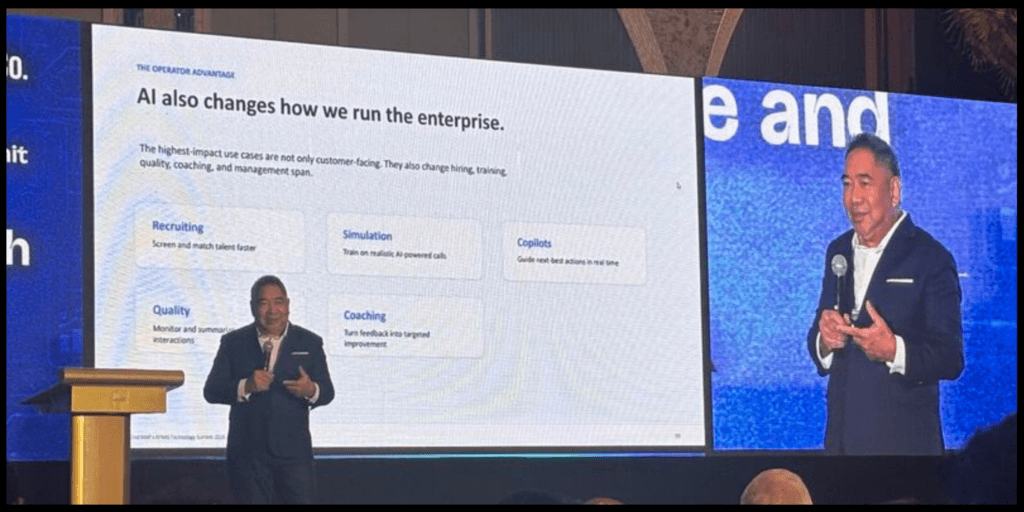
The impact of AI on employment was another recurring topic. This was particularly evident during the session by Rainerio “Bong” Borja, Chief Strategy Officer of Alorica. Contrary to the common belief that AI will simply replace jobs, he explained that the IT-BPM industry continues to grow. AI is changing the nature of work rather than eliminating it.
Routine customer interactions are increasingly handled through self-service platforms and conversational AI. This allows employees to focus on more complex tasks. These tasks require critical thinking, domain expertise, and empathy.
New roles are also emerging, including AI orchestrators, human-in-the-loop specialists, and AI trainers. This demonstrates that organizations are not replacing people. Instead, they are redefining the value that people bring.
Building AI Responsibly: A Case Study from KPMG Australia
Mark Hudson, Chief Technology Officer of KPMG Australia, offered a practical example of how organizations can scale AI responsibly Rather than immediately adopting public AI tools, KPMG built secure internal platforms and established governance committees. It also created AI guardrails and invested heavily in employee education. Their experience demonstrated that technology alone does not create transformation. Success depends equally on governance, clear policies, and equipping people with the skills to use AI responsibly. It was a reminder that organizations should prepare their culture and workforce at the same pace that they adopt new technologies.
Trust and Verification in the Age of AI Cybersecurity
Finally, Jennifer Capones-Tongco, CEO of NetTrust Philippines, discussed one of the summit’s most thought-provoking themes: trust.
AI has dramatically increased the speed, sophistication, and scale of cyberattacks, making it easier than ever for malicious actors to impersonate trusted individuals through convincing emails, voice cloning, and deepfake technology. Her message was simple yet powerful: cybersecurity is no longer only a technical challenge—it is fundamentally a human one. Organizations must cultivate a culture where employees feel empowered to verify unusual requests, regardless of the apparent authority of the sender. In the age of AI, trust should never replace verification.
Key Takeaways from the Summit
Looking back on the summit, three consistent themes emerged across every presentation. First, AI is no longer an IT project but a strategic leadership priority. Second, governance is not a barrier to innovation. It is what enables organizations to innovate confidently and responsibly. Finally, as AI becomes more capable, uniquely human qualities such as judgment, ethics, empathy, and critical thinking become even more valuable.
The 2nd MAP x KPMG Technology Summit was not simply a discussion about artificial intelligence.It was a timely reminder that the future of AI will be shaped not only by algorithms. It will also be shaped by the quality of the leadership guiding them.
Ready to Build Your Tech Team or Modernize Your Systems?
The lessons from the MAP x KPMG Technology Summit make one thing clear: organizations that get AI adoption right invest in the right people just as much as the right platforms. Whether you’re looking to hire technology talent to lead your AI and digital transformation efforts, or you need guidance on adopting new technology into your systems, John Clements can help. Contact Us today to get started.

