| TL;DR
Three Kellogg alumni —a CEO, a VC investor, and a food entrepreneur—gave one clear answer: yes. An MBA is worth it. Not just for the salary bump, but for the network, the mindset shift, and the doors it keeps opening decades later. Here’s what they said. |
You’ve done the research. You’ve run the numbers. And yet the question keeps coming back: is an MBA worth it? It’s the right question to ask — an MBA is a significant investment of time, money, and energy. The answer isn’t always found in rankings or salary reports.
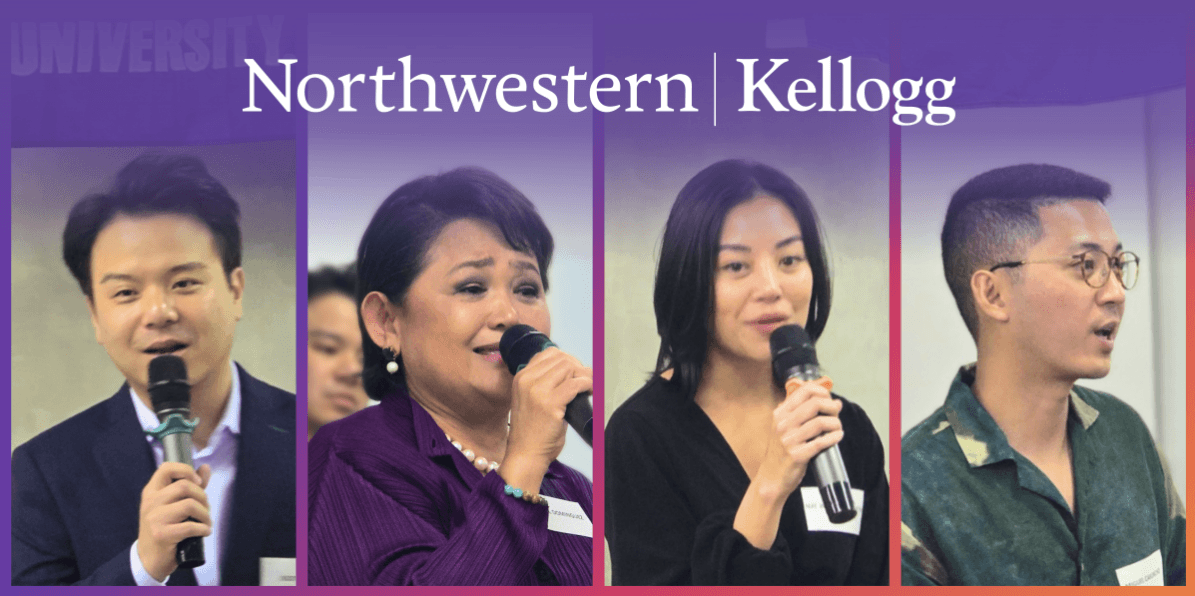
On June 29, 2026, Northwestern Kellogg held an alumni panel in Manila. Three graduates took the stage to answer that question directly. No sales pitch. No glossy brochure. Just honest reflections from people who’ve lived it.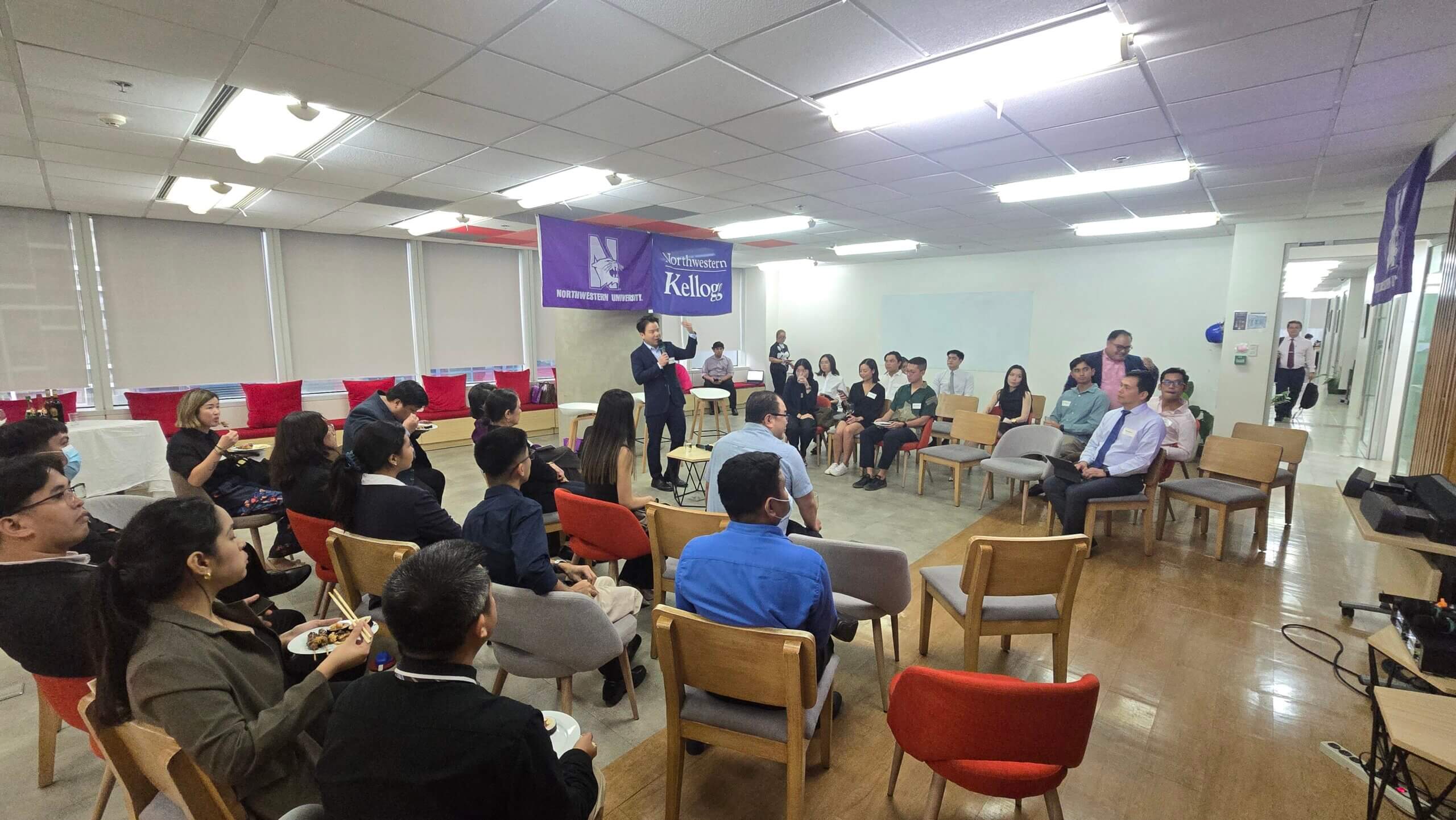
“Was It Worth It?” Here’s What They Actually Said
Carol Dominguez, President and CEO of John Clements Consultants, graduated from Kellogg in 1989. She went on to build a global career at Citibank — New York, London, Milan — before returning to the Philippines to lead John Clements Consultants for over two decades. When asked if she’d do it again, her answer was immediate.
“Every minute was worth it,” she said. “It’s not just about what you’re doing. It makes you think differently.”
Nat Wittayatanaseth (’18) echoed that. She moved from Thailand to the US, built a VC career using connections from Kellogg’s Bay Area immersion program, then landed in the Philippines — getting her footing almost entirely through alumni introductions. “A lot of the career opportunities I’ve recently had haven’t come from job boards,” she said. “They’ve come from my Kellogg network.”
Miguel Caruncho (’23) runs Habit Food Group. He went into his MBA uncertain about entrepreneurship and came out with the investor communication skills and the credibility to scale his business. “When investors see Northwestern on your resume, there’s an immediate sense of trust,” he said.
The ROI Goes Beyond the Salary
Yes, the numbers are strong. According to the Graduate Management Admission Council (GMAC), MBA graduates consistently report salary gains of 50–80% post-degree. Kellogg’s Class of 2025 reported a median base salary of $175,000 with a $30,000 signing bonus — bringing total compensation to $205,000.
But the panelists kept steering the conversation away from salary and toward something harder to quantify: perspective.
Carol described what she calls “global thinking.” After Kellogg, she wasn’t just solving problems — she was looking at them from ten different angles. She pointed out that what works in New York doesn’t necessarily work in Manila. That kind of adaptability, she argued, is what separates good managers from great leaders.
Research from McKinsey & Company supports this — leadership effectiveness is increasingly tied to emotional intelligence and cross-cultural fluency, two areas MBA programs are specifically designed to develop.
The Network Is the Degree
Every alumnus at the Manila event returned to one theme: the Kellogg network is not like other networks. It’s active. It answers messages. It refers without being asked.
Kellogg has over 70,000 alumni across six continents, including 20 Fortune 500 CEOs. But it’s not just the scale — it’s the culture. “You reach out to someone on LinkedIn,” said Dicky Kwok, Kellogg’s Associate Director for Asia, “and there’s a very good chance they will come back with a response.”
That’s not an accident. It’s baked into how the program is built. Teams are central to the curriculum. Clubs, treks, and global immersion programs are engineered for genuine connection. The Harvard Business Review has long documented how MBA-era networks outperform professional networks built later in careers — partly because they form during periods of high openness and shared vulnerability.
The Honest Part: It’s Not Easy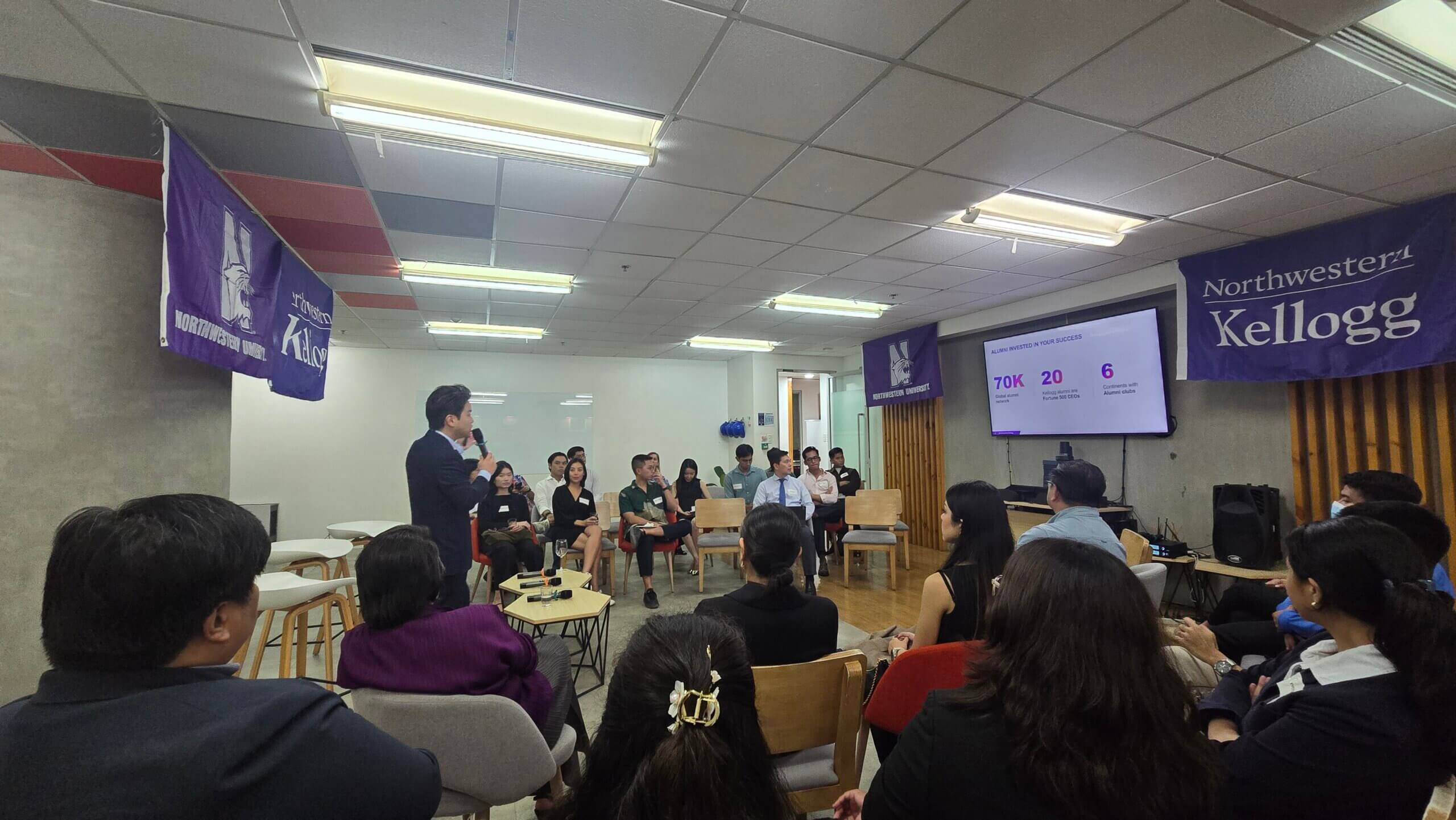
None of the panelists pretended the MBA is a magic ticket. Nat talked about imposter syndrome — being a non-native English speaker surrounded by people who seemed to know exactly what they were doing. She also talked about “the impossible trinity”: the idea that you can only fully optimize two of three things at once — academics, recruiting, and social life.
Miguel admitted he almost didn’t go. He needed three or four conversations to be convinced the MBA was the right move over just running and growing his business. His verdict now? “The complete package was always what drove me.”
Carol’s advice for surviving the intensity: stay intentional. Know what you want before you walk through the door. And never stop learning after you leave. She went back to school twice post-MBA — once at Harvard’s Advanced Management Program in 2012, and again for an AI course during the pandemic. According to the World Economic Forum, continuous learning is now one of the top skills employers demand — and it’s a habit the best MBA programs actively instill.
So, Is an MBA Worth It?
For the right person, at the right time, with the right school? Absolutely.
The question isn’t really “is an MBA worth it.” The better question is: worth it for what? If you want to pivot careers, build a global network, develop leadership depth, and gain the kind of credibility that opens doors 30 years later — the answer from all three Kellogg alumni was a resounding yes.
Engineering background? Go. Non-traditional path? Go. Uncertain about what you want next? That’s exactly who the MBA is designed for.
As Carol put it: “It’s not just about learning. The network, the education, the experience — it builds on you. And then it keeps building.”
|
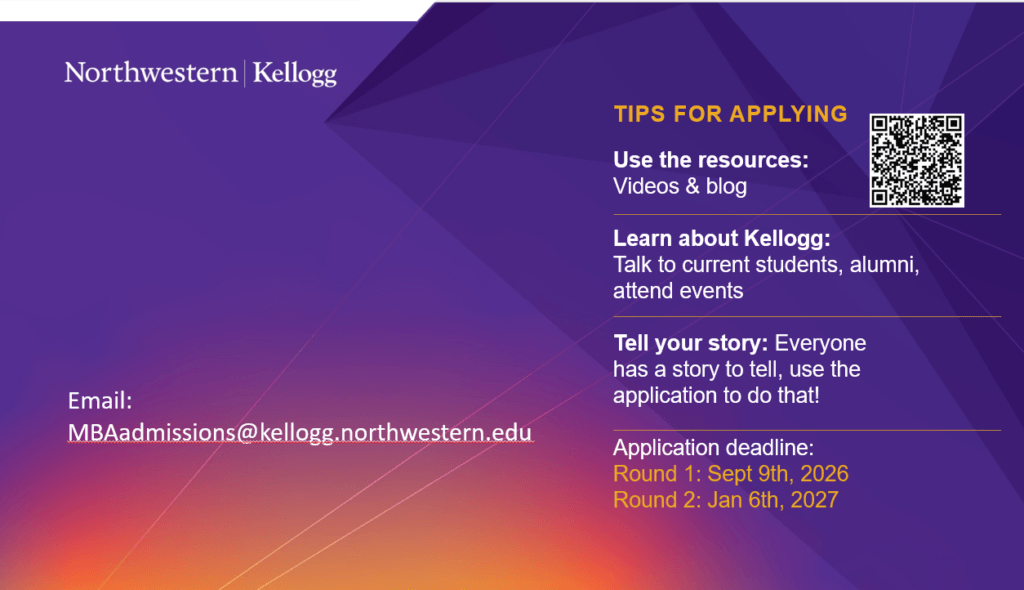
Ready to Find Out If Kellogg Is Right for You? Explore programs, connect with alumni, and start your application at www.kellogg.northwestern.edu. Application deadlines: Round 1 — September 9, 2026 | Round 2 — January 6, 2027 |