
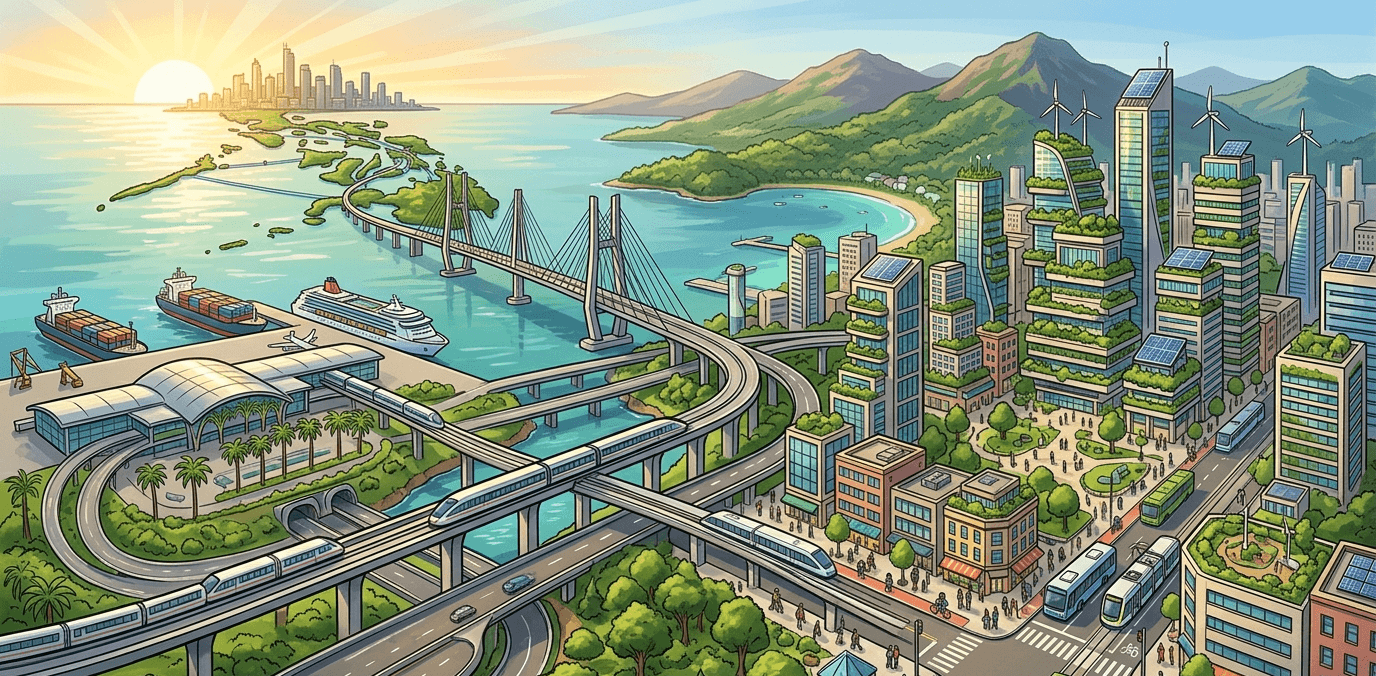
The future does not happen by accident. It is designed, planned, and built through deliberate action. This powerful message resonated throughout the inspiring presentation of Architect Felino “Jun” Palafox Jr., one of the Philippines’ foremost architects, urban planners, and visionaries.
In his session, Postcards from the Future: The Philippines 2050 Well into 2100, Architect Palafox painted a compelling picture of what the Philippines can become—a first-world country, a globally competitive economy, and a nation recognized for sustainability, resilience, inclusivity, and livability. More importantly, he challenged leaders, businesses, and communities to think beyond today’s limitations and begin shaping the future now.
Meet the Visionary
Architect Felino “Jun” Palafox Jr.
- Founding Partner and Principal Architect-Urban Planner, Palafox Associates
- President and Principal Architect, Palafox Architecture Group, Inc.
Globally recognized, Architect Palafox has dedicated decades to advocating for sustainable development, smart cities, and transformative urban planning that balances economic growth with environmental stewardship.
Thinking Bigger: A First-World Philippines
One of the strongest takeaways was the importance of long-term thinking.
Architect Palafox emphasized that the Philippines possesses extraordinary potential. With abundant natural resources, a strategic geographic location, a young workforce, and a growing economy, the country has many of the ingredients needed to become one of the world’s leading economies. Projections even suggest that the Philippines could rank among the world’s top economies by 2075 (see https://psa.gov.ph for economic data).
Yet achieving this vision requires more than growth. It demands bold planning, strong leadership, and a commitment to nation-building that spans generations. His “RE-Century” concept calls for continuous innovation, renewal, and reinvention in how we build cities, communities, infrastructure, and institutions.
Connectivity as the Foundation of Progress
Seamless connectivity across the archipelago is essential to unlocking opportunities and reducing regional disparities. Architect Palafox’s vision includes integrated highways, railways, airports, seaports, bridges, and tunnels to connect Luzon, Visayas, and Mindanao more efficiently.
Key impacts of improved connectivity:
- Lower logistics costs and stronger agricultural trade
- Boosted tourism and regional economic growth
- Larger markets and more efficient supply chains for businesses
- Better access to jobs, healthcare, and education for communities
Preparing for a Population of 150 Million
By 2050, the Philippines is projected to reach 150 million people. Accommodating this growth requires proactive urban planning. Architect Palafox proposed developing 100 new smart, sustainable, resilient, and livable cities.
These compact, integrated communities would provide convenient access to housing, employment, healthcare, recreation, and education—reducing long commutes and improving quality of life.
Building Cities for People
Architect Palafox introduced the idea of 15-Minute Cities, 10-Minute Communities, and 5-Minute Neighborhoods.
- Essential services within walking or cycling distance
- Vertical urbanism and compact city development
- Prioritizing pedestrians, cyclists, and public transport users
His principle, “Those with less in wheels should have more in roads,” reinforces the need to design cities for people, not just vehicles.
Infrastructure Beyond Roads and Bridges
True progress requires integrated development. Architect Palafox outlined multiple categories of infrastructure:
- Hard and soft infrastructure
- Green and digital infrastructure
- Institutional systems and emerging technologies like AI and IoT
Critical sectors include water systems, energy, housing, telecommunications, disaster resilience, tourism, waste management, and public spaces.
Learning from Global Success Stories
Dubai’s transformation from a modest trading hub into a global economic powerhouse illustrates what visionary leadership and long-term planning can achieve. Architect Palafox stressed that the Philippines should learn from such examples while leveraging its own unique strengths.
Addressing Challenges Ahead
Despite optimism, several challenges must be addressed:
- Corruption and governance issues
- Climate change and environmental concerns
- Infrastructure gaps and inequality
- Wealth distribution, peace, and order
Collaboration among government, business, educators, and civil society is essential. No single institution can build the future alone.
A Call to Build the Future Together
Architect Jun Palafox concluded with a powerful vision of communities that are smart, resilient, connected, accessible, walkable, bikeable, sustainable, healthy, and inclusive.
The Philippines 2050 vision will not emerge by chance. It will be shaped by today’s decisions, infrastructure investments, and leaders who dare to think beyond short-term cycles.
Ready to build future-ready organizations and leadership teams? Connect with the experts at John Clements and discover how we can help your organization prepare for tomorrow’s opportunities today.
Visit the John Clements Contact Page: https://www.johnclements.com/contact-us/

