
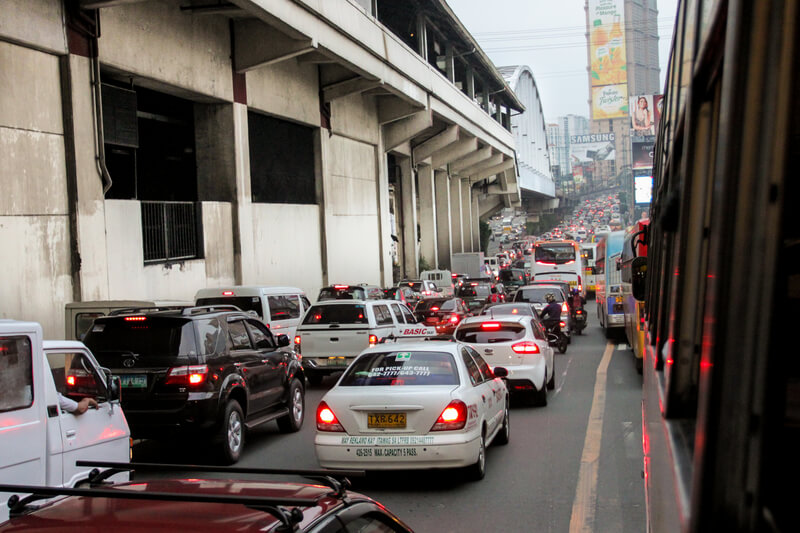
The Metro Manila traffic crisis is more than just a daily inconvenience—it is a systemic issue with profound economic and social consequences. At the recent MAP General Membership Meeting, officials from the Department of Public Works and Highways (DPWH) and the Department of Transportation (DOT) highlighted both the scale of the problem and the ambitious plans to address it.
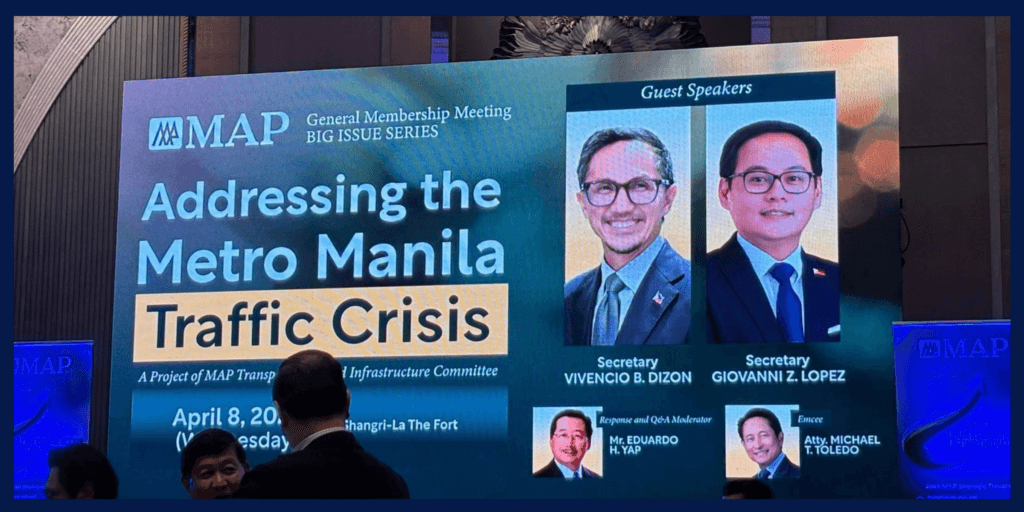
The Scale of the Problem
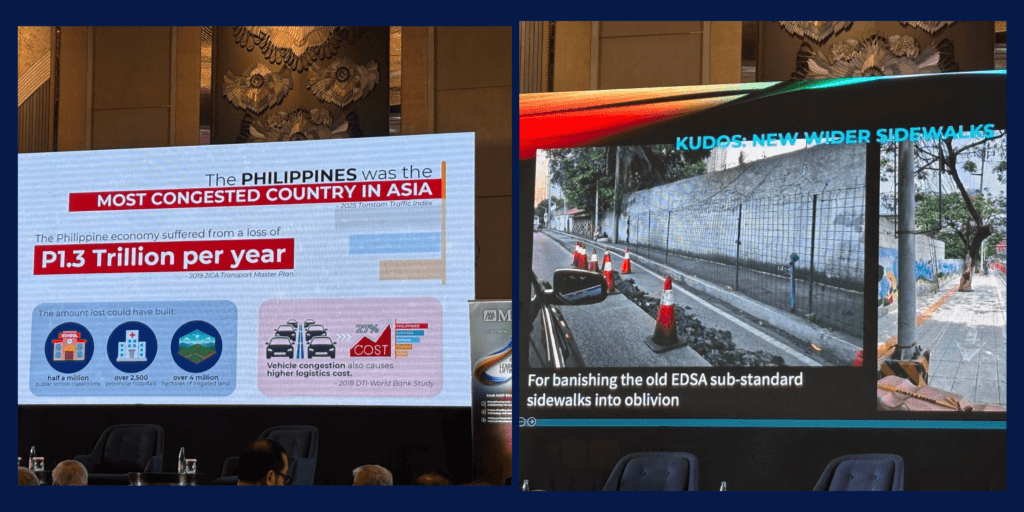
- The Philippines ranks among the most congested countries in Asia.
- Traffic congestion results in an estimated ₱1.3 trillion in annual economic losses
- Beyond financial costs, the real loss is time—time with family, productivity, and rest.
Specifically, the Metro Manila traffic crisis has eroded the dignity of commuting, leaving millions stranded daily in long queues and overcrowded stations.
Government Initiatives
Mass Transit Projects
- Rehabilitation of MRT-3 and LRT-2
- Expansion of the EDSA Busway
- Construction of the Metro Manila Subway, MRT-7, and North-South Commuter Railway
- Development of the Unified Grand Central Station
These projects aim to cut travel times drastically, making Metro Manila more livable and sustainable.
Policy Reforms
Sec. Vince Dizon emphasized reforms within DPWH:
- Lowering inflated project costs
- Improving procurement transparency
- Ensuring infrastructure spending delivers real value (https://dpwh.gov.ph)
Active Transport: Cycling and Walking
Cycling offers a practical alternative, but current infrastructure remains inadequate:
- Inconsistent and unprotected bike lanes
- Limited connectivity
- Lack of secure bike parking and end-of-trip facilities
Furthermore, while active transport is included in the government’s vision, private vehicles still dominate road space. The Metro Manila traffic crisis will not be solved without prioritizing people over cars.

Key Challenges
- Car-centric infrastructure bias
- Incomplete mass transit systems
- Ineffective demand management
Consequently, commuters continue to face daily frustration despite ongoing projects.
Personal Perspective
From waking up at 4 AM to catch a UV Express, to driving daily, and now biking to work, my own journey reflects the constant adaptation Filipinos make to cope with the Metro Manila traffic crisis. Each phase underscores the urgent need for systemic change.
Conclusion
Solving traffic is not just about building more roads—it requires a mindset shift toward moving people efficiently and restoring dignity in commuting. Execution, transparency, and accountability will determine success.
Stay engaged. Stay vigilant. Let’s ensure promises turn into real improvements.
For collaboration, solutions, or inquiries, reach out via our Contact Us page or connect with us on social media.

