
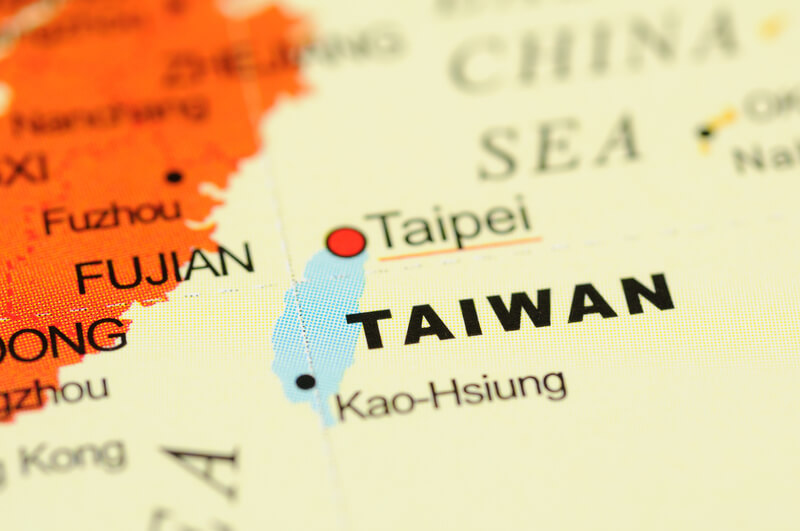
The EMBA session led by Tully Moss offered a rigorous examination of Taiwan globalization through the case Taiwan After Globalization: Twilight of the Developmental State? Specifically, the discussion explored how Taiwan transformed its economy and how structural and geopolitical pressures now test its resilience. Consequently, participants contrasted early development successes with the demands of today’s global environment.
Foundations of Taiwan’s Economic Success
Why Taiwan Succeeded Early
The session opened with a direct question: Why has Taiwan been successful? Class discussion pointed to several reinforcing factors:
- Strong government guidance with long-term policy coherence
- Early land reform that improved productivity and income distribution
- A disciplined and highly educated workforce
- Export-oriented industrialization
- Global leadership in semiconductors
These factors aligned closely with the case findings. In particular, state-led industrial policy shaped Taiwan globalization by guiding the shift from agriculture to manufacturing and, later, to advanced technology industries. Early land reforms strengthened rural incomes, while targeted industrial strategies enabled firms to scale and compete internationally.
Government institutions also played a decisive role. Organizations such as the Industrial Technology Research Institute (ITRI) accelerated domestic innovation and technology transfer (https://www.itri.org.tw). Furthermore, sustained investment in education supported a steady pipeline of skilled talent.
Semiconductor Leadership and the Role of Talent
TSMC as a Strategic Asset
A session highlight included a video featuring Morris Chang and the rise of TSMC. Chang identified three core sources of long-term advantage:
- A deep pool of highly skilled engineers and technicians
- Low workforce turnover that preserves institutional knowledge
- Geographic clustering of firms that drives learning-by-doing
Together, these strengths reinforced Taiwan globalization by embedding local firms into global semiconductor supply chains. In contrast to fragmented ecosystems elsewhere, Taiwan’s concentrated model delivered speed, reliability, and technological leadership. Today, TSMC’s role within global chip production underscores this advantage (https://www.tsmc.com).
Government backing amplified these strengths. Public investment in STEM education and applied research institutions ensured that private-sector innovation scaled efficiently, rather than emerging in isolation.
Human Capital Development and Social Equity
Closing the Education Gap
The discussion also featured Anting Liu, founder of Teach for Taiwan, an initiative that places high-performing graduates in underserved rural schools. This effort highlights an often-overlooked dimension of Taiwan globalization: inclusive human capital development.
While industrial progress drove national income growth, disparities in educational access persisted. Programs like Teach for Taiwan seek to address that imbalance by strengthening foundational skills nationwide. As a result, economic competitiveness becomes more durable and socially sustainable.
Notably, education policy remains a cornerstone of Taiwan’s development model, supported by national planning frameworks (https://www.edu.tw).
Geopolitical Context and Strategic Vulnerabilities
Economic Strength Meets Political Risk
Group discussions expanded into Taiwan’s external environment, examining cross-strait relations, defense strategy, U.S.–China rivalry, and supply chain security. Taiwan’s dominance in advanced semiconductors, while economically powerful, also creates exposure.
Taiwan produces a significant share of the world’s most advanced chips, making it indispensable to global industries. However, this centrality heightens geopolitical tension. Specifically, competition between China and the United States has elevated Taiwan globalization into a strategic concern rather than a purely economic one.
Consequently, Taiwan must balance economic interdependence with security considerations. Maintaining open trade while ensuring national resilience now defines policy debates, as outlined by official government briefings (https://www.taiwan.gov.tw).
Reflections and Key Insights
The session produced several enduring lessons:
- Coordinated state action can accelerate industrial upgrading
- Human capital remains the most sustainable competitive advantage
- Strong institutions support innovation and long-term growth
At the same time, Taiwan’s experience exposes the limits of its model under changing global conditions. Dependence on a single high-value industry increases systemic risk. Furthermore, democratic governance, while strengthening legitimacy, adds complexity to long-term planning. In this context, Taiwan globalization presents both a legacy of success and a test of adaptability.
Conclusion
Taiwan’s journey from an agrarian economy to a high-technology powerhouse stands among the most compelling development stories of the modern era. Effective policy, disciplined execution, and sustained investment in people made this transformation possible.
Yet today, the challenge has evolved. Taiwan must now navigate intensified globalization pressures, technological rivalry, and geopolitical uncertainty. Ultimately, the defining question is whether Taiwan can retain its strategic and economic relevance while adapting its development model for a far less predictable world.
Let’s Continue the Conversation
If your organization is analyzing global workforce trends, leadership development, or regional talent strategies shaped by globalization, our consultants can help.
Contact us at https://www.johnclements.com/contact-us/

