
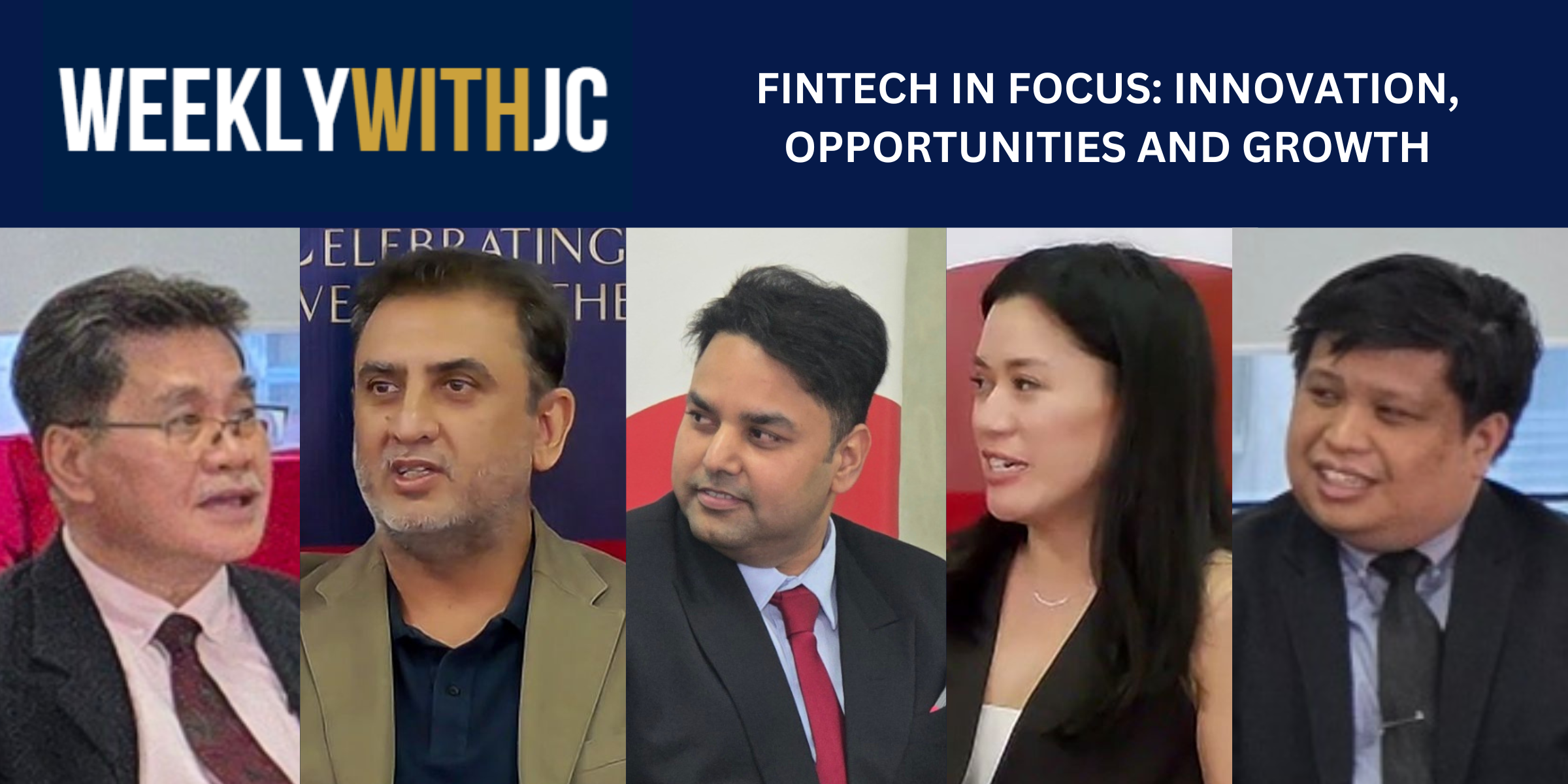
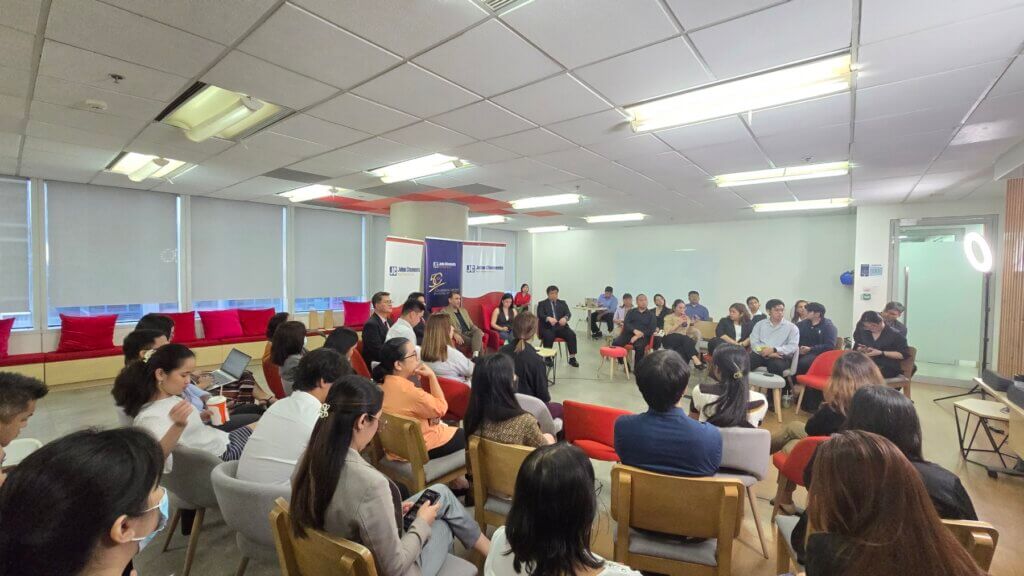
The Weekly with JC session, “Fintech in Focus: Innovation, Opportunities, and Growth,” brought together industry leaders shaping the future of digital finance in the Philippines. The discussion featured Manish Bhai (CEO, Uno Digital Bank) on the country’s accelerating shift toward digital banking and the role of AI in services. Isabel Ridad (CFO, Tookitaki) and Alok Chaubey (Senior Director, Trusting Social) added sharp insights on trust-building, data analytics, and the evolving regulatory landscape.
Why it matters: Digitalization, alternative data, and responsible innovation now define the next chapter of Philippine fintech.
The Philippines’ Digital Banking Surge
First, speakers pointed to hard data: the BSP reports that more than half of monthly retail payments in 2023 were digital, surpassing the central bank’s target and signaling a durable shift in consumer behavior. In 2024, digital’s share rose further to 57.4% by volume and 59.0% by value, led by merchant payments, P2P transfers, and B2B transactions.
Then, Manish Bhai linked this surge to a mobile‑first population and growing trust in formal digital channels. He argued that AI will personalize services in real time, making finance feel embedded in everyday life. To keep momentum, he urged operators and tech enablers to partner closely and called for better infrastructure and a unified national ID to streamline KYC and reduce fraud.
AI in Finance: Personalization—With Guardrails
Next, the panel explored how AI can tailor products, speed decisions, and scale operations. Industry research shows banks that embed AI across functions can materially improve efficiency while strengthening risk controls—provided they invest in data governance and Responsible AI.
However, Bhai emphasized balance: convenience can drive overspending and overborrowing. He urged checks and balances in product design and policy.
Compliance at Scale: Trust as a Growth Engine
Meanwhile, Isabel Ridad spotlighted the compliance back office, where AI now automates monitoring and review at scale, allowing teams to handle rising volumes without equal headcount growth—while maintaining rigor. Global benchmarks echo her point: leading banks deploy AI to elevate KYC, screening, and monitoring effectiveness.
Regionally, she noted increasing regulatory coordination on transparency, explainability, and cross‑border data—a trend ASEAN aims to accelerate through the Digital Economy Framework Agreement (DEFA) and broader data‑governance work.
Alternative Data: Broadening Access and Reducing Fraud
In parallel, Alok Chaubey showed how telco‑derived alternative data opens credit to thin‑file consumers. Trusting Social’s solutions (e.g., Trust Score 2.0 and Selfie Score) help lenders assess risk, onboard faster, and prevent fraud, especially for underserved communities. Trusting Social has also partnered with UNO Digital Bank in the Philippines to advance inclusion through AI‑powered scoring.
Policy Enablers: Open Finance and Digital ID
Finally, the conversation tied technology to policy. The BSP’s Open Finance Framework (Circular No. 1122) pushes consent‑driven data portability and interoperability, encouraging customer‑centric innovation. At the same time, PhilSys (national ID) supports streamlined KYC and safer digital onboarding—key to scaling inclusive finance.

The Bottom Line
The future of fintech in the Philippines sits at the intersection of AI‑driven personalization, pro‑innovation regulation, and inclusive credit models powered by alternative data. As digital banking accelerates, industry and policymakers must work together to build systems that stay secure, transparent, and accessible.

