

“You don’t need a weatherman to know which way the wind blows.”
Bob Dylan sang that line decades ago, but it feels tailor‑made for today’s AI era. The winds of change are here, and leadership in AI is about knowing not just where the breeze is coming from, but how to harness it without losing the human warmth that makes business thrive.
Artificial intelligence is everywhere. It writes, it predicts, it automates. Yet the real story is not about machines replacing humans. It is about humans learning to lead differently. Leadership in AI means balancing empathy with challenge, vision with pragmatism, and customer‑centricity with innovation.
The HubSpot case study, Harvard Business Review insights, and Zenger Folkman’s research all converge on one truth: AI is powerful, but leadership decides whether it empowers or endangers.
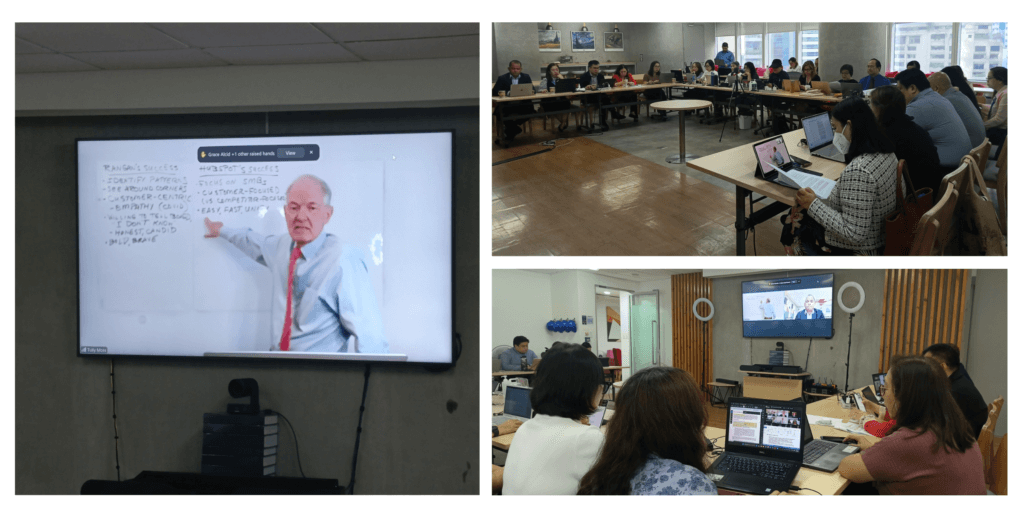
HubSpot in 2025: AI Meets Inbound Marketing
HubSpot began in 2006 with a simple idea: inbound marketing. Instead of interrupting customers, create valuable content that attracts them. By 2024, HubSpot had grown to 248,000 customers and $2.63 billion in revenue. That is not just growth—it is proof that simplicity and customer‑centricity scale.
When Yamini Rangan became CEO in 2021, she made a bold move. She paused the roadmap to prioritize AI‑first tools like ChatSpot and Content Assistant. At the INBOUND 2024 conference, HubSpot showcased how AI could empower small and medium‑sized businesses with simplicity and accessibility.
What made Rangan’s leadership remarkable was not just the technology pivot. It was her willingness to admit uncertainty while making bold decisions. During COVID, she faced a moment of truth: cut prices and invest in customers or protect short‑term revenue. She chose customers. HubSpot slashed prices by 75% to provide relief during the pandemic—a risky move that prioritized relationships over immediate gains. The result? Revenue grew 31% from 2020 to 2021, with 62,000 net new customers.
That is leadership in AI: technology decisions rooted in human judgment and customer empathy.
My HubSpot Experience: From Chaos to Clarity
Before HubSpot, my workflow was a juggling act. I had one platform for newsletters, another for signup forms, and a third for scheduling social posts. It was clunky, exhausting, and far from efficient.
Then came HubSpot. Suddenly, everything was in one place. I could design the newsletter, create the signup form, and schedule the social posts seamlessly. AI‑driven features made it intuitive. Content suggestions appeared when I needed them. Scheduling became effortless. HubSpot did not just save time—it gave me back focus.
This mirrors what HubSpot does at scale. The platform streamlines marketing processes by consolidating email blasts, social media scheduling, and SEO tracking while providing integrated access for marketing and HR teams. It is leadership in AI in action: technology serving people, not the other way around.
The Flywheel That Changed Everything
Rangan brought more than just AI to HubSpot. She introduced a “flywheel” concept that continuously improves customer experience by breaking down silos and prioritizing customer focus over competitor focus. This approach transformed HubSpot from a tool into a culture.
Instead of chasing what competitors were doing, HubSpot listened to what customers needed. They reversed their initial focus from large enterprises to smaller businesses, successfully expanding from companies with 20-50 employees to those with 500-1000 employees. This was not a retreat—it was strategic repositioning toward underserved markets.
The lesson for leadership in AI is clear: technology follows strategy, and strategy follows customers.
Harvard Business Review: AI as a Leadership Partner
Harvard Business Review argues that AI can make leaders better by freeing them from repetitive tasks and sharpening decision‑making. Leaders who embrace AI gain time to focus on empathy, strategy, and foresight.
But HBR also warns leaders must adopt an AI‑first mindset without losing their humanity. AI should augment judgment, not replace it.
This balance is what makes HubSpot’s approach instructive. The platform uses AI to handle mundane tasks—data entry, email scheduling, content suggestions—while freeing marketers to focus on creativity, strategy, and relationship‑building. That is the partnership HBR describes: AI handling mechanics, humans handling meaning.
Zenger Folkman: Empathy vs Challenge
Joe Folkman’s research reframes the debate. The problem with AI is not empathy… it is the lack of challenge.
His study of 429 leaders revealed that high empathy with low challenge creates comfort but stagnation. High challenge with low empathy drives compliance but erodes trust. The leaders who excelled combined both empathy and challenge, creating supportive accountability.
This is where AI falls short. Chatbots can simulate empathy, but they rarely push back. They do not say, “That is not a good idea” or “You need to rethink this.” Without challenge, empathy becomes hollow.
Rangan understood this balance. She was honest about uncertainties—admitting what she did not know during COVID—while making bold, disciplined decisions. She challenged her team to focus on first principles rather than chasing every trend. That combination of honesty and conviction is what separates human leadership from algorithmic execution.
Leadership in AI: The Balancing Act
So, what does leadership in AI really mean?
It means leaders must ensure AI connects meaningfully, not just comforts. They must provide the push AI cannot, holding teams accountable. They must anticipate trends before they hit, looking around corners instead of reacting late. And they must keep AI simple, accessible, and empowering.
Yamini Rangan embodies this balance. She did not just add AI to HubSpot; she made it customer‑first. She recognized patterns early, made bold decisions during crisis, and maintained a disciplined approach to innovation. That is leadership in AI. Technology serving people, not the other way around.
AI Needs Human Leadership
AI is powerful, but it is not wise. It can simulate empathy but cannot challenge. It can automate tasks but cannot anticipate cultural nuance. That is why leadership in AI matters.
HubSpot shows how AI can empower SMBs when guided by customer‑centric vision. Harvard Business Review reminds us that AI augments leadership, not replaces it. Zenger Folkman warns that empathy without challenge is a trap.
And my own experience with HubSpot proves the point: AI‑driven simplicity turned chaos into clarity. Leadership in AI means making technology serve people, not the other way around.
The path forward requires both vision and humility. It requires unified AI‑driven systems that encompass business processes while simultaneously investing in people to upgrade AI skills and democratize transformation. Technology and people development must advance together, not separately.
Not the End of Leadership
“Every new beginning comes from some other beginning’s end.”
That line from Semisonic’s Closing Time reminds us that leadership in AI is not the end of human leadership but the start of a new chapter. The leaders who blend empathy with challenge, vision with pragmatism, and technology with humanity will be the ones who write the soundtrack of this era.
Rangan’s journey at HubSpot offers a blueprint: recognize patterns early, make bold customer‑centric decisions, admit uncertainties honestly, challenge teams to think from first principles, and maintain disciplined focus on what matters. That is how AI becomes an enabler rather than a displacer.
The winds of change are blowing. You do not need a weatherman to know which way they are going. You just need leadership that harnesses them without losing the human warmth that makes business—and life—worth living.
Lead smarter in the AI era—connect with John Clements today.

