
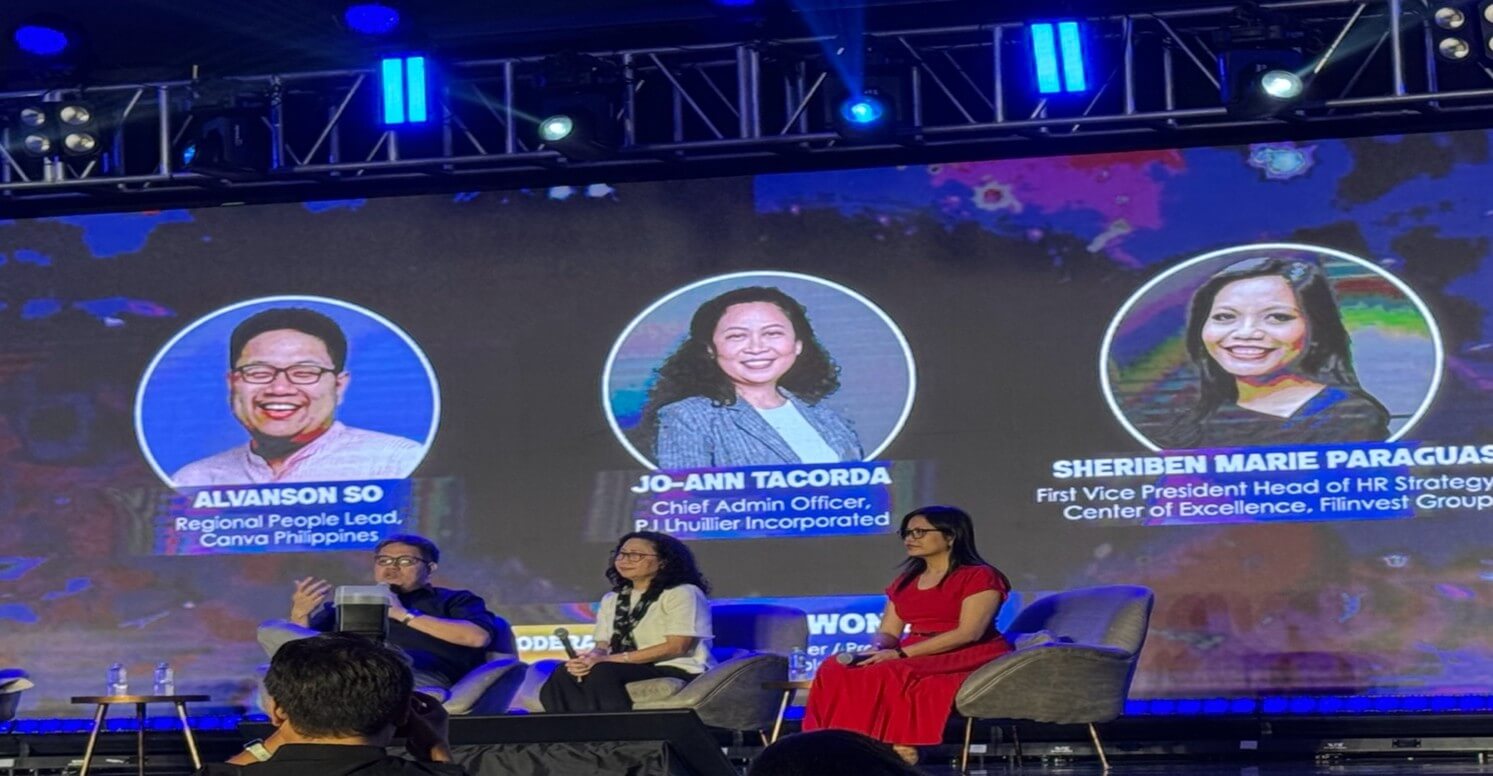
At the PMAP Annual Conference in Cebu, empowerment emerged as one of the most resonant and actionable themes of the event. Three HR leaders—Marie Paraguas, Joanne Tacorda, and Alvanso So—offered perspectives that challenged traditional notions of power and leadership, ultimately redefining empowerment as both a system and a mindset.
Collectively, their message was clear: empowerment is not a slogan; it is a culture designed, modeled, and lived.
The CASE for Empowerment: Designing Systems That Work
Marie Paraguas, First Vice President and Head of HR Strategy and Center of Finance of the Philippines, opened the session with a thought-provoking question: “Is your organization truly designed to empower its people — or simply to manage them?”
Drawing from her 25 years of experience in human resources, Paraguas shared her organization’s approach, aptly called The CASE Framework, which stands for Context, Authority, Skill, and Engagement. It is both a philosophy and a practical blueprint for building empowerment into an organization’s DNA.
-
- To begin with, Context is about clarity. Employees must understand the company’s purpose and how their roles connect to the bigger picture. When people know the “why,” they make smarter, faster decisions with less oversight.
- Authority grants employees the power to act and decide. Empowerment falters when decision rights are vague or limited. Therefore, by pushing decision-making closer to the frontlines, leaders foster accountability, agility, and trust—leading to 50% lower attrition rates in empowered teams.
- Skill ensures that empowerment is grounded in competence. Leaders are more confident in delegating authority when they trust their teams’ capabilities. This is why HR’s role becomes pivotal in creating meaningful learning opportunities and coaching leaders to embrace vulnerability and diverse thinking.
- Finally, engagement breathes life into the system. It’s about cultivating a culture where employees feel inspired to take ownership, take risks, and even fail forward. Paraguas encouraged leaders to celebrate bold ideas, reward experimentation, and recognize courage—not just success.
She concluded with a challenge: “Empowerment is a top-down commitment with bottom-up action. No one gets left behind when everyone is equipped and encouraged to lead.”
Empowerment in Practice: The Cebuana Lhuillier Experience
Moving from frameworks to real-world application, Joanne Tacorda, Head of HR of Cebuana Lhuillier, shared how empowerment becomes tangible within a large, nationwide organization of 12,500 employees and 3,500 branches.
Tacorda described her journey as a “full circle moment”—from being a participant at a PMAP event 25 years ago to now leading HR for one of the country’s most respected microfinancial institutions.
She revealed that sustaining empowerment across such a vast workforce requires intentional leadership engagement and systematic design. Her experience distilled into three enduring principles:
-
- First, Use Data and Experience to Influence Leadership. To gain buy-in, Cebuana Lhuillier ensures leaders are part of the journey—not just recipients of HR programs. When the company launched its Diversity & Inclusion program, the entire management committee went through the same training as employees. This hands-on exposure created genuine advocacy from the top.
- Embed Empowerment in Leadership Systems. Empowerment thrives when it’s institutionalized. Cebuana’s Leadership Development Program defines what empowered leadership looks like, outlining competencies, values, and behaviors expected from every leader. By doing so, the company transforms empowerment from initiative to identity.
- Celebrate Empowering Leaders. Tacorda highlighted the power of recognition. In particular, by publicly celebrating leaders who uplift and develop their teams through internal communications, off-site events, and leadership spotlights, the company sustains momentum and inspires others to do the same.
As Tacorda said: “Empowerment sticks when leaders see it, experience it, and celebrate it together.”
Small Shifts, Big Impact: The 2-Percenters Mindset
To close the theme, Alvanso So, Regional People Lead at Canva Philippines, brought an energizing and practical dimension to the discussion through what he called “The 2-Percenters.”
Using a memorable story about a FedEx engineer who fixed a conveyor belt by making “two percent” adjustments, So illustrated how minor, intentional shifts can lead to major transformation.
Empowerment, he said, doesn’t always require sweeping reform. Instead, it’s about knowing which screws to turn.
He outlined five “2-percenters”—simple yet powerful ways leaders can expand their influence and build bold, safe spaces for others:
-
- Cultivate Confidence. Confidence is the foundation of influence. So urged leaders to “check their stories” to replace self-limiting beliefs like “I don’t have the budget” with empowering reframes such as “It’s costlier to lose talent to competitors.” Leaders who rewrite their internal narratives model courage for their teams.
- Act Despite Fear. Fear is inevitable, but progress requires action. “I don’t know what I’m doing yet,” So said, highlighting how adding the word “yet” transforms fear into a growth mindset. Empowerment begins when leaders take the first step, even in uncertainty.
- Get a Game You Can Win. Clarity creates confidence. So emphasized defining expectations through “magic questions”: What does that mean? How would you know? What would you see? Setting clear rules ensures teams play to win, not guess the game.
- Give Feedback with Impact. Feedback, he noted, is a gift—but it must be given with intention. In Filipino culture, leaders often soften messages to avoid offense. Nevertheless, So encouraged a new approach: “Soften the person, not the message.” Feedback should be honest yet human; forthright yet respectful.
- Speak Truth to Power. Using the formula Deference + Motive + Solution, So showed how to challenge ideas without creating conflict. By showing respect, clarifying intent, and proposing solutions, leaders can influence upwards while building mutual trust.
He ended with a call to authenticity and courage: “Small, consistent actions create big cultural shifts. Empowerment grows when we choose to act one two-percenter at a time.”
Empowerment as a Shared Responsibility
From systems to practice to mindset, the message across all three sessions was unmistakable: empowerment is everyone’s job.
-
- Marie Paraguas taught that empowerment must be structurally designed—through clarity, authority, skills, and engagement.
- Joanne Tacorda demonstrated how empowerment can be operationalized—through leadership involvement, systemic integration, and public recognition.
- Alvanso So reminded everyone that empowerment must also be lived daily—through small acts of courage, communication, and confidence.
Ultimately, when these dimensions converge, organizations create not only high-performing teams but also cultures of trust, creativity, and ownership.
The Call to Action: Build the Brave Spaces
Empowerment is not about giving people power; it’s about creating brave spaces where they can use the power they already have.
It begins with context and clarity, strengthened by trust and capability, and sustained through the daily discipline of courage and communication.
In a rapidly changing workplace shaped by technology, AI, and constant transformation, empowerment remains the most human differentiator of all.
When leaders choose to act with clarity, confidence, and courage, they don’t just empower others—they ignite cultures that thrive.
Build Empowered Teams for the Future of Work
True empowerment in the workplace starts with leaders who inspire courage, clarity, and confidence. At John Clements Consultants, we help organizations cultivate this culture of empowerment—from leadership development and talent strategies to systems that drive engagement and growth.
Are you ready to ignite empowerment in your organization? Contact us today to discover how we can help you build stronger, future-ready teams.

