
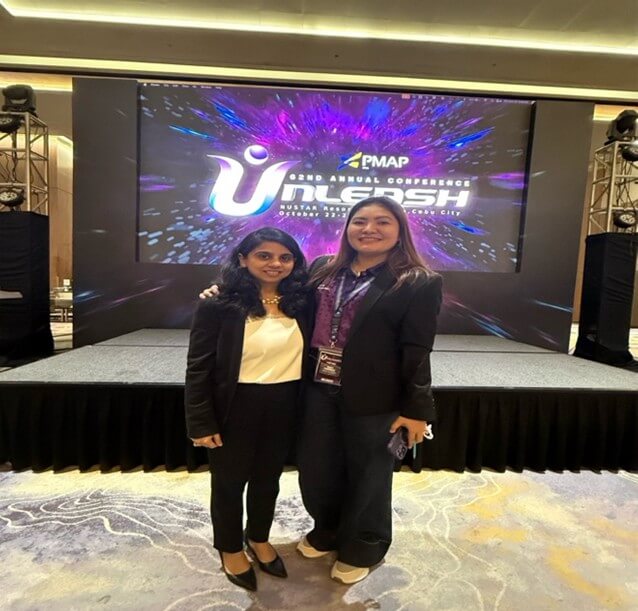
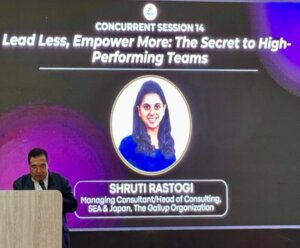
During the PMAP (People Management Association of the Philippines) Annual Conference in Cebu, I had the opportunity to attend one of the most engaging concurrent sessions led by Shruti Rastogi, Head of Consulting for Southeast Asia and Japan at Gallup.
Her session, titled around the evolving role of managers and the importance of leading with strengths, offered a deep and practical look into what it truly means to manage, motivate, and empower people in today’s changing workplace. Drawing from Gallup’s extensive global research and her expertise as a CliftonStrengths Coach, Shruti encouraged us to reflect not just on what we do as leaders, but how we do it, and who we become in the process.
Her message was simple yet powerful: the quality of management defines the quality of the employee experience, and therefore, the success of the entire organization.
The Energy of Engagement
Shruti began her talk with a warm acknowledgment of the Filipino workplace spirit: the energy, camaraderie, and optimism that make teams in the Philippines unique. But she also reminded everyone that beyond enthusiasm, effective leadership requires reflection and intention.
“We’ve all been absorbing so much information,” she said. “Now is the time to reflect — to connect the dots for yourself, your team, and your organization.”
This set the tone for an afternoon of deep introspection and meaningful conversation, challenging attendees to think differently about what great management truly looks like.
“My Manager Is…” — What the Internet Thinks About Leadership
In a lighthearted yet revealing exercise, Shruti asked everyone to take out their phones and Google three words: “My manager is…”
The results filled the room with laughter — and a bit of discomfort. Common results included words like “toxic,” “micromanager,” and “incompetent.” A few positive results surfaced as well, such as “supportive” and “amazing,” but the overwhelming trend was negative.
This, Shruti explained, reflects the global sentiment about management. “We spend more waking hours with our managers than with our families,” she said. “If that relationship isn’t healthy, everything else suffers performance, motivation, and even personal well-being.”
The Middle Manager Dilemma
Shruti went on to explain that being a manager today is one of the toughest jobs in any organization. Expectations are high, but resources are often limited.
Gallup’s data shows that 70% of the variance in employee engagement is determined by the manager. This means that no matter how strong a company’s strategy or brand may be, its success depends largely on how its managers connect, motivate, and develop their people.
Yet fewer employees, especially from younger generations like Gen Z, aspire to become managers. Many view it as stressful, unrewarding, and emotionally exhausting. Shruti called this the “manager crunch,” emphasizing that organizations must redefine management not as a burden, but as a meaningful and rewarding role.
The Manager–Employee Disconnect
Gallup’s global studies reveal a consistent gap between how managers see their own actions and how employees experience them:
-
- 60% of managers believe they give recognition regularly, but only 35% of employees agree.
-
- 50% of managers say they provide ongoing feedback, but only 21% of employees confirm this.
-
- 42% of managers think they promote collaboration, while just 30% of their teams agree.
The takeaway: intent doesn’t always translate into impact. Managers may feel they’re doing enough, but employees often experience something very different. Bridging that perception gap is one of the first steps toward building a more engaged and aligned workforce.
Well-Being and the Expanding Role of Managers
The pandemic transformed the workplace and the expectations placed on managers. Today’s employees want leaders who see them as people first — who care not just about what they do, but how they feel.
Shruti emphasized that well-being is no longer an HR program; it’s a leadership responsibility. Managers must now balance performance metrics with empathy, flexibility, and human connection.
In the Philippines, Gallup’s life evaluation index shows that around 35% of employees are thriving — higher than many global averages but still leaving significant room for growth. The challenge for managers is to create environments where more people feel energized, valued, and fulfilled at work.
Part II: Building Trust and Leading with Connection
The second half of the session focused on self-awareness and reflection. Shruti began by asking a tough but important question:
“If you are a manager, how much time do you really spend inspiring others, thinking critically, communicating clearly, or holding people accountable?”
Few could confidently say they excelled in all areas. “That’s okay,” she said. “We’re all in the middle of firefighting. The key is to be aware — and to start leading with intention.”
Trust: The Cornerstone of Every Great Team
Shruti highlighted that trust is the foundation of every high-performing team.
“If I’m a coach and I don’t trust my team can win, nobody else will,” she explained.
She distinguished between two kinds of trust:
- Leaders build strategic trust — aligning people across the organization.
- Managers build relationship trust — fostering belonging, reliability, and consistency within teams.
When managers focus on relationship trust, teams become more open, engaged, and committed.
The Leadership Self-Assessment
To make this lesson personal, Shruti asked everyone to rate themselves privately across seven areas:
- Building relationships
- Developing people
- Leading change
- Inspiring others
- Thinking critically
- Communicating clearly
- Creating accountability
Then, she asked them to imagine what ratings their team members might give in the same areas.
This reflection, simple but powerful, opened many eyes. It wasn’t about guilt; it was about self-awareness: understanding that leadership is a continuous process of growth and recalibration.
Knowing Your Players: Leading with Strengths
The next theme was strength-based leadership. Shruti quoted Gallup’s founder, Don Clifton, the father of strengths psychology:
“What would happen if we thought about what is right with people instead of trying to fix what’s wrong with them?”
She explained that in childhood, we nurture strengths naturally. A child who is good at piano gets lessons. But in adulthood, we often focus more on fixing weaknesses than on amplifying natural talent.
To make this point vivid, Shruti led an interactive exercise. She asked participants to write the sentence “I use my strengths efficiently” using their non-dominant hands. The results were clumsy and awkward. Then she had them write the same sentence with their dominant hand effortlessly.
“When we work against our strengths,” she said, “it feels uncomfortable and unnatural. But when we play to our strengths, everything flows.”
Recognizing Strengths in Others
Shruti then encouraged participants to think of two or three colleagues they work closely with.
-
- What are these colleagues naturally great at?
-
- How often do they get to use those strengths?
-
- What would happen if they had more opportunities to do so?
This exercise revealed how much untapped potential exists in teams — people often excel when they are simply allowed to do more of what they do best. As one participant shared, “When I get to use my strength — mentoring and storytelling — it doesn’t feel like work. It feels fulfilling.”
The Five Clues to Discovering Talent
To help participants identify strengths, Shruti introduced five clues to talent:
-
- Yearning – What activities naturally attract you?
- Rapid Learning – What comes easily or instinctively?
- Flow – When do you lose track of time?
- Satisfaction – What gives you joy or pride?
- Glimpses of Excellence – What do others consistently praise you for?
Recognizing these clues helps both managers and employees unlock their most natural potential — the work that energizes rather than drains them.
Conclusion: Leading with Trust, Strength, and Humanity
In closing, Shruti left this timeless reminder: “We spend so much time trying to fix what’s wrong with people. But imagine what we could achieve if we focused on what’s right.”
The message resonated deeply, especially among HR and people leaders. The session was not just about management techniques, but about a mindset shift: from control to trust, from evaluation to development, from managing people’s weaknesses to amplifying their strengths. For those of us in HR and recruitment, it reaffirmed our most human mission: helping individuals discover their best selves and bringing that to work every day.
In the end, Shruti reminded everyone that managers are not just supervisors; they are the connective tissue of the organization. Their ability to build trust, inspire growth, and lead with authenticity will determine whether the teams function or truly thrive.
Empower Your Managers, Elevate Your Workplace
The evolving role of managers in the modern workplace is clear — trust, strengths, and human connection now define great leadership. At John Clements Consultants, we help organizations unlock this potential through expert talent solutions, leadership development, and people-focused strategies designed for lasting impact.
Ready to build stronger, more connected leaders? Contact us today to discover how we can help your organization thrive through empowered management and purposeful leadership.

