
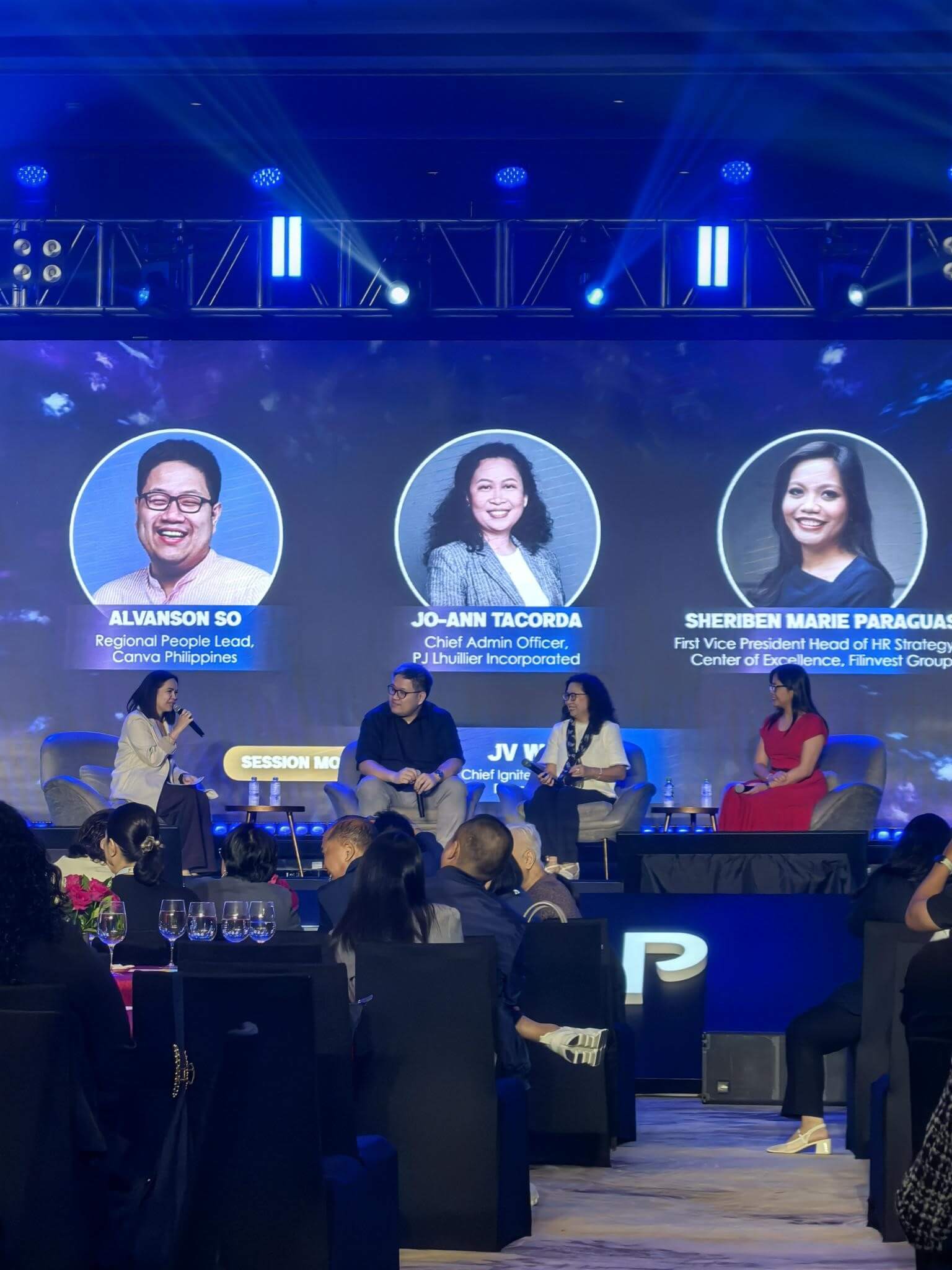
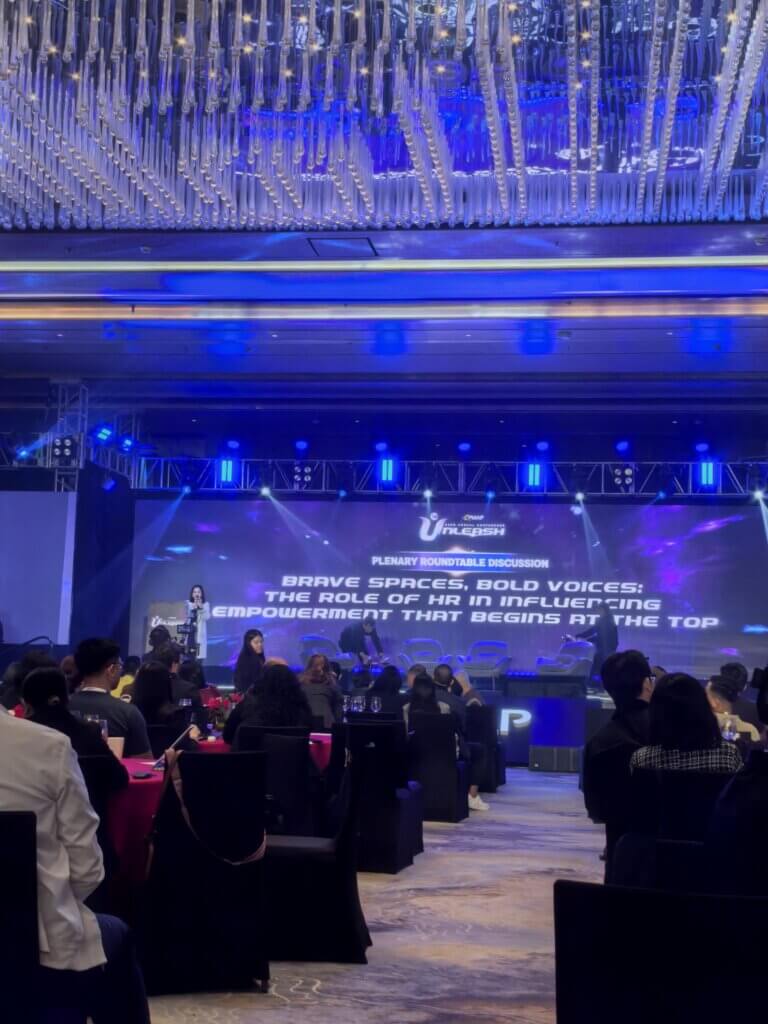
In a world where leadership constantly evolves, empowerment has become more than a management principle—it is the heartbeat of modern organizations. This truth came alive during the PMAP National Conference session titled “Brave Spaces, Bold Voices: The Role of HR in Influencing Empowerment That Begins at the Top.”
The session featured three exceptional leaders:
- Mr. Alvanso So, Regional People Lead at Canva Philippines
- Ms. Jo-Ann Tacorda, Chief Administrative Officer at PJ Lhuillier, Inc.
- Ms. Sheriben Marie Paraguas, First Vice President and Head of Strategy Center of Excellence at Filinvest Group
Together, they painted a powerful picture of how empowerment, authenticity, and human-centered leadership drive not just performance—but purpose.
Empowerment by Design: Building CASE for Courage
Ms. Sheriben Marie Paraguas opened the session with a message that resonated deeply:
“True empowerment is not what managers do for their teams, but what organizations design with them.”
Drawing from her extensive HR experience, she introduced CASE—a framework for sustainable leadership empowerment in the workplace:
- C – Context: Empowerment begins when employees understand how their work contributes to the company’s mission. Clarity builds confidence.
- A – Authority: Autonomy fosters trust. When employees are given decision-making power, accountability and loyalty are strengthened.
- S – Skill: Empowerment must be supported by continuous learning and coaching.
- E – Engagement: It thrives where effort, courage, and innovation are recognized.
Ms. Paraguas emphasized that empowerment is not an HR project—it is a leadership mindset. Her insights aligned with data showing that empowered teams generate 26% higher revenue per employee and are 3.5 times more innovative.
“To influence the top,” she concluded, “HR must first embody the bold voice we ask of others.”
Empowerment from the Top: Authentic Leadership in Action
Representing PJ Lhuillier, Inc., Ms. Jo-Ann Tacorda shared how empowerment becomes reality when modeled by leaders.
Managing over 12,500 employees across thousands of branches, she described how Cebuana Lhuillier’s culture is grounded in trust, authenticity, and shared accountability.
“Empowerment from the top is easier said than done,” she admitted.
“But when it’s grounded in data, lived through values, and modeled with consistency—it becomes the heartbeat of organizational growth.”
Her message resonated with today’s social media trends, where audiences value authenticity over perfection.
Just as online communities engage more with real, vulnerable leadership stories, organizations must also create psychologically safe spaces for openness and collaboration.
Cebuana’s approach—anchored in data-driven leadership, transparency, and continuous feedback—shows that empowerment builds emotional connection, not just operational efficiency.
Every empowered employee becomes a storyteller, a brand ambassador, and a living example of authentic leadership in action.
Designing Human-Centered Workplaces
Adding a digital and creative perspective, Mr. Alvanso So of Canva Philippines emphasized that empowerment thrives in environments where people can “work with purpose and play with creativity.”
Canva’s culture encourages every “Canvanaut” to make decisions, experiment boldly, and take ownership of their impact.
HR’s role, he said, is to design brave spaces—environments where diverse voices are not only heard but celebrated.
“Empowerment,” Mr. So noted, “is the bridge between inclusion and innovation.”
When people feel psychologically safe, they speak up, challenge ideas, and contribute to breakthroughs—both in product design and organizational culture.
Key Takeaways: Empowerment as a Strategic Advantage
From the panel discussion and Q&A, several key insights stood out:
- Empowerment begins with trust. Leaders must model courage and openness before expecting it from their teams.
- Data drives accountability. Surveys and engagement metrics help identify empowerment gaps and guide leadership action.
- Psychological safety is non-negotiable. Feedback sessions, open dialogues, and “learning with impact” create the foundation for brave conversations.
- Empowerment must evolve with generations. Younger employees value flexibility, well-being, and feedback—HR must design systems that meet these needs.
- Every empowered person is a brand storyteller. In today’s digital world, empowerment and social media influence go hand in hand.
Final Reflection: Leadership with Heart
The “Brave Spaces, Bold Voices” session reminded everyone that empowerment is not a one-time initiative.
It is a culture built from the top down and lived from the inside out.
When HR leads with empathy, leaders model authenticity, and employees are trusted to act boldly, empowerment becomes more than just a strategy—it becomes identity.
As the speakers collectively echoed:
“Empowerment thrives where people are seen, trusted, and inspired to lead with courage. That’s the kind of leadership the modern world—and modern workplace—needs most.”
Empower Your Workplace from the Top Down
Turn leadership empowerment in the workplace into a lasting culture of trust, authenticity, and innovation.
At John Clements, we help organizations strengthen their leaders and create environments where people thrive and perform at their best.
Contact us today to start building a more empowered and inspired workplace.

