

Emotions are an inevitable part of professional life. Whether it’s excitement, frustration, or self-doubt, how we manage our emotions often defines our ability to thrive at work. This was the central focus of the recent JC Learning Bites session titled “Dealing with Your Own Emotions,” facilitated by Mr. Dennis Pabelico last October 22, 2025.
The session explored the case “Amisha Gupta’s First Year at Work,” which followed the journey of a young professional adjusting to her first year in a large corporate environment. Through Amisha’s story, participants reflected on how emotions — both positive and negative — influence our professional behavior, relationships, and decisions.
The Emotional Transition from Campus to Corporate
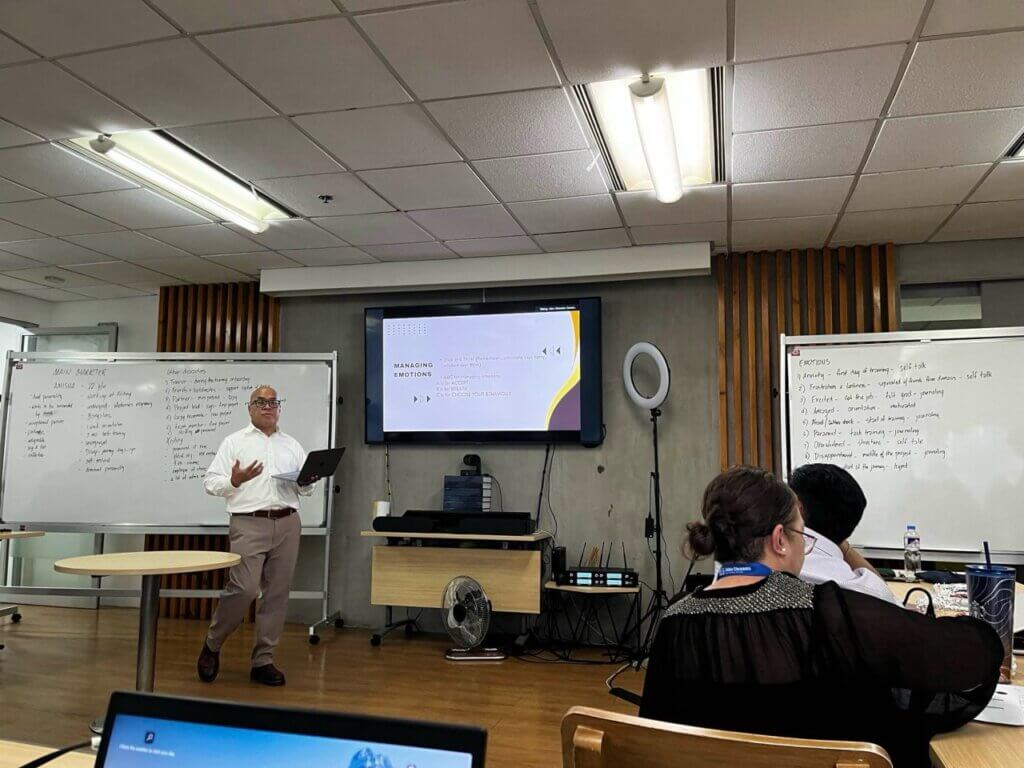
The discussion began with Amisha’s story of joining Xciting, a massive IT company with over 100,000 employees worldwide. Like many fresh graduates, Amisha entered the corporate world with enthusiasm and high expectations. However, as she began navigating the complexities of structured training, strict work culture, and high performance standards, she experienced a wide range of emotions — excitement, anxiety, fear, frustration, and even self-doubt.
The group recognized how this emotional rollercoaster mirrors the experiences of many young professionals starting their careers. Transitioning from university life to corporate life is not just a shift in workload — it’s an emotional transformation that requires awareness, patience, and adaptability. As the discussion progressed, participants reflected on their own “first-year” experiences, realizing how acknowledging emotions can lead to personal growth and resilience.
Steps in Handling Emotions
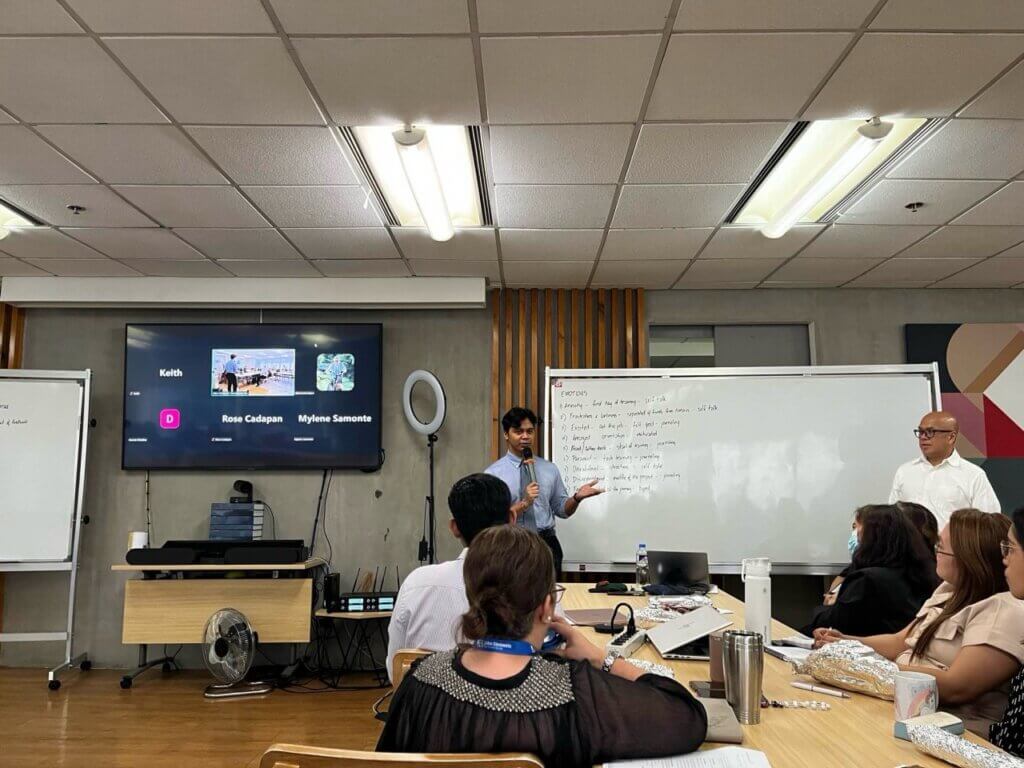
The session emphasized that emotions are not to be suppressed but to be understood and managed. Mr. Pabelico introduced three essential steps for dealing with emotions effectively:
-
- Know what you’re feeling – Awareness is the first step toward emotional control. Naming the emotion helps you understand its root cause.
- Accept and own it – Take responsibility for what you feel instead of blaming others or circumstances.
- Manage it correctly – Respond thoughtfully rather than reacting impulsively.
When emotions are overwhelming, it’s helpful to identify emotional triggers — often unmet expectations or personal needs. Reframing one’s thoughts can shift the focus from external blame to internal understanding, allowing for more constructive responses.
The ABC of Managing Emotions
A practical technique shared during the session was the ABC Method for Managing Emotions:
A – Accept: Acknowledge your emotions as valid and part of being human.
B – Breathe: Take a pause, breathe deeply, and create space between the emotion and your reaction.
C – Choose your behavior: Decide how to respond — calmly and intentionally.
This simple yet powerful approach encourages mindfulness and helps professionals remain composed even under pressure.

Personal Reflection
Personally, this session reminded me of my own first-year experience at John Clements Consultants, Inc. Like Amisha, I encountered a mix of emotions — excitement on my first day, uncertainty during adjustments, and moments of frustration when things didn’t go as planned. Over time, I learned that growth happens when we acknowledge these emotions rather than ignore them.
By applying self-awareness and emotional management techniques, I’ve learned to stay grounded and productive even in challenging situations. Looking back, I’m proud of the emotional maturity I’ve developed — proof that managing emotions is not about suppressing feelings but about mastering how we respond to them.
Key Insights and Takeaways:
Several valuable insights emerged from the group discussion and shared experiences:
-
- Everyone experiences emotions differently; awareness of this diversity builds empathy.
-
- Don’t be someone controlled by emotions — be someone who controls them.
-
- Avoid letting emotions consume you; instead, recognize them and move forward.
-
- Remember the 3 L’s of emotional management:
-
- Look at it – Acknowledge your emotions.
-
- Learn from it – Reflect on what they teach you.
-
- Let go – Move on and don’t dwell on negativity.
Final Thoughts
The session concluded with a powerful reminder: emotional intelligence is a key driver of professional growth. Managing emotions effectively allows us to navigate challenges, build stronger relationships, and adapt to change with clarity and confidence.
Dealing with your own emotions is not just a workplace skill — it’s a lifelong practice. The more we understand ourselves, the more capable we become of handling others and leading with empathy, awareness, and resilience.
Build Emotional Intelligence, Elevate Your Career
Ready to strengthen your emotional intelligence in the workplace? At John Clements Consultants, we help professionals and organizations cultivate emotional resilience, self-awareness, and leadership growth through expert-led learning programs.
Contact us today to learn how we can support your team’s development journey.

