

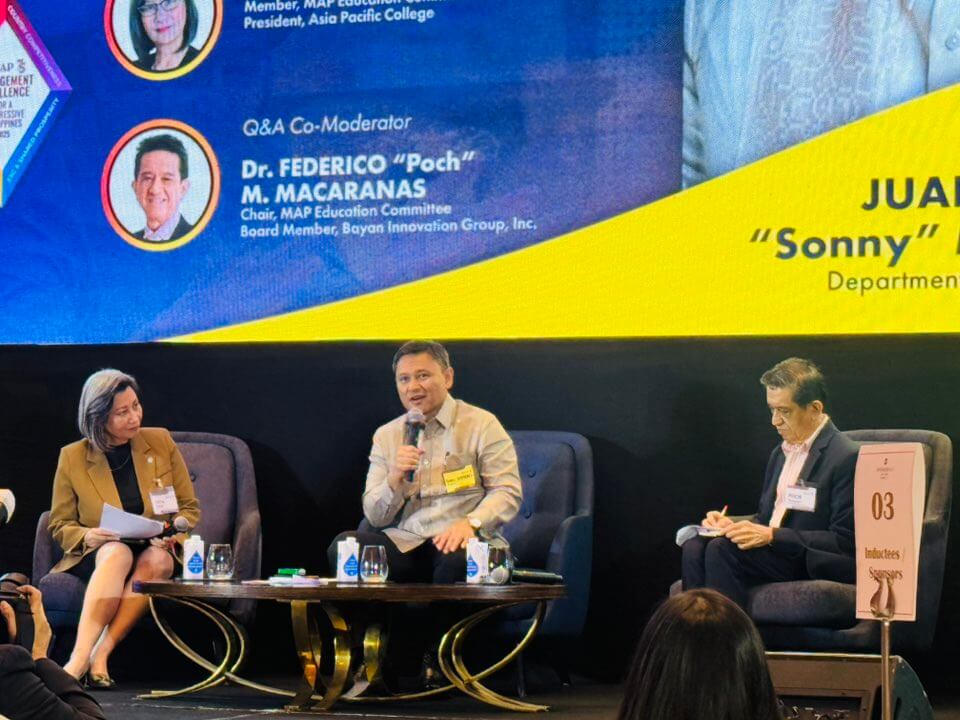
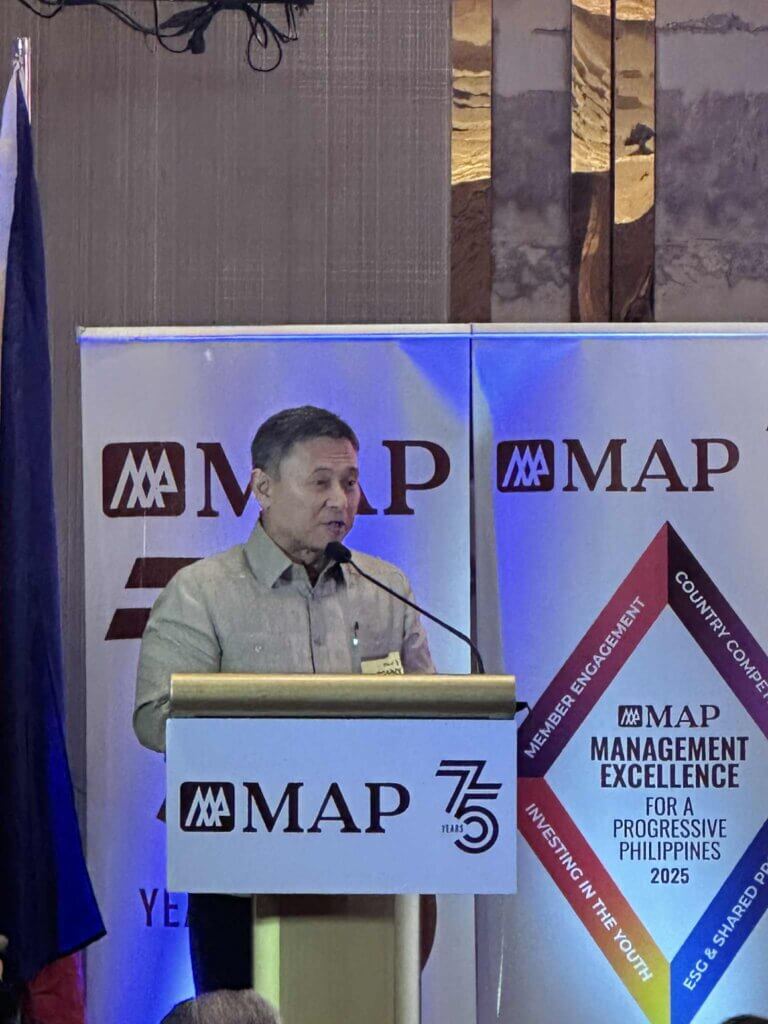
At the recent Management Association of the Philippines (MAP) General Membership Meeting held at Shangri-La The Fort on October 8, 2025, Education Secretary Juan Edgardo “Sonny” Angara reflected on what it means to lead the Department of Education (DepEd) — the country’s largest organization, employer, and learning community. With over a million teachers and support staff serving 27 million learners in more than 47,000 public schools, Angara emphasized both the immense challenges and transformative opportunities in Philippine education.
Managing Scale, Stewarding Impact
“The Department of Education is big — and that’s an understatement,” Angara began. DepEd employs more than half of the entire government workforce and oversees more than 200 field offices nationwide. Moreover, beyond classrooms and textbooks, it also stewards billions of pesos in taxpayer funds, powering programs that shape the lives of millions of children and families.
Expanding Access Through Nutrition
One of the department’s key priorities, for instance, is the expansion of the School-Based Feeding Program. “When the President came in 2022, the budget was ₱5 billion,” Angara shared. “This year, we’re proposing ₱11.7 billion — more than double — allowing us to feed all kindergarten students for 120 days.” Consequently, for the first time, over one million kindergarteners will benefit, ensuring that “our youngest citizens are well-fed and well-prepared for the future.”
Investing in Infrastructure and Innovation
Angara highlighted that the education sector’s proposed ₱928 billion budget is the largest in history, reaching 4% of GDP when combined with CHED, TESDA, and other agencies. As a result, this funding will accelerate school construction, strengthen public-private partnerships, and repurpose closed private schools into new learning spaces — helping close the 165,000-classroom gap. In addition, DepEd plans to distribute 240,000 laptops and hire additional administrative officers to lighten teachers’ non-teaching workload.
Aligning Education with Industry Needs
Beyond funding, reforms under the Strengthened Senior High School (SHS) program aim to align education with industry demands. Specifically, core subjects will be streamlined to five, with greater emphasis on work immersion and real-world skills. “Progress isn’t measured in memos,” Angara said. “It’s seen in quiet changes that happen every day in our schools.” Accordingly, from AI-assisted data mapping to disaster-ready “Educahubs,” DepEd is embracing innovation. In one Quezon City school, for example, free smartphones and laptops helped identify undernourished learners — a tangible result of the Department’s new Center for AI Research.
Driving Literacy and Community Engagement
Meanwhile, through programs like Bawat Bata Makababasa (BBMP) and ARAL, children across the country are gaining reading skills and accessing learning recovery opportunities that unite schools and communities. These initiatives, in turn, reflect DepEd’s commitment to inclusive, community-driven education.
A Call to Collaborate
Concluding his address, Secretary Angara appealed to business leaders and partners: “We can’t do it alone. Help us see the horizon. Help us co-design the future of education.” Furthermore, he urged industries to champion apprenticeships and recognize skills beyond degrees. “Every effective program is a story of good management,” he said. “And every story of good management is one of collaboration. When we work together, we build not just classrooms — we build futures, feeding both hope and minds.”
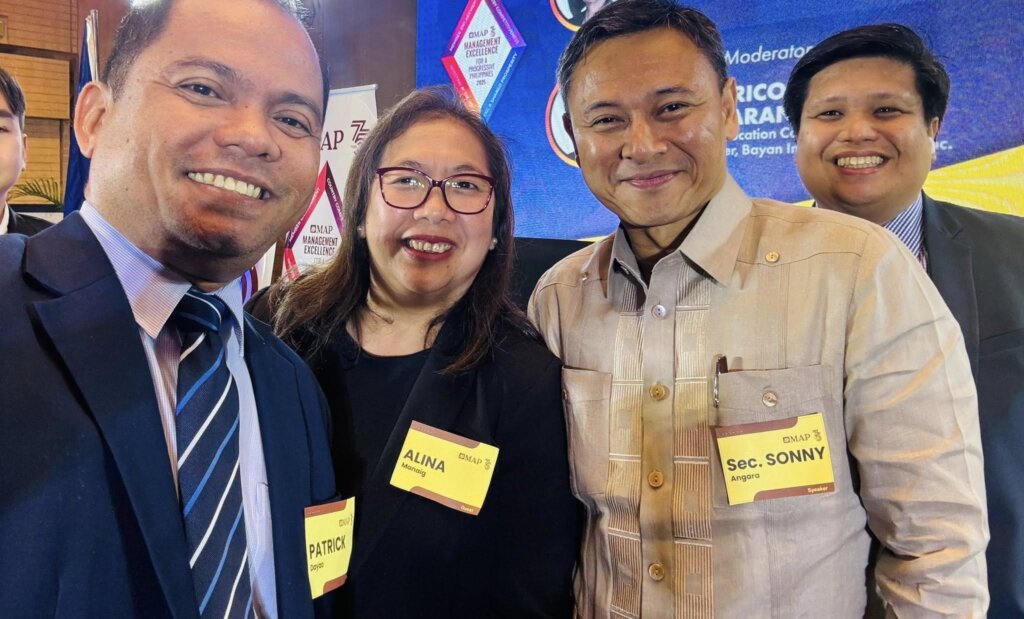
Partnering for a Brighter Future in Education
As the Philippines moves forward with bold education reforms under Secretary Angara’s leadership, collaboration between public and private sectors has never been more vital. At John Clements, we share this vision — helping organizations build capable, future-ready leaders and professionals who can drive progress in education and beyond.
Ultimately, be part of the change. Contact us today to learn how we can work together to shape a smarter, stronger nation.

