
Artificial intelligence is transforming how we live, work, and lead. However, nowhere is its impact—and its complexity—more profound than in healthcare.
From Classroom to Case Study: Exploring AI’s Promise
Artificial intelligence is transforming how we live, work, and lead. Yet, nowhere is its impact—and its complexity—more profound than in healthcare, where the intersection of AI and human empathy is redefining what it means to care, connect, and make decisions.
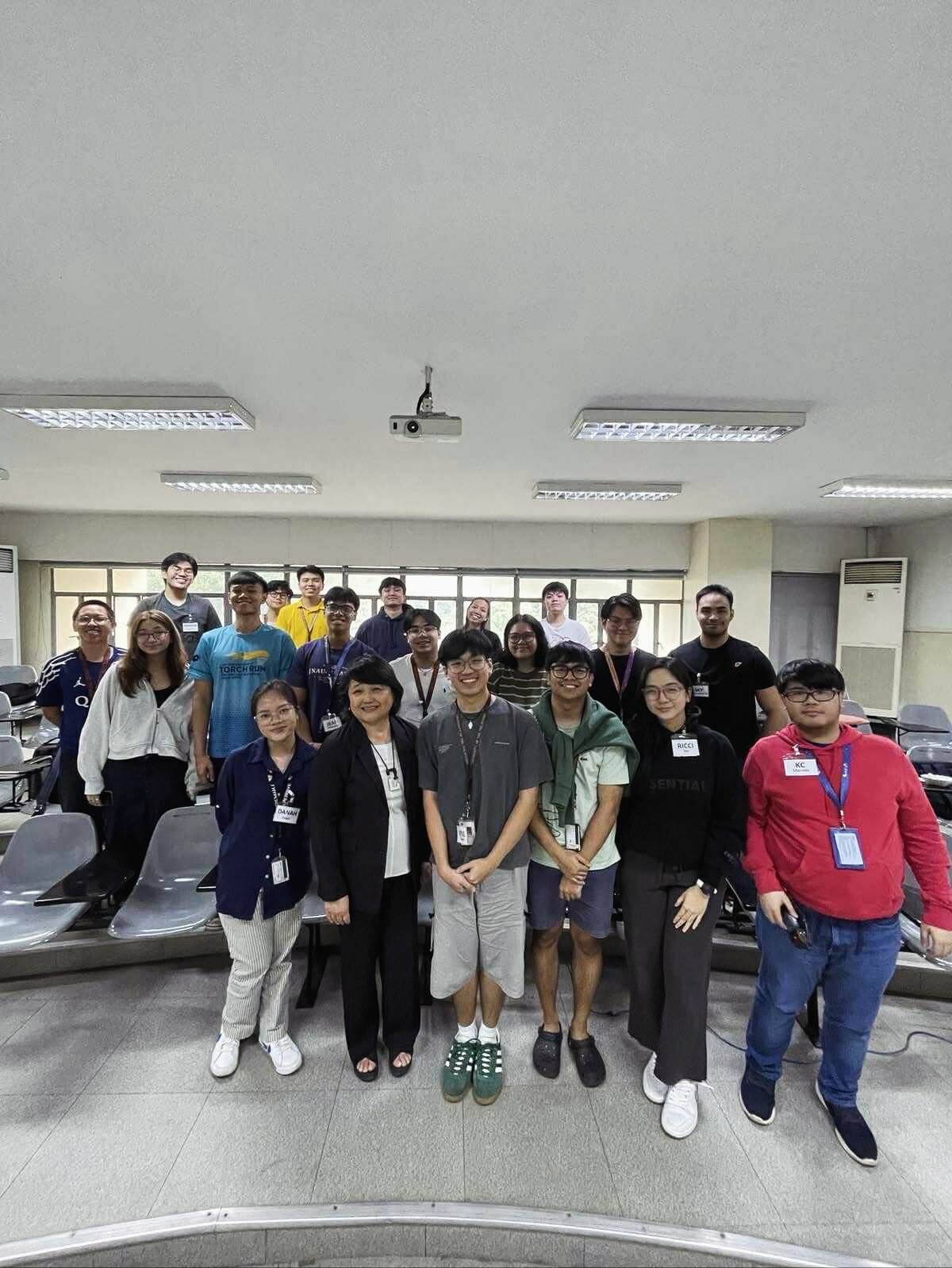
In my BA 198 “Leading with Artificial Intelligence” class at the UP Virata School of Business, we explored this intersection through the Harvard Business School case “K Health: Building an AI Physician Model.” Specifically, the case follows Allon Bloch, whose father suffered a preventable stroke due to gaps in medical monitoring. That experience, in turn, inspired him to co-found K Health, a company built on a bold vision: to use AI and data to make healthcare smarter, faster, and more equitable.
The K Health Model: AI with a Human Purpose
Students examined how K Health distinguishes itself from traditional telemedicine and symptom checker apps. Unlike others, its AI doesn’t merely match symptoms to diagnoses—it learns from millions of anonymized patient records from Maccabi Healthcare Services in Israel, encompassing 2.4 million patients and billions of data points.
Consequently, this rich, longitudinal data powers K Health’s three-pronged AI system: a clinical language model for interaction, a logical medical model for reasoning, and a statistical model for prediction. Together, these models replicate the reasoning of a physician while continuously improving accuracy.
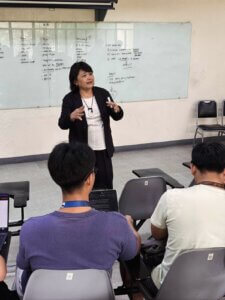
Still, as our whiteboard discussions revealed, data and algorithms are only part of the story. Students debated a deeper question: Can AI ever replace human empathy, intuition, and judgment? The consensus was clear—AI can assist, but it cannot replace. It can analyze patterns, but not emotions. It can optimize, but not empathize.
From Case to Clinic: Testing AI in Real Life
To move from theory to practice, I invited students to experiment with real data. For example, I distributed my mother’s recent laboratory tests—including red and white blood cell counts, platelets, procalcitonin, glucose, urinalysis, urine culture, and a chest X-ray—and asked them to use any AI tool of their choice, from ChatGPT to Gemini, to interpret the results.
As expected, the findings were eye-opening.
AI-generated assessments aligned closely with actual medical interpretations. Thus, this hands-on exercise illustrated the enormous diagnostic potential of generative AI—not as a replacement for medical professionals, but as a co-pilot that empowers them to focus more on empathy, communication, and care.
Moreover, it echoed a recent conversation I had with a fellow Harvard Business School Alumni Board member, who shared:
“ChatGPT and Gemini are already exceptionally good for health diagnostics. You can upload blood reports, X-rays, or even talk to them like doctors to walk you through their reasoning.”
The Human Element: What Our Discussion Revealed
From our in-class whiteboard debates, several recurring themes emerged:
- First, AI must complement—not substitute—human intelligence. It should amplify what humans do best: reasoning, empathy, and creativity.
- Second, trust is the true currency of adoption. Without transparency, explainability, and accountability, no amount of technology will gain public confidence.
- Third, collaboration is key. Doctors, patients, and technologists must co-create systems that are reliable, ethical, and contextually relevant.
- Finally, data is power—but also responsibility. Privacy, bias, and cultural sensitivity must be integral to AI design, not afterthoughts.
Reinforcing the Lesson: Insights from HBR
To close the session, we turned to the Harvard Business Review article “AI Adoption in U.S. Health Care Won’t Be Easy” by James and Robert Rebitzer. According to the authors, AI’s biggest hurdle isn’t technical—it’s behavioral. They call it “switchover disruption”: the cost, resistance, and productivity loss that come with adopting new technology.
By drawing lessons from history—such as the slow adoption of electronic health records (EHRs) versus the rapid acceptance of minimally invasive surgery—the Rebitzers emphasize that trust and alignment among stakeholders determine whether innovation succeeds or stalls.
Therefore, they propose three principles for building that trust:
- Shift the narrative from substitution to augmentation—AI should empower, not replace.
- Implement responsibly, aligning incentives and workflows.
- Ensure ethical transparency, giving patients control over their data and consent.
The Final Diagnosis: Technology Alone Isn’t Destiny
Our collective takeaway: AI in healthcare is not just about technology—it’s about trust.
The future of medicine lies not in machines that think like doctors, but in doctors and leaders who know how to think with machines. When used responsibly, AI can reduce errors, extend care to underserved communities, and help us live longer, healthier lives.
Nevertheless, the human element—empathy, ethics, and discernment—remains irreplaceable.
As one student insightfully put it, “AI can process data faster, but only humans can feel the weight of a diagnosis.”
Beyond the Classroom: A Call to Lead with Heart
What began as a case discussion became a living experiment in the future of healthcare—one that challenged us to rethink not just what AI can do, but what we, as humans, must still do better.
Ultimately, the path ahead will be defined by how well we balance innovation and integrity, data and dignity, intelligence and empathy.
Because in the end, the smartest AI will still need a human heart.
Lead the Future of Human-Centered Innovation
At John Clements Consultants Inc., we believe that technology should elevate—not replace—the human spirit. Whether you’re building AI solutions, designing healthcare systems, or leading change in your organization, we’re here to help you shape a future where intelligence meets empathy.
Let’s co-create that future. Reach out to us today to explore how leadership, innovation, and heart can transform your business.

