

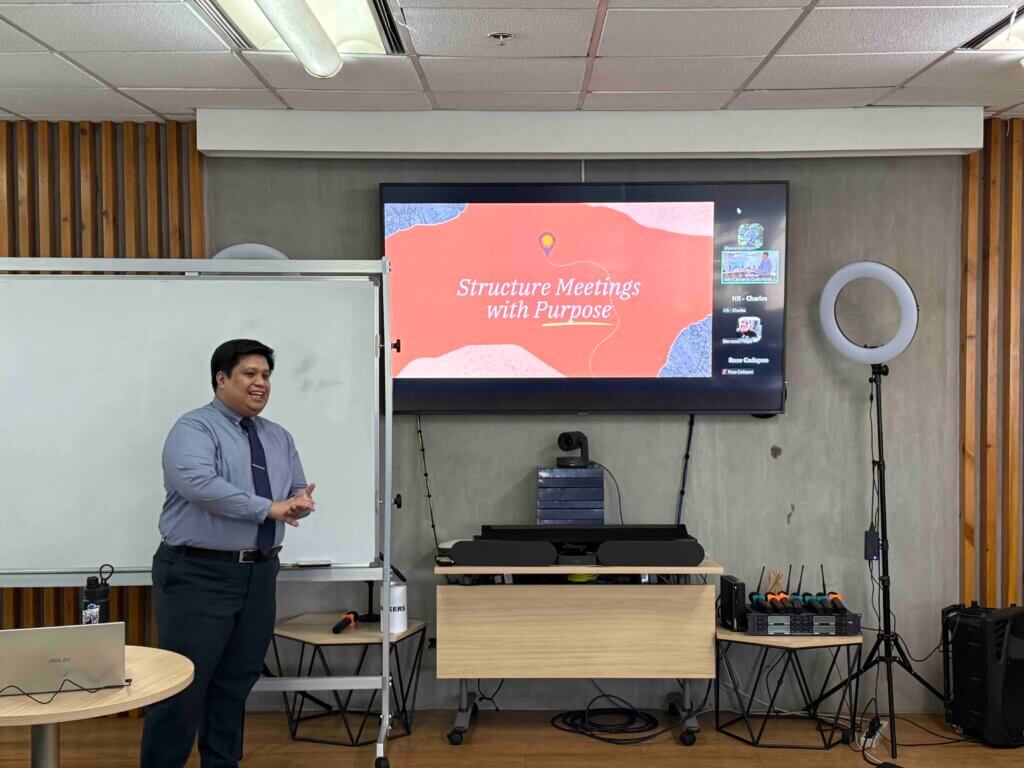
On October 1, I attended JC Learning Bites Session 9, “Structured Meetings,” facilitated by Dan Napa from Enterprise Sales. I had already completed the pre-session activity on CK Connect and arrived ready to reflect. My mindset shifted, and I gained practical tools—ones I applied the very next day.
The Cost of Unstructured Meetings: What I Didn’t Realize Before
I used to accept invites by default, assuming that showing up meant I was contributing. People let meetings drag on, repeated updates unnecessarily, and lost action items in long message threads. My calendar became a to-do list instead of a decision engine. That pattern left me drained and frustrated.
A Wake-Up Call from World Vision Canada
Dan shared the “Meeting Madness” case from World Vision Canada. It revealed how well-intentioned meetings can spiral into chaos when governance and decision rights are unclear. Afterward, I audited my own calendar and found similar gaps: fuzzy purpose, missing agendas, and unnamed owners.
One Habit That Changed Everything: WAWTA
I began writing “WAWTA—What Are We Trying to Achieve?” at the top of every invite. That one-line purpose forces a decision: is this meeting necessary? If WAWTA is vague, I pause the invite and suggest a clearer format. As a result, meetings became shorter and outcomes more focused.

Seven Practical Tips to Structure Your Meetings
- Start with WAWTA in Every Invite
Include a one-sentence purpose. If it’s missing, ask for one or suggest a memo instead. This makes attendance intentional and prepares participants to contribute. - Share the Agenda 24 Hours in Advance
Materials and agendas should be sent at least a day before. When participants prepare, discussions are streamlined and decisions are made faster. - Use RACI to Clarify Roles
For each expected action, add a RACI row: Responsible, Accountable, Consulted, Informed. Ownership is clarified, and post-meeting confusion is reduced. - Default to 30 Minutes with Clear Outcomes
Set a 30-minute default and list three expected outcomes. Shorter meetings encourage discipline and minimize filler updates. - Invite Only Essential Participants
Limit attendees to decision-makers and doers. Those who only need to be informed can be sent a summary afterward. This preserves focus and reduces side conversations. - Protect Focus Time on Your Calendar
Block two hours daily labeled “Focus — No Meetings.” When the purpose is stated, boundaries are respected. - Delegate with Support, Not Just Tasks
Pair each assignment with a short handover and one checkpoint. Delegation should be treated as development—it builds capability and frees time.
A Three-Week Experiment That Delivered Results
Over the course of three weeks, I ran a simple experiment to improve meeting structure. To begin, I added a WAWTA header in Week 1 to clarify each meeting’s purpose. Then, in Week 2, I trimmed the attendee list from 12 to 6, focusing only on essential roles. Finally, in Week 3, I applied RACI to all action items and ensured that deadlines were set during the meeting itself.
The results were clear. Meeting length dropped by 35 percent. Action completion accelerated. Fewer follow-up emails were needed. My manager noticed and asked what had changed.
Templates That Make Structure Repeatable
- Meeting Invite: WAWTA + three outcomes + 30-minute default
- Pre-Meeting Checklist: agenda + materials attached + expected decisions
- Post-Meeting Note: one-paragraph summary + RACI table + deadlines
These templates can be used to scale structured meetings across teams and projects.
Metrics You Can Expect from Structured Meetings
- Routine meetings shortened by 30–35 percent
- Attendee lists reduced to essential roles
- Post-meeting action delays halved through named ownership
Small experiments build momentum. Consistent habits scale results.
What’s Next: My Pilot Plan and Yours
This month, I’ll pilot WAWTA and RACI across three project meetings, tracking meeting length, attendance, and action completion. You can do the same: run a three-week test, gather feedback, and share results. After two weeks, ask participants:
- Was the purpose clear?
- Was my time used well?
- Did I leave with next steps?
Structured meetings aren’t about rules—they show respect for people’s time. Protect time, clarify purpose, and assign ownership.
Learn More About JC Learning Bites
Ready to transform your meeting culture? Explore JC Learning Bites and the John Clements Leadership Institute programs.

