
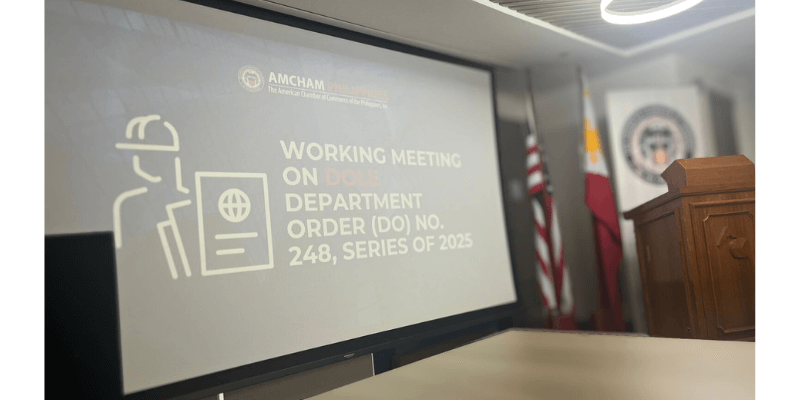
The American Chamber of Commerce of the Philippines (AmCham) convened an insightful working meeting on July 30, 2025, led by the Human Capital and Resources Committee in collaboration with the Department of Labor and Employment (DOLE). The event focused on the recently issued Department Order (DO) No. 248, Series of 2025, which outlines new rules and regulations on the employment of foreign nationals in the Philippines.
Key Attendees
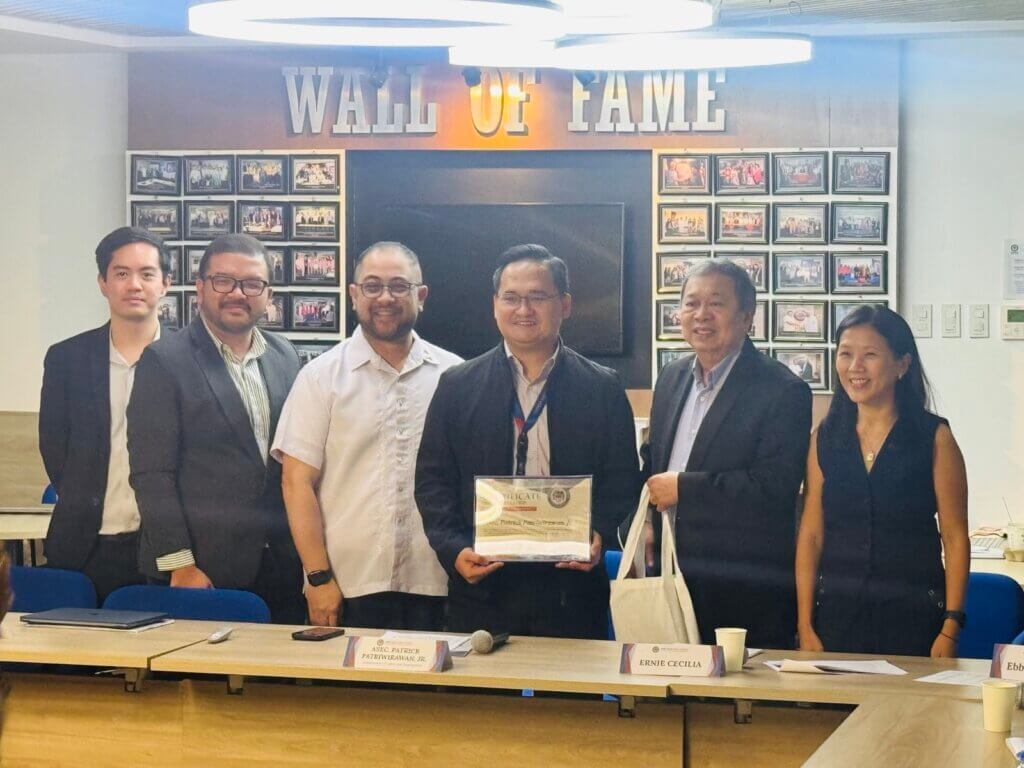
Among the distinguished guests were Mr. Ebb Hinchliffe, Executive Director of AMCHAM Philippines, and Mr. Ernie Cecilia, current Chair of the Industrial Relations Committee. The guest of honor, OIC-Assistant Secretary (ASEC) Patrick Patriwirawan, Jr. of DOLE’s Bureau of Local Employment, delivered a comprehensive presentation on the new directive.
A Growing Trend
Over the past years, the Philippines has witnessed a noticeable rise in the employment of foreign nationals. According to the Bureau of Immigration (BI), there was a 13% increase in foreign workers from 2023 to 2024, totaling approximately 153,651 in 2024.
This growing presence of foreign talent has prompted the Philippine government, in collaboration with the Department of Labor and Employment (DOLE), to take significant steps. Hence, Department Order (DO) 248 was implemented to tighten regulations and safeguard the local labor market, while also aiming to broaden employment access for Filipino workers.
New Guidelines: Key Provisions and Highlights
-
Streamlined Labor Market Test (LMT)
Employers must publish the job vacancy and the foreign national’s name in:
-
- A newspaper of general circulation
- PhilJobNet
- The PESO or Job Placement Office (JPO) with jurisdiction over the work location
Corporate officers (as specified in the Articles of Incorporation, By-laws, or GIS, and certified by the corporate secretary) are exempt from publication requirements.
This approach promotes inclusivity by opening opportunities to job seekers who may not have access to online job platforms, effectively widening the recruitment pool.
-
Skills Development & Understudy Training Programs
Employers are required to implement:
-
- A Skills Development Program (SDP), which includes transferring technology or skills to at least two rank-and-file Filipino employees.
- An Understudy Training Program (UTP), designed to prepare two Filipino understudies for potential succession.
- These programs ensure that Filipino workers directly benefit from the presence of foreign talent in the workforce. Additionally, to ensure that foreign workers contribute to the Philippine economy.
-
Economic Needs Test (ENT)
To protect local employment opportunities, an Economic Needs Test has been introduced. This ensures that foreign nationals are considered for employment only if no qualified Filipino workers are available.
-
Compliance and Penalties
DOLE has reinforced compliance mechanisms to curb misuse. Violations such as misrepresentation, fraud, or tampering can result in:
-
- Revocation or denial of an AEP
- Bans of 5 to 10 years from future applications
- Strict enforcement is being pursued to preserve the integrity of the employment system.
Supplemental Guidelines Issued June 5, 2025
To clarify and amend the original provisions of DO 248, DOLE released supplemental guidelines that include:
-
- Mandatory newspaper publication; PhilJobNet and PESO/JPO postings are now optional
- SDP/UTP requirements are limited to specific sectors such as public utilities, strategic investments, and businesses receiving fiscal incentives
- Exemptions for shareholders, SEC-registered investors, and pre-cleared positions
- Affidavit of Undertaking allowed for AEP renewal applications if training plans are pending (to be submitted within 60 days)
- Employers must also submit progress reports, including signed attestations by the employer, the foreign national, and the understudies
Surprising Nationality Trends in AEP Issuance
Interestingly, data shared by DOLE revealed that Western nationalities did not appear in the top 10 countries issuing Alien Employment Permits in 2024. The list was dominated by Asian neighbors:
-
- Chinese
- Vietnamese
- Indonesian
- Indian
- Japanese
- South Korean
- Malaysian
- Burmese
- Taiwanese
- Thai
This trend reflects the region’s increasing economic integration and labor mobility within Asia.
Leading by Example
John Clements Consultancy, Inc. is the leading recruitment firm in the Philippines, which has been in the business for over 50 years. As a trusted name in the industry, the company is deeply committed to compliance and ethical labor practices. Rather than risking its reputation, John Clements chooses to lead by example. This commitment goes beyond mere adherence to regulation as it reflects a broader mission to foster fair labor practices, minimize legal risks, and build a more positive and inclusive workplace culture.
Workforce Solutions in a Changing Landscape
Through its comprehensive managed workforce solutions, John Clements not only employs foreign nationals internally but also deploys talent to client companies via its outsourcing services. These flexible, end-to-end solutions are designed to help businesses scale efficiently while focusing on their core operations.
However, with the implementation of DO 248, new challenges have emerged. The regulation introduces more strict evaluations and documentation requirements, potentially resulting in longer processing times for Alien Employment Permit (AEP) applications. As the qualification standards for foreign nationals are being more heavily scrutinized, this stricter regulation may limit opportunities for foreign nationals due to higher qualification standards and increased documentation requirements. Nonetheless, these adjustments are not without purpose as they are meant to better protect the Philippine labor force. Despite this, the company remains optimistic and committed to working together for the betterment.
A Renewed Focus on Local Talent
Another key aspect of DO 248 is its emphasis on prioritizing Filipino workers, which encourages companies to invest in training programs that develop local talent, ensuring that Filipinos are well-equipped to meet industry standards.
This approach does not just benefit workers—it uplifts companies and contributes to national progress. As the saying goes, “Tangkilikin ang sariling atin.” If we can deliver world-class service abroad, why not channel that same excellence within our borders? It’s time to invest in our people—through training, upskilling, and creating meaningful opportunities.
 Execution Is Everything
DO 248 is a significant step by the government to impose stricter rules. However, even when a program or directive is thoughtfully crafted and holds significant potential, its success largely depends on how well it is implemented. Without strict, consistent implementation, and especially in the presence of miscommunication among those directly involved, particularly frontline personnel, the entire system risks becoming inefficient and disorganized. To ensure long-term success, clear communication, strong coordination, transparency, and disciplined execution are essential. Promising plans can only succeed if carried out with integrity and efficiency.
In this regard, we commend ASEC Patriwirawan for his transparency and calm demeanor throughout the working meeting. He listened attentively to feedback, addressed questions with clarity, and reiterated DOLE’s commitment to continuous improvement for the benefit of all.
Looking Ahead: A Shared Responsibility
The recent working meeting between AMCHAM Philippines and DOLE signifies a meaningful step forward. Through collaboration between the public and private sectors, Department Order No. 248 holds the potential to enhance the employment landscape for both foreign and Filipino workers.
With a shared vision, transparent leadership, and a commitment to execution, we can build a labor market that thrives—anchored in fairness, growth, and national development.

