
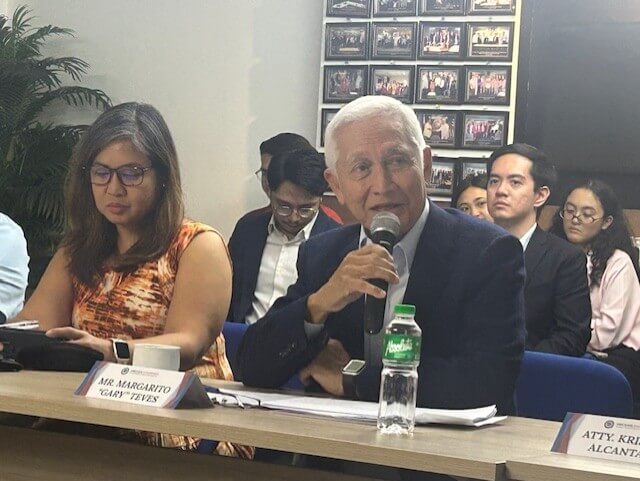
The American Chamber of Commerce of the Philippines (AmCham) convened a Post-State of the Nation Address (SONA) session on July 31, 2025, to evaluate President Ferdinand Marcos Jr.’s fourth SONA. The event gathered insights from the legal, fiscal, and governance lenses to assess the administration’s direction and offer actionable recommendations for stakeholders in the business and policy communities.
1. Political and Sectoral Insights (Vriens & Partners)
Atty. Elaine Collado, Country Director of Vriens & Partners, highlighted that the 2025 SONA took a distinctly people-centric tone, focusing on tangible social issues such as education, agriculture, health, and infrastructure. However, it lacked emphasis on high-level geopolitical issues like the West Philippine Sea (WPS), the International Criminal Court (ICC), and former President Duterte’s detainment.
Education took center stage, with the rollout of the ARAL Program (Academic Recovery and Accessible Learning), scholarships targeted at marginalized families, and support measures for teachers. Over 22,000 classrooms have been built, and programs were set to build 40,000 more by 2028.
In agriculture, the President emphasized food security through ₱113 billion in funding, support for livestock development, and revitalization of the coconut industry. Infrastructure support included the construction of farm-to-market roads and irrigation systems.
Under infrastructure, flagship projects like the Bataan-Cavite Interlink Bridge, Mindanao Transport Connectivity Program, and the PNR Bicol Line were advanced. While acknowledging delays in Metro Manila Subway projects, the President committed to transparency, instructing the Department of Public Works and Highways to audit projects and threatening a reenacted budget if Congress inserts “malicious” changes.
In health, expanded access to PhilHealth benefits, the construction of new cancer and urgent care centers, and increased mental health services were key highlights. Technology and digitization initiatives included the National Fiber Backbone, e-Gov app services, and the distribution of smart devices to schools.
On energy, the administration targeted electrification of 4 million households by 2028 and expansion of solar home systems. A notable directive was the expansion of the lifeline rate subsidy and action on power supply issues, such as the blackout in Siquijor.
2. Fiscal Policy and Economic Risks (Gary Teves)
Former Finance Secretary Gary Teves presented a sobering view of the Philippines’ fiscal outlook. The budget deficit remains elevated at 5.7% of GDP in 2024—above the government’s target—and the national debt has climbed to ₱16.9 trillion, or Php 148,589 per Filipino.
He cited six major fiscal risks:
- Global trade pressures, such as the imposition of new U.S. tariffs; 2.
- Geopolitical uncertainty, including the Ukraine-Russia and Middle East conflicts;
- Climate change impacts, which have already cost the economy Php 911 billion since 2000;
- Weak absorptive capacity, evident in underutilized budgets in key agencies;
- Rising unprogrammed appropriations, which divert funds from planned projects;
- Persistent corruption, with 20% of the national budget allegedly lost annually.
Teves emphasized the importance of fiscal sustainability to preserve borrowing capacity and protect essential sectors like health and education. He advocated for reforms in both expenditure and revenue management:
- On expenditures: Improve legislative-executive coordination, open bicameral budget meetings to public scrutiny, and reform procurement systems.
- On revenues: Modernize VAT administration, stop granting excessive VAT exemptions, and raise non-tax revenues through privatization of certain government assets.
- Trade and business: Focus on diversifying export markets and reducing the cost of doing business.
3. Legal and Regulatory Observations
Presented by Atty. Kristine Alcantara
Atty. Kristine Alcantara, Founding Partner of Legalgorithm, examined the legal implications of the SONA’s policy shifts. She emphasized the importance of regulatory consistency and legislative clarity. Her analysis highlighted the need to harmonize national and local policies, especially in digital transformation, public procurement, and infrastructure development.
Conclusion
Balancing Vision with Discipline
The AmCham session revealed that while the SONA addressed many people-focused initiatives, deeper structural challenges persist. A balance must be maintained between ambitious social programs and fiscal discipline. AmCham’s key recommendation: the government must stay committed to reform, enhance governance and transparency, and prioritize economic sustainability to build a resilient future.
Turn Policy Insights into Strategic Advantage
The AMCHAM Post-SONA 2025 Forum revealed critical developments that will shape the Philippine business landscape in the years ahead. If you’re a business leader looking to align your workforce and strategy with the nation’s evolving priorities—education, infrastructure, digital transformation, and governance—John Clements Consultants is here to help.
From executive search to leadership development, our services are designed to prepare your organization for what’s next.
Contact us today to explore solutions that support sustainable growth and policy-aligned workforce planning.

